Belfast talent walks familiar road: Ray Collins discusses career, new album
Belfast singer Ray Collins on the clubs that raised him, the friends he lost, and the York Street songs on his album As I Roved Back.
As printed in the Celtic Mirror, August 1995
Ray Collins has traveled many roads in his career.
The Belfast-born singer/songwriter has experimented with and become successful in various performing arts.
Consider that Collins’ resume includes theatrical performances, two previous album releases and years of live shows. Then, it’s easy to see why his name is firmly entrenched among the elite of Irish entertainers.
“As I Roved Back” released by Colin Glen music, is undoubtedly Collins at his finest.
Musically, the album is a curious blend of Celtic folk, rock and traditional sounds. There is even a touch of country on one track.
Lyrically, the eight-song set is nostalgic reflection of Collins’ personal experiences.
A talented storyteller, Collins takes the listener by the hand and dashes back in time. His lyrics, like words in a storybook of memories, prompt the listener to see what he sings.
Collins says his formative years, musically, were the late 1960s.
“Van Morrison was doing his thing, and American rock was taking off - Dylan, Joan Baez - it seems everybody had an acoustic guitar slung over their shoulder at the time,” he said.
Those days would also prove instrumental in instilling in Collins his punch for performing live.
The raucous Belfast club scene was the setting where Collins would endure his initiation rites as a live act.
“It was kind of by the cuff back then. You would show up at a club with a guitar and get up and play. Sometimes alone, sometimes not,” he recalled.
Collins took a respite from music in the 1970s. But, he was not idle. He became active in the trade union movement and Irish political and cultural affairs.
In the early 1980s, Collins turned to drama and theater. Nevertheless, music was still a part of his life, and during these years, he was also in the studio, recording.
The origins of “As I Roved Back” were strictly acoustical.
“I’ve been working on this album for several years, actually,” Collins said. “It took three recordings to get it where I wanted it. I recorded every song acoustically, originally. But some songs just begged for a full band arrangement.”
No problem there for Collins. Reaching deep into the talented well of musicians from the New York music scene, Collins came away with some of the best.
Sean O’Connor and Dave Sandler of the Look A Likes would handle strings and sticks, respectively.
Susan McKeown of Chanting House was brought in for back up vocals, and Geoff Blythe of Black 47 on saxophone rounded out an impressive array of talent, which Collins utilized masterfully on the collaboration.
“Some songs, like ‘Belfast Punter’ and ‘Restin My Bones’, work much better with the full band. I was real pleased with the sound we got. They are a great group to work with,” Collins said.
Many fans of Collins’ music, however, have come to associate his name with stirring ballads.
Aware of that fact, Collins included several on the album.
“Songs like Rovin Clans, Silence of the Sound, Honor Bright, I wanted to find that happy medium between folk and contemporary rock,” he said.
While many of the tracks were written recently, Collins said he found himself blowing dust off songs written years ago.
“‘Rovin Clans’: I wrote that when I was 17,” he said. “I was hitchhiking, and I got the idea for the song and wrote it down. Almost all of the original lyrics are intact.”
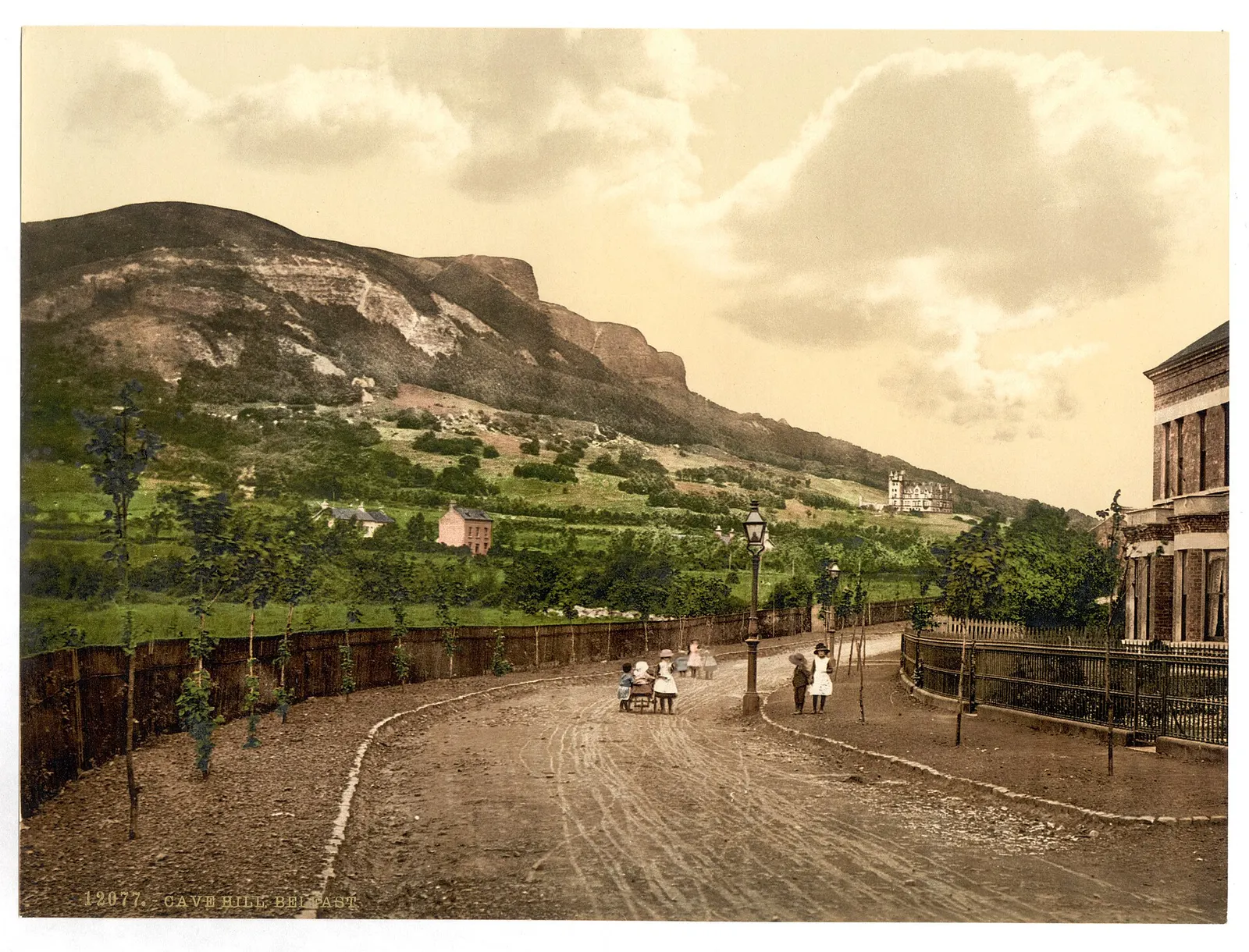
The title track “As I Roved Back To York Street” was written as an ode to the once-promising Sailorstown district of Belfast.
“I spent a lot of time there with my parents and grandparents. It was a proud community. It had seen a lot of suffering back in the 20s and 30s. It was hoped to become a haven for employment, but it never happened,” Collins said.
The most memorable track on the album is “Belfast Punter.”
From Sandler’s opening drumbeat, Collins’ impassioned vocals manage to vividly capture the angst and sorrow of a man lamenting the fate of friends vanished and gone.
The verse is: “Where are you now my friends, through all the laughter, tears, and pain. Some are dead, all are gone.”
“That verse sums up a lot of feelings for me,” Collins said. “I had good friends who were murdered, assassinated, lost to sectarian violence. Almost all of the people I ran with in my younger days are gone.”
The distribution of “As I Roved Back” is concentrated heavily on the east coast of the United States, with Collins hoping that the album will eventually become popular across the country.
“I hope people like the record and it certainly is a good time to be moving your music. After all, it certainly does seem to be the ‘in’ thing to be Irish. But really, the table has been set for some time now,” Collins said.
“The Chieftains have done so much with traditional music, U2 with rock, and Van has always been influential. What we’re seeing is a culmination of things. I don’t know how long it will last, but I think it’s great.”
Collins said he plans to tour to support “As I Roved Back.”
“I was set back somewhat recently by a rib injury. But I’m going to get out there and play,” he said, “I also have enough material for another album, maybe even a Christmas album. I’ve kicked that idea around for a while.”
York Street, then and now
Ray Collins never became a household name in the Pacific Northwest, and the record is thin. What we can add comes mostly from an artist profile kept by the London radio station NTS. It describes him singing on the picket lines and rallies of the Northern Ireland Civil Rights Association in the 1960s, and as a founding member of its Belfast branch. It also fills in the theatre years he mentions above. At the Irish Arts Center in New York in 1986 he played James Connolly in “Under Which Flag” and staged a one-man show, “In Belfast Town,” a social history of the York Street and Sailortown area. The title song of this album began life as that show’s finale. The same profile dates the album to 1996, a year after this review, which may simply reflect a wider release.
The Sailortown he sang about is almost gone. It was Belfast’s first waterfront village, a mixed Protestant and Catholic dockland of more than 5,000 people packed between the docks and York Street. James Larkin’s 1907 dock strike began there. Demolition started in the late 1960s to make way for the M2 motorway, and the last terrace on Ship Street came down in the 1970s. By 2021 two churches, one pub and three houses were left. St Joseph’s, closed in 2001, was leased in 2017 by the Sailortown Regeneration Group, which restored it for events.
His New York players went on. Black 47, Geoff Blythe’s band, broke up in 2014 after a quarter century. Susan McKeown won a Grammy in 2007 for “Wonder Wheel,” recorded with the Klezmatics.
Questions readers ask
Where was Sailortown in Belfast?
Sailortown was a working-class dockland district just north of Belfast city centre, bordered by Henry Street, York Street and the Whitla Street dock gate. It dates from the mid-nineteenth century and once housed more than 5,000 people of both religions. Demolition began in the late 1960s for the M2 motorway, and by 2021 only two churches, one pub and three houses remained.
Who played on Ray Collins’ album As I Roved Back?
According to this 1995 review, Collins recorded As I Roved Back with New York musicians: Sean O’Connor on strings and Dave Sandler on drums, both of the Look A Likes, Susan McKeown of the Chanting House on backing vocals, and Geoff Blythe of Black 47 on saxophone. The album was released on Colin Glen music and ran to eight songs.
What happened to the band Black 47?
Black 47 was a Celtic rock band formed in New York City in 1989 by Larry Kirwan and Chris Byrne, named after the worst summer of the Great Famine, 1847. Saxophonist Geoff Blythe, a founding member of Dexys Midnight Runners, joined a year later. The band built its name at Paddy Reilly’s bar in Manhattan and broke up in 2014.
Did Susan McKeown win a Grammy?
Susan McKeown, the Dublin-born singer who sang backing vocals on Ray Collins’ album, won the 2007 Grammy Award for Best Contemporary World Music Album for Wonder Wheel, made with the Klezmatics. She has fronted Susan McKeown and the Chanting House since 1989, a band that played New York venues such as Sin-é and CBGB in the early 1990s.