Ireland's great outdoors: Travel plans should include outside activity
A 1995 guide to outdoor Ireland: golf for under $20 a day, riding treks, salmon rivers, race days and boat trips to the islands.
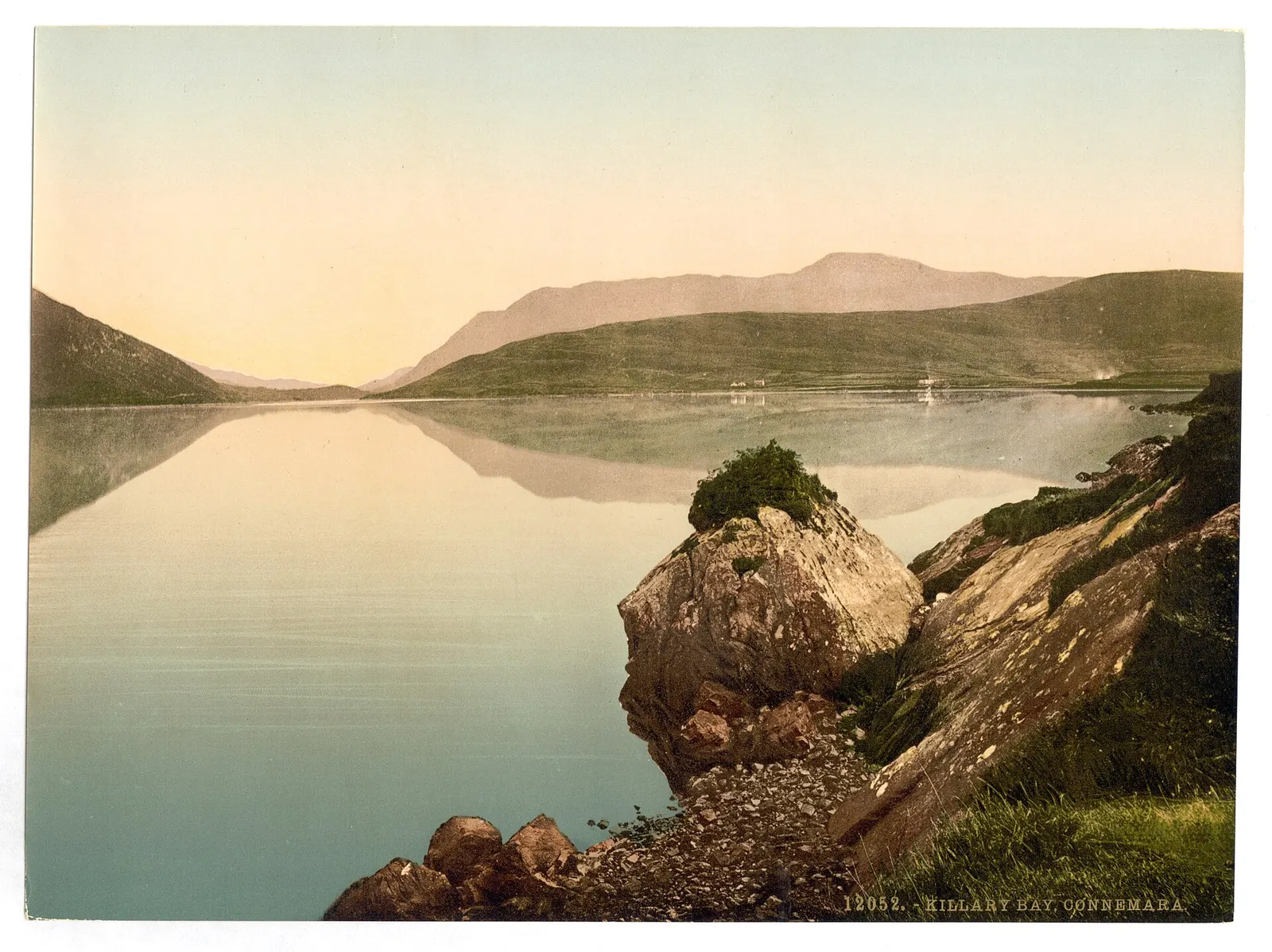
As printed in the Celtic Mirror, August 1995
It’s no secret that Ireland is synonymous with beautiful scenery - 3,000 miles of coastline, hundreds of rivers and lakes, a natural rim of mountains, a patchwork of fertile fields, misty rainbow-filled skies, and rhododendron lined roads.
“Don’t forget your camera,” all the guidebooks advise.
But just looking at or taking pictures of the Irish scenery is only a beginning.
If you really want to experience Ireland, step outside into the verdant countryside and indulge in the great outdoors at its best.
Surrounded by water and stroked by gentle Gulf Stream breezes, Ireland basks in a year-round temperate climate, ideal for all types of outdoor activities.
And if there is one thing that the Irish love more than indulging in their own outdoor pursuits, it’s sharing their enthusiasm with visitors.
Best of all, no one has to be an expert at anything - everyone is welcome to join in the fun.
Indeed, nothing brings a smile to Irish eyes like the sight of a visitor teeing off to an emerald fairway.
As a country known for its 40 shades of green, Ireland has an abundance of golfing greens, with more than 250 courses throughout the country, all of which welcome visitors.
An impressive collection of new 18-hole championship courses has opened in recent years, including many with international involvement, such as a Jack Nicklaus course at Mount Juliet in County Kilkenny; Arnold Palmer courses at Tralee, County Kerry, and the “K Club” in County Kildare; and Robert Trent Jones Sr. courses at Ballybunion, County Kerry, and Adare Manor, County Limerick.
For the tourist, golf is an enjoyable way to see some of Ireland’s most appealing sights.
Lahinch, one of the Irish circuit’s most challenging championship courses, is nestled near the Cliffs of Moher on the Atlantic, while the seaside links at Salthill overlook Galway Bay, and Killarney’s twin courses rest amid a panorama of lake and mountain vistas.
Ireland’s courses are as varied as its landscape - some winding around mountains or along rivers, others overlooking valleys or under palm trees, and many within cities or at resorts.
Best of all, Ireland’s golf facilities are seldom crowded, waiting times are rare, and green fees are very affordable, averaging less than $20 a day.
A call in advance to the club secretary is all that is needed to arrange a game.
With fertile fields and limestone-rich soil, it’s no wonder that Ireland is also great horse country - and equestrian-themed activities are easy to arrange.
There are more than 50 Irish riding centers and stables that offer horses for hire by the hour or the day.
If you have a few days or a week, some centers also operate guided point-to-point treks with overnight accommodations and meals included in the package.
These trips follow some of the country’s most scenic trails, including the Donegal seaside, the Connemara coast, Burren region of Clare, Dingle Peninsula, Killarney Reeks, Sligo’s Yeats Country, and County Wicklow’s garden paths. Extended treks from a single lodging base are also available into the hinterlands of Galway, Tipperary, Limerick, Mayo and Waterford.
Many visitors also enjoy watching Ireland’s beautiful horses at fairs and festivals and at the races.
Once considered the sport of kings, horse racing is truly the sport of the people, with 28 tracks spread throughout the country and racing over 230 days a year including some Sundays and evenings from May through August.
A fun-filled social occasion, a day at the races adds special zest to any itinerary.
If you want to meet and mingle with the Irish, go to the races.
Similarly, but in a more relaxing setting, there is nothing quite like a day’s fishing to get a visitor totally in tune with the gentle ebb and flow of the Irish lifestyle.
To cast a rod on an Irish river is to enter a world set apart, to slow down, relax and forget pressures.
Many of Ireland’s hotels and guesthouses, set beside rivers or lakes, offer private salmon and trout fishing privileges to guests.
A day’s fishing can be arranged with boats and ghillies (guides) who provide local knowledge and expertise.
With a season that starts early in the year, Irish fishing is at its peak from May through September.
The most popular types of fishing are salmon and trout.
Limerick, Wexford, Waterford, and Sligo offer guided walking tours for visitors.
Outdoor pursuits in Ireland frequently offer an out-of-the-way twist, such as island-hopping.
Many visitors devote at least a day to touring one or more of the three storied Aran Islands, off the coast of Galway, connected by sea and air services to the mainland.
Few visitors realize that the Arans are only the beginning.
There are at least 20 other off-shore islands that can be visited by boat, from inhabited islands like Inishbofin off the coast of Connemara, popular with botanists and bird-watchers, and Tory and Arranmore off the coast of Donegal, bastions of Gaelic culture, as well as uninhabited islands such as the Skelligs, off the coast of Kerry, originally a 6th Century monastic settlement and today a bird sanctuary.
To encourage visitors to share in Ireland’s great outdoors, there is a series of colorful brochures titled “Only the Best,” available free from the Irish Tourist Board.
The series includes golf, fishing, equestrian activities, sailing, bicycling, walking, islands and nature locales.
To request one or more titles, contact the Irish Tourist Board, 345 Park Avenue, New York, NY 10154. Or call (212) 418-0800.
Thirty-one summers on
Some of the new courses in this guide have since become famous well beyond golfing circles.
The K Club’s Palmer Course in County Kildare hosted the 2006 Ryder Cup, from September 22 to 24, the first time the event was played in Ireland. Europe won by 18½ to 9½, with Henrik Stenson holing the winning putt. Adare Manor, whose Robert Trent Jones course opened in 1995, the year this piece ran, was bought by J. P. McManus in 2015 and redesigned by Tom Fazio. It will stage the next Ryder Cup on Irish soil, on September 17 to 19, 2027, with the Irish government expected to spend €58 million on the event.
Lahinch, the links she placed near the Cliffs of Moher, was founded in 1892 and laid out by Old Tom Morris before Alister MacKenzie, later co-designer of Augusta National, reworked it in 1927. It hosted the Irish Open in July 2019, won by Jon Rahm. We would not count on finding a round anywhere on that list for $20 today.
The Skelligs are better known than any 1995 reader could have imagined. Skellig Michael became a UNESCO World Heritage Site in 1996, and its monastic steps stood in for the planet Ahch-To in “Star Wars: The Force Awakens” (2015) and “The Last Jedi” (2017). Landing is a serious business. Blue Cove, one of the three landing points, is approachable on an average of only 20 days a year. Puffins, gannets and storm petrels still breed there.
The coast she describes now has a name. The Wild Atlantic Way, launched in 2014, is a 2,500-kilometre driving route from the Inishowen Peninsula in Donegal to Kinsale in County Cork, taking in the Cliffs of Moher, the Dingle Peninsula and the Skelligs viewpoint along the way.
Overseas promotion has changed hands too. Since January 2002 marketing the island of Ireland abroad has been the job of Tourism Ireland, a body set up under the 1998 Belfast Agreement, so the Park Avenue brochure line above belongs firmly to the archive.
Questions readers ask
When is the Ryder Cup at Adare Manor?
The 46th Ryder Cup will be played at Adare Manor in County Limerick from September 17 to 19, 2027. It will be the first Ryder Cup in Ireland since 2006, when Europe beat the United States 18½ to 9½ at the K Club in County Kildare. Adare Manor’s course, first designed by Robert Trent Jones, was redesigned by Tom Fazio after J. P. McManus bought the resort in 2015.
Can you land on Skellig Michael?
Boat landings on Skellig Michael, off the Iveragh Peninsula in County Kerry, depend heavily on weather and sea conditions. The island has three coves with steps cut by its early monks, and Blue Cove, the hardest, is approachable on an average of only 20 days a year. Skellig Michael has been a UNESCO World Heritage Site since 1996.
How long is the Wild Atlantic Way?
The Wild Atlantic Way is a 2,500-kilometre, or about 1,553-mile, driving route along Ireland’s west coast. It runs through nine counties and three provinces, from the Inishowen Peninsula in County Donegal to Kinsale in County Cork, with 157 discovery points. It was officially launched in 2014 and takes in the Cliffs of Moher and the Dingle Peninsula.
Who designed Lahinch golf course?
Lahinch Golf Club in County Clare was founded in 1892 by officials of Limerick Golf Club, and its original links was laid out by Old Tom Morris. Alister MacKenzie, who co-designed Augusta National, redesigned and extended the Old Course in 1927 for a fee of £2,000. Lahinch hosted the Irish Open in 2019, which Jon Rahm won.