A tribute to bravery: Irish Brigade remembered at Civil War battlefield
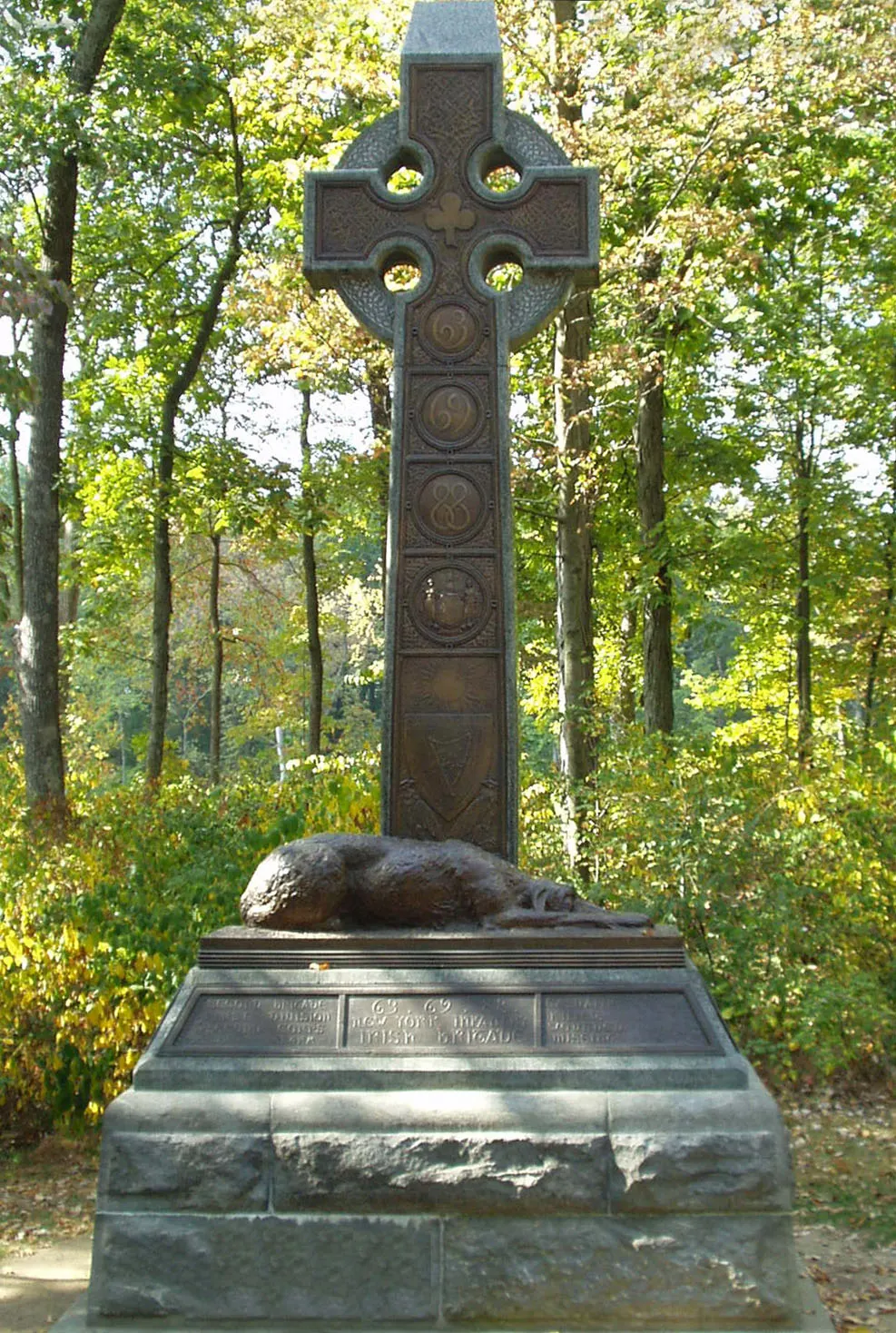
In 1995 the National Park Service approved what it said would be the last monument at Antietam, honouring the Irish Brigade’s charge at Bloody Lane.
As printed in the Celtic Mirror, August 1995
WASHINGTON - Final approval has been given for the construction of a monument to the soldiers who fought in the Irish Brigade during the Civil War.
The monument will be placed at Antietam National Battlefield near Sharpsburg, Md.
“Americans of Irish heritage are delighted,” said Jack O’Brien of the Irish Cultural Society Foundation.
“After a 133-year lapse in historical memory, the accomplishments of the Irish Brigade at Antietam will forever be recognized,” he said.
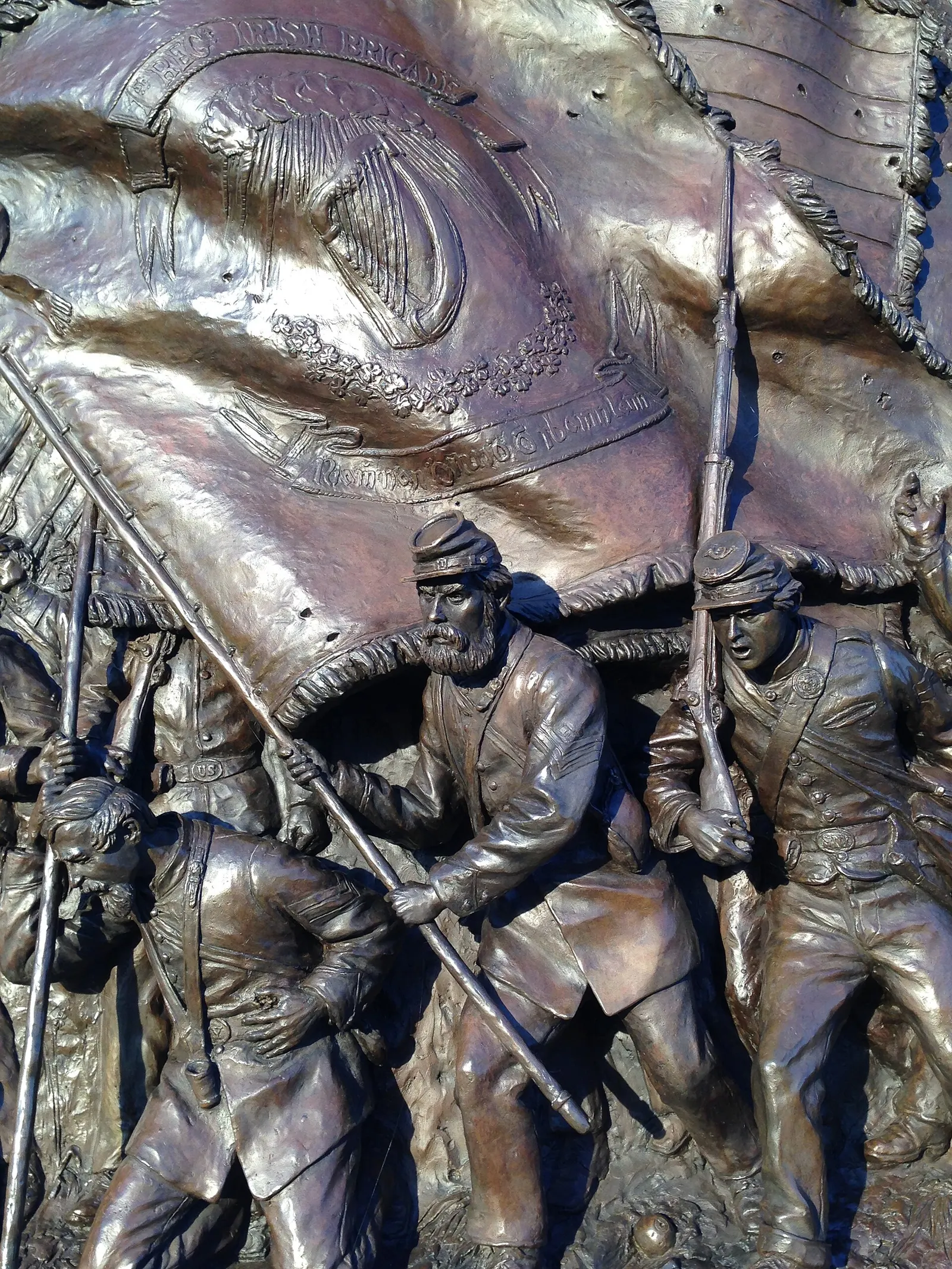
Two bronze sculptures will be embedded in a piece of Irish granite.
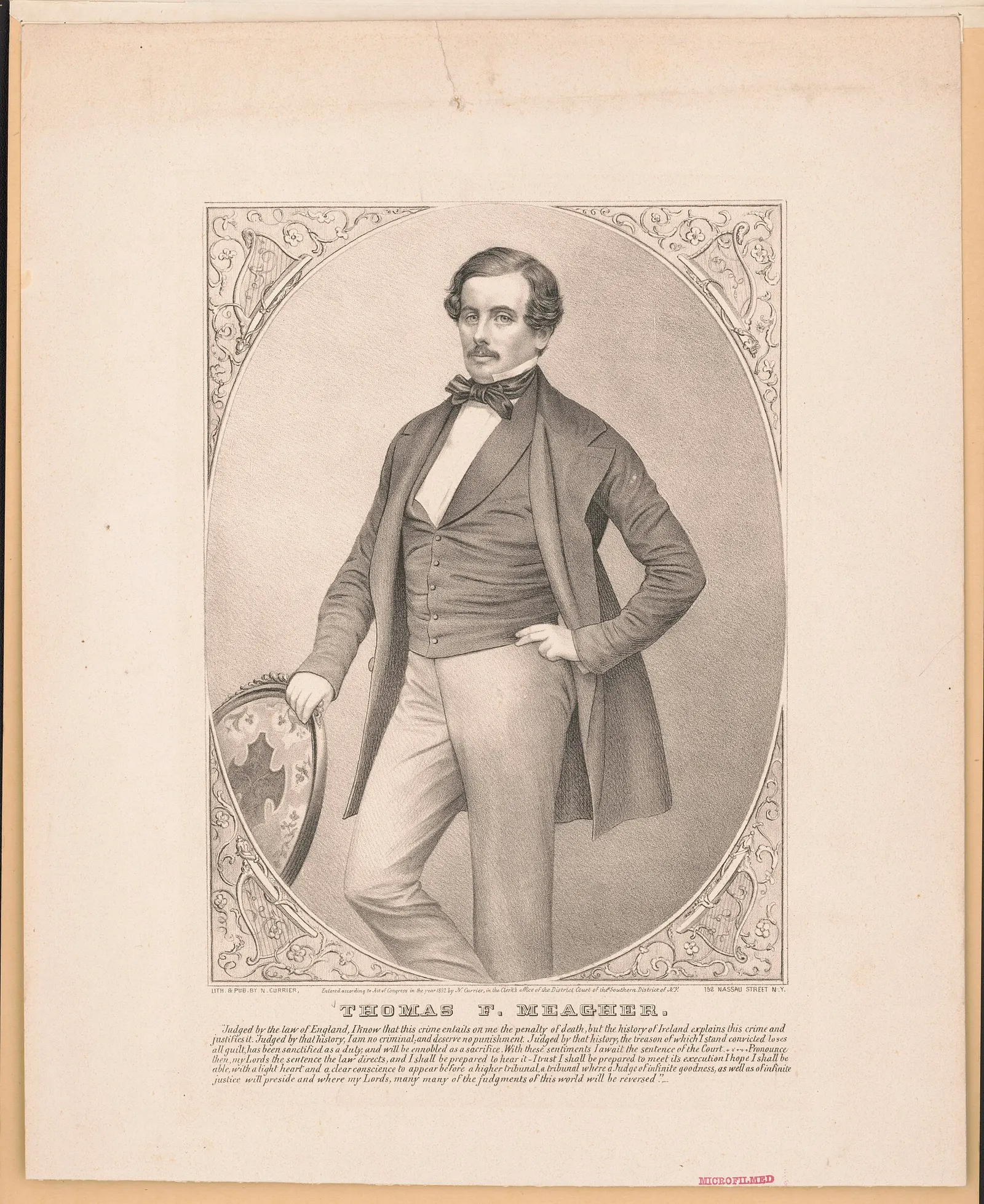
The front will depict a battle scene. The reverse will be a bust of the brigade’s commander, Thomas Francis Meagher.
Designed by Codori Memorials of Gettysburg, Pa., the monument will be 10 feet high, about 6-1/2 feet wide and a depth of 4 feet.
The sculptor, Ron Tunison, is creating the two brass reliefs.
Honoring the soldiers who fought and died in the battle of Antietam Creek, this will be the last monument permitted to be erected on this historic Civil War battlefield, according to the park service.
Known as the “Forgotten Monument,” it will stand next to the observation tower at “Bloody Lane,” where more than 500 Irishmen from the Brigade were killed or wounded in the bloodiest one-day battle of the Civil War.
“The bravery of other brigades are honored by handsome monuments at Antietam, but the tribute to the Irish Brigade was ignored until now,” O’Brien said.
O’Brien said estimates on the cost of the monument are $150,000.
Donations are currently being sought from individuals and corporations.
“People are spreading the word to help us raise funds to make the forgotten monument to the famous Irish Brigade a permanent reality and a tribute to our forefathers,” O’Brien said.
A nation wide fund-raising effort has been announced.
The Irish Brigade was made up of mostly native and first generation Irishmen, it was organized in New York City by Thomas Francis Meagher.
Jesuit educated, he was banished in 1849 to Tasmania by British authorities for his activities in the Irish independence movement.
After the Civil War, Meagher was appointed territorial Secretary of Montana. When he died in 1867, Meagher was acting governor of the territory.
The Battle of Antietam was fought on Sept. 17, 1862 in and around Sharpsburg, Md.
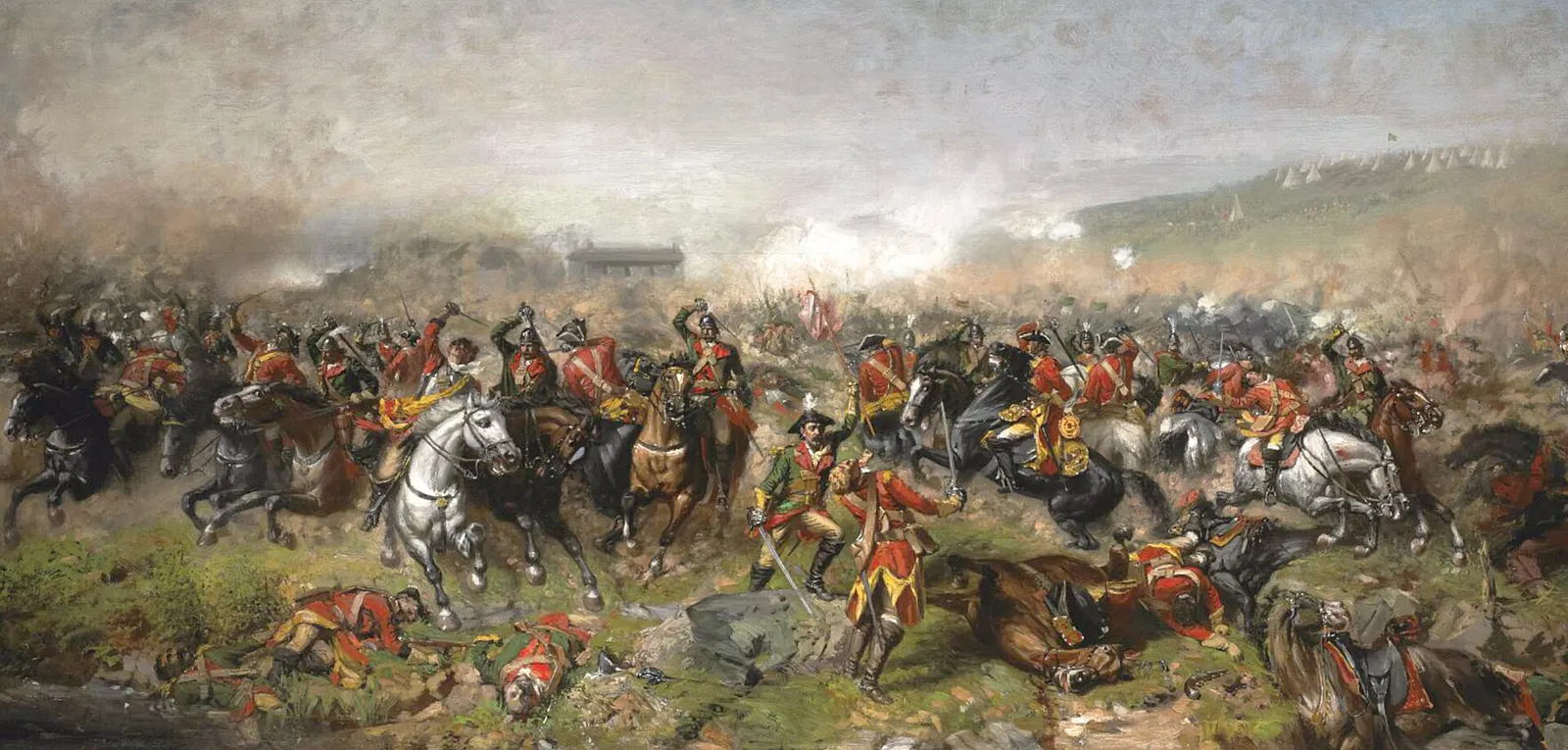
The Irish Brigade was sent against Anderson’s North Carolina Brigade, which fell back to its well defended, entrenched position in a sunken road, now known as “Bloody Lane.”
The Irish Brigade marched in precision through a cornfield to the edge of the sunken road.
From their concealed position, the Confederates fired their weapons into the advancing columns.
The Brigade’s green flags were riddled with shot. Eight color bearers of the 69th alone were killed or wounded as one after the other raised the green banner again.
In the heat and passion of the deadly struggle, a knock-down, drag-out, fire-fight developed which resulted in heavy losses among the members of the attacking Irish Brigade and the defending North Carolinians.
For more than three hours, the battle raged until the Union soldiers were able to push the Confederates from “Bloody Lane.”
“A terrible price was paid by the Irish Brigade for its assault on the Confederates that day,” O’Brien said.
Two regiments of the brigade suffered casualties of more than 50 percent.
The Battle of Antietam was one of the most decisive battles of the Civil War, ending General Lee’s first invasion of the North.
It is also known as the bloodiest day of the war because more than 22,000 men were killed and wounded - more than on any other single day of the entire Civil War.
The losses of the Irish Brigade were higher than any other brigade.
The Union victory at Antietam enabled Lincoln to issue the Emancipation Proclamation to free the slaves. It also prevented European powers from recognizing and supporting the Confederacy.
The monument went up
The money was raised. The Irish Brigade monument was dedicated at Antietam on October 25, 1997, a little over two years after this report, and it stands where the park service said it would: at the base of the observation tower at the end of Bloody Lane. Contemporary accounts put the crowd at the unveiling at close to 1,000 people. Ron Tunison’s two bronze reliefs are on it as described here, the charge on the front and Meagher on the back.
The park service’s own figures for the brigade at Antietam are blunt: 540 casualties, made up of 113 killed, 422 wounded and five missing. The monument text adds that the brigade lost over 4,000 men across the whole war. On the Confederate side, nearly 2,000 men were killed or wounded along the sunken road.
Meagher has collected more stone and bronze since 1995. A statue honouring him went up in 2004 in Waterford, his home city, near his childhood house on The Mall. A memorial with his bust was dedicated in 2009 on the bank of the Missouri River at Fort Benton, Montana, close to where he went overboard from the steamboat G. A. Thompson on the evening of July 1, 1867. His body was never found, and the circumstances are still argued over. The older equestrian statue in front of the Montana State Capitol in Helena dates from 1905.
The battlefield itself has grown. The American Battlefield Trust and its partners had preserved 468 acres of the wider battlefield by mid-2023, including a 44.4-acre tract between Miller’s Cornfield and the Dunker Church. And every first Saturday in December since 1989, volunteers set out about 23,000 candles on the field, one for each soldier killed, wounded or missing on September 17, 1862.
Questions readers ask
Where is the Irish Brigade monument at Antietam?
The Irish Brigade monument stands at the base of the observation tower at the end of the Sunken Road, better known as Bloody Lane, in Antietam National Battlefield near Sharpsburg, Maryland. It was dedicated on October 25, 1997. A bronze relief of the brigade’s charge is on the front and a portrait of its commander, Thomas Francis Meagher, is on the back.
How many men did the Irish Brigade lose at Antietam?
According to the National Park Service, the Irish Brigade lost 540 men at Antietam on September 17, 1862: 113 killed, 422 wounded and five missing. Most fell attacking the Confederate line in the sunken road. Eight colour bearers of the 69th New York alone were shot down, and two of the brigade’s regiments lost more than half their men.
What happened to Thomas Francis Meagher?
After the Civil War Meagher became Secretary of Montana Territory and served as acting governor. On July 1, 1867, he fell from the steamboat G. A. Thompson into the Missouri River at Fort Benton, Montana, and drowned. His body was never recovered, and theories of murder have circulated ever since. Statues of him stand in Helena, Montana, and in Waterford, Ireland.
Which regiments made up the Irish Brigade?
The Irish Brigade was authorised in September 1861 and first consisted of the 63rd, 69th and 88th New York Infantry, all largely Irish. They were soon joined by the 29th Massachusetts, a mostly Yankee regiment that never felt at home in the brigade. Meagher armed his New York companies with smoothbore muskets firing buck and ball for close-range fighting.