Making the Book of Kells: Symbolism tells the stories
Peacocks, beard-pulling men and rats fighting over the Eucharist: how the Kells monks turned the everyday animals and quarrels of their world into gospel lessons.
As printed in the Celtic Mirror, September 1995
Like artists before and after them, the monks who made the Book of Kells used their own experiences and surroundings to create their art.
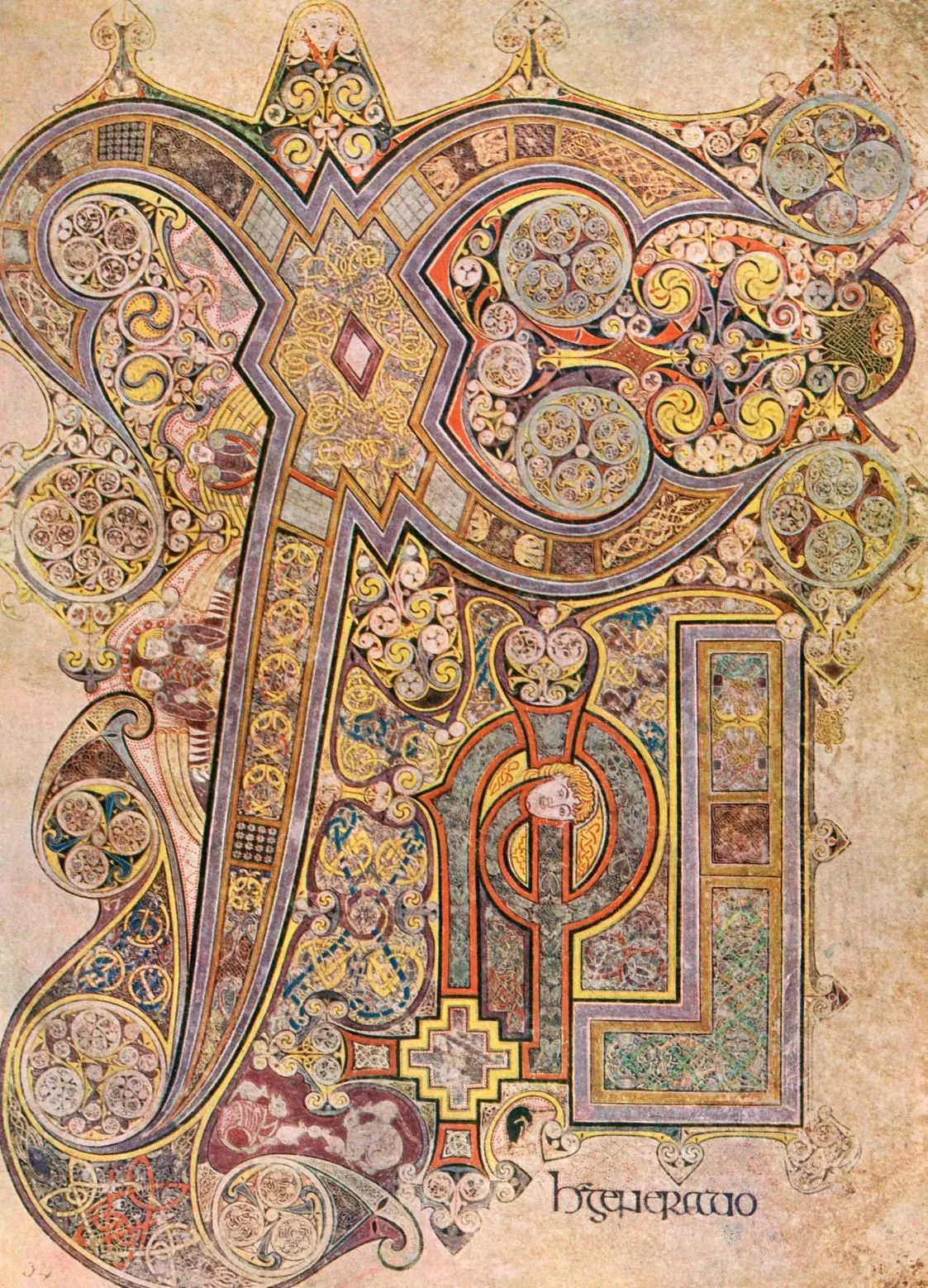
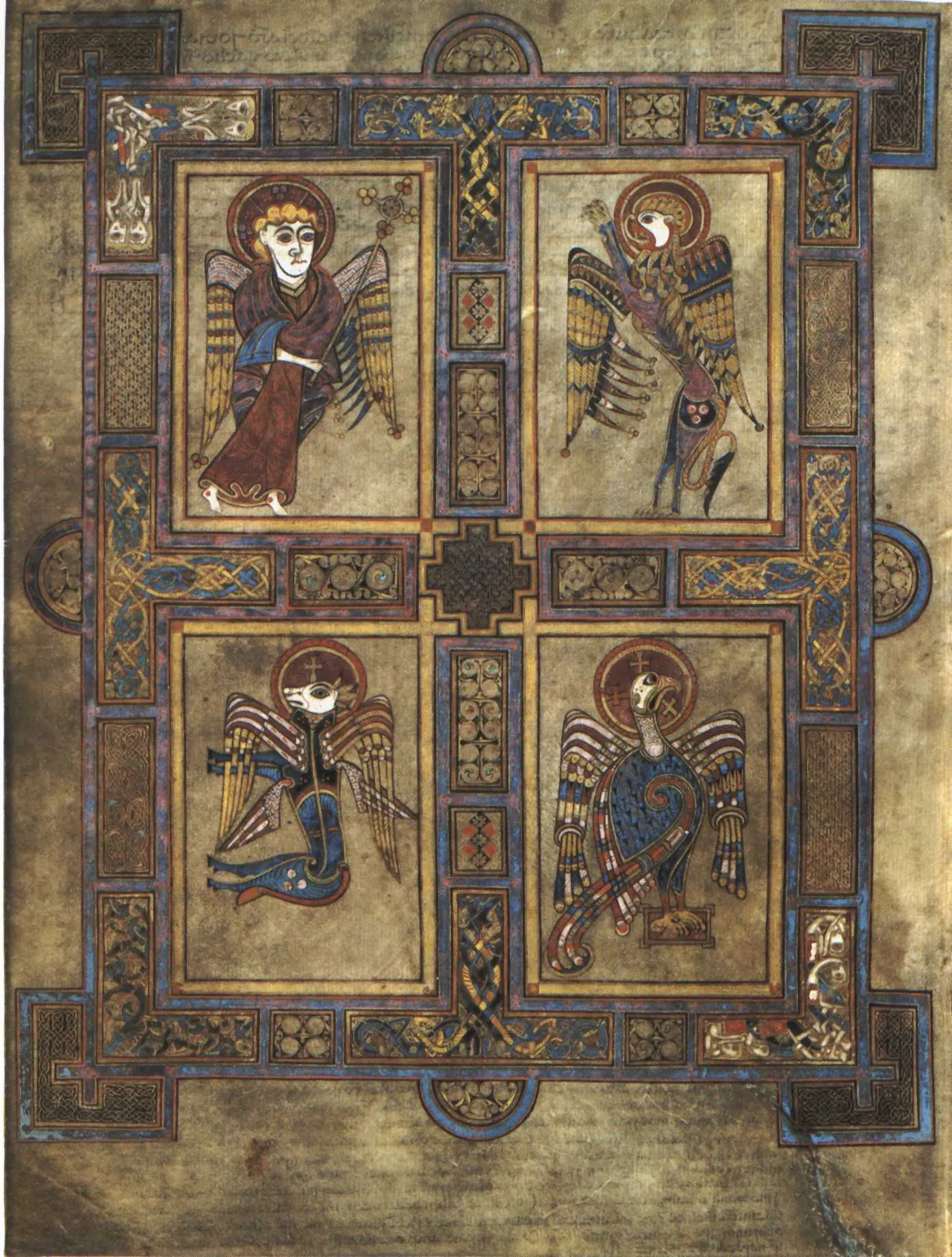
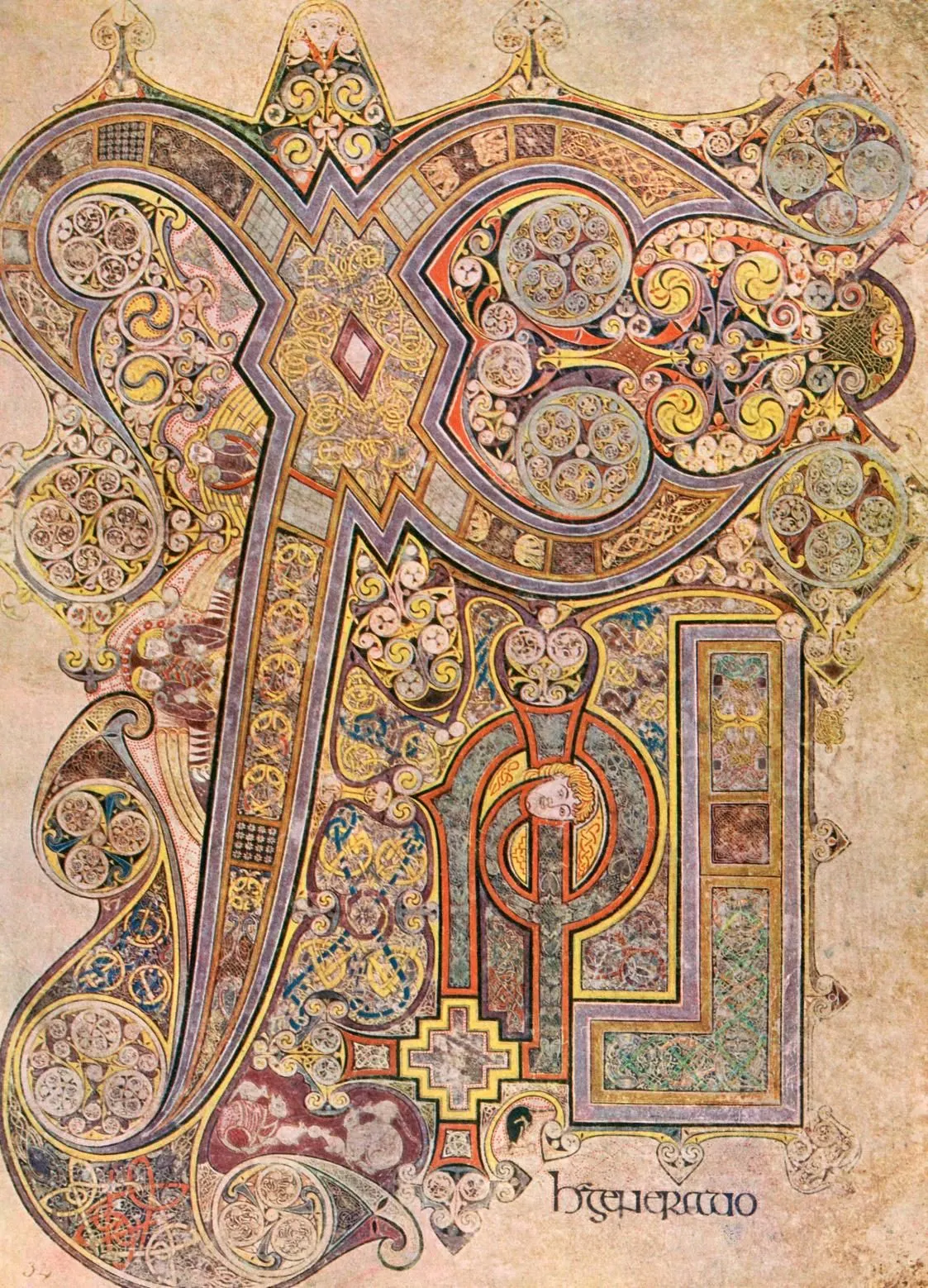
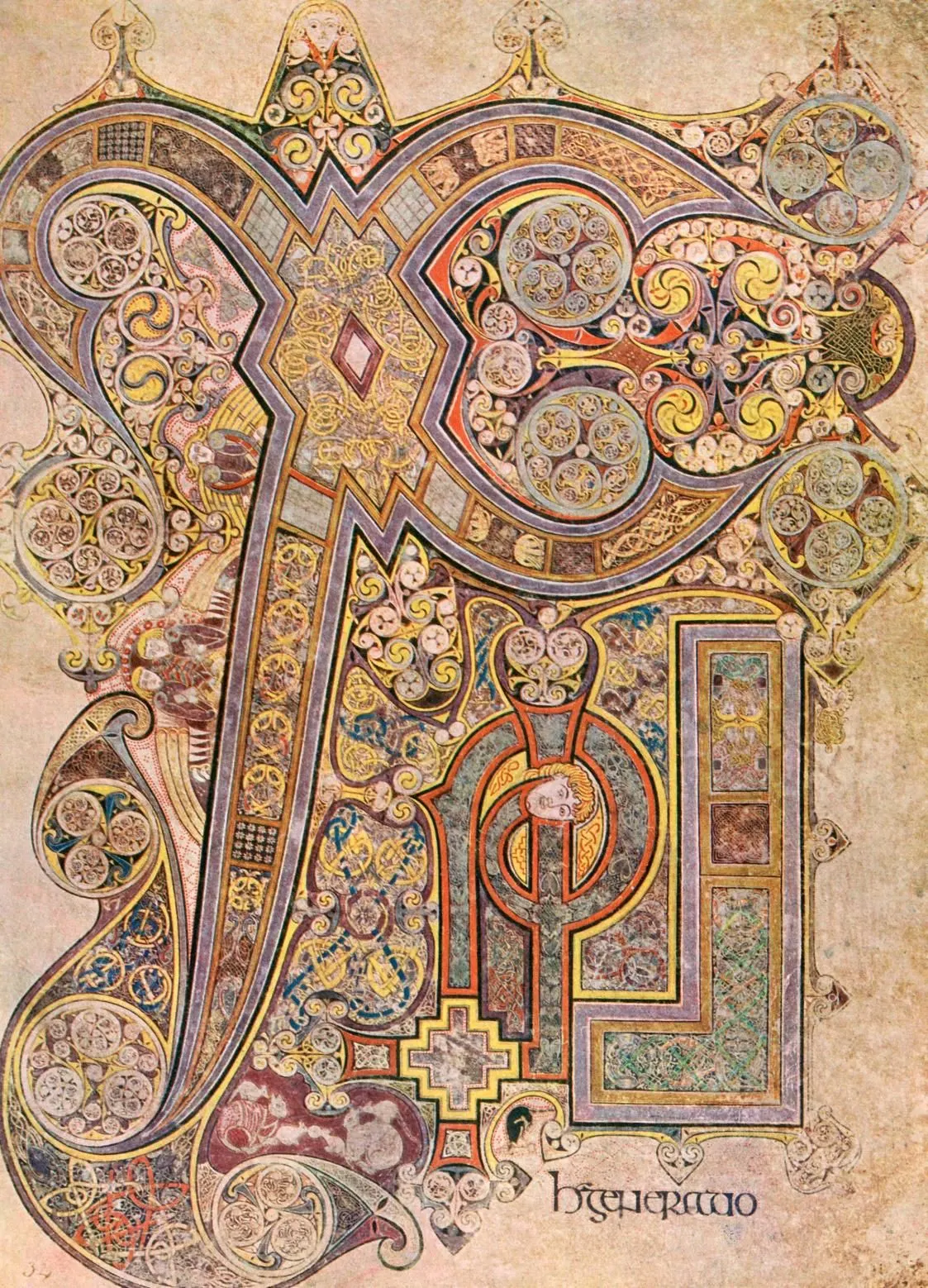
The Book of Kells, an illuminated (spiritually enlightening) manuscript written about 800 A.D. by Christian monks, is a celebrated treasure of medieval Celtic art that contains picture stories of the four gospels, handwritten in Latin.
Its creators took an artist's tool called symbolism and used it with common things of 1,200 years ago to tell the story of Christ's birth and to preach to the peasantry the laws and teachings of the Lord.
It is the quality of the art for which the book is still studied.
Louis Porretta, whose Cork-based company and Trinity College in Dublin have produced limited edition prints of three of the manuscript's famous paintings, said: "(The monks) were applying things that were common in their lives to make stories. It's kind of a holistic thing that ties in all of the surroundings with the lessons they learned. They took lessons from nature."
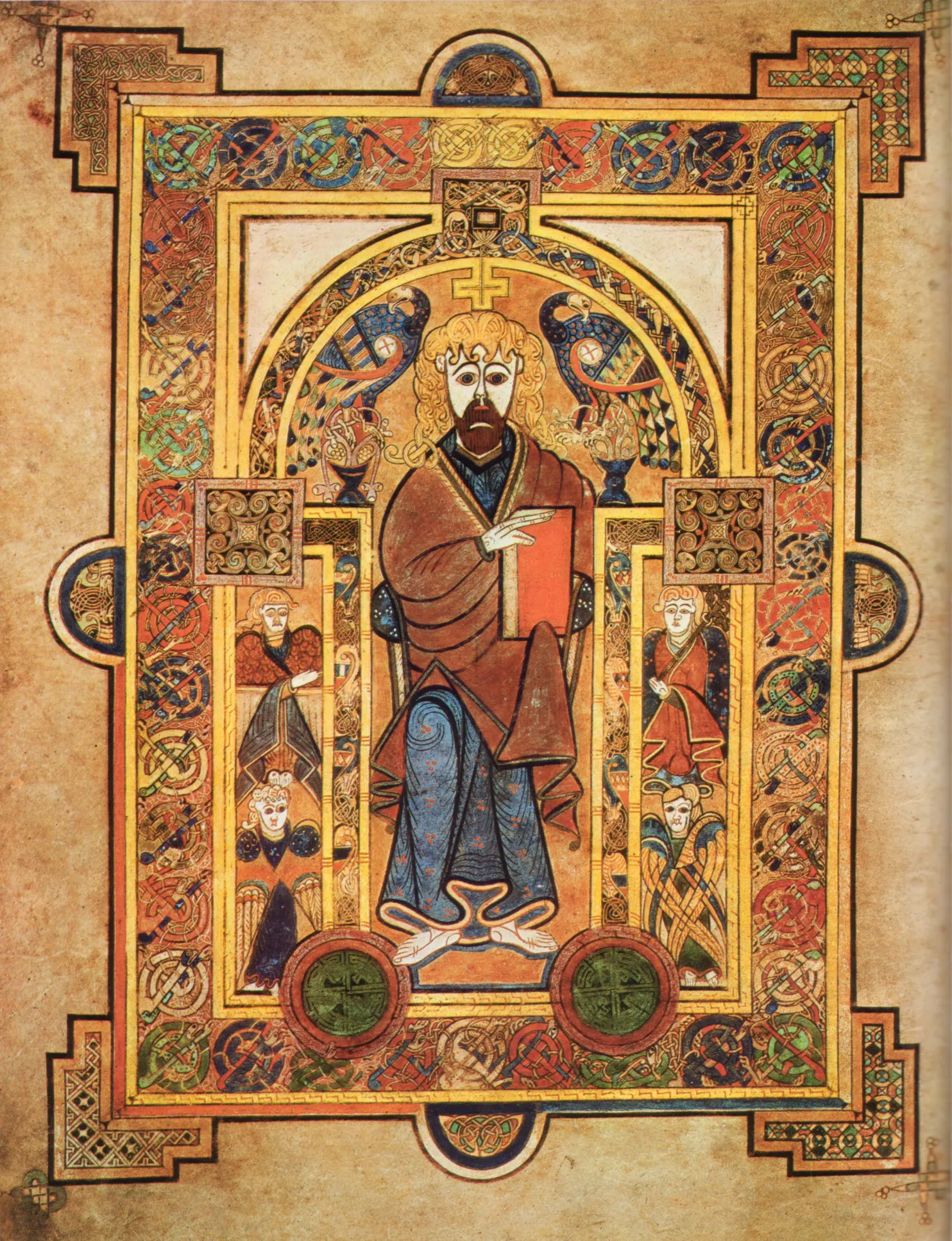
For example, the monks drew into the picture stories about the peacock, which in medieval times was a symbol of the immortality of Christ because it was believed that when peacocks died, their flesh did not decay.
"And, you have the typical Celtic intertwined bodies with two men pulling each other's beards," Porretta said.
"They conjecture the reason behind that idea is that Christ said you can't be a slave to two masters. You can't mix religion and business or else you'll embarrass yourself and you'll wind up getting nowhere," Porretta said.
Another of the illuminated pages portrays two rats struggling over the Eucharist. Behind each rat is a cat looking on.
"That would be something that at the time, people would be trying to keep the unleavened bread away from the rats," Porretta said. "You get the idea there that perhaps the cats are chasing the rats and protecting the Eucharist."
Reading this in 2026
Christine Goldbeck's piece ran in our September 1995 issue as a short appreciation, and it holds up. The peacocks she mentions are still the easiest way into the book. On folio 32v, the full-page image of Christ enthroned, a pair of peacocks flank the figure. The belief she reports was an old one: Augustine and Isidore of Seville both held that peacock flesh did not putrefy, which made the bird a ready emblem of the Resurrection.
What has shifted since 1995 is mostly the history around the pages. The old tradition that Saint Columba made the book himself has been set aside on grounds of handwriting and style. The dating most scholars accept is around 800, and the theory with the widest support is that the work began in the scriptorium on Iona and was finished at Kells, in County Meath, where a new abbey was built between 807 and 814.
The book's later life reads like a thriller. The Annals of Ulster record that in 1007 the great gospel of Colum Cille was stolen from the church at Kells. It turned up a few months later, stripped of its gold and jewelled cover, hidden under a sod. In 1654, with Cromwell's cavalry quartered in the town, it was sent to Dublin for safety. The churchman Henry Jones presented it to Trinity College in 1661. It has stayed there since, apart from short loans abroad.
Those loans are rare and nervous affairs. When the Gospel of Mark volume travelled to Canberra in 2000, only the fourth time the manuscript had left Ireland, it came home with minor damage to its pigments. Nobody at Trinity is in a hurry to repeat that.
The physical object has also changed shape. Today it has 340 leaves, or 680 pages; scholars think around 370 were made. An 1895 binding failed quickly, and in 1953 the bookbinder Roger Powell rebound the whole thing in four volumes. That split is why a visitor at Trinity sees only one volume open at a time, with the displayed pages changed on a rolling cycle.
In 2011 UNESCO added the manuscript to its Memory of the World register. Trinity has since put full digital images online through its Digital Collections portal, so the beard-pullers, the cats and the rest of the menagerie can be studied at screen resolution from Anchorage as easily as from College Green. Porretta's limited-edition prints, which the story mentions, we could not trace further, and we have left them as the 1995 piece described them.
Porretta's reading of the cats and rats is a sensible one: a community worried about vermin and the consecrated bread, putting that worry into the margins of scripture. Twelve hundred years later, the little scene still makes people smile at the glass case.
Questions readers ask
Where is the Book of Kells kept today?
The manuscript is at Trinity College Dublin, which received it in 1661 from the churchman Henry Jones. It had been sent to Dublin for safekeeping in 1654 when Cromwell's cavalry was quartered at Kells. Since Roger Powell rebound it in four volumes in 1953, one volume is on display at a time and the open pages are changed periodically.
How old is the Book of Kells and who made it?
Scholars date it to around 800 AD. It was made by monks of the Columban order, most likely begun at the monastery on Iona off the Scottish coast and completed at Kells in County Meath, where a new abbey was built between 807 and 814. The legend that Saint Columba wrote it himself was discredited on palaeographic and stylistic grounds.
Why are there peacocks in the Book of Kells?
Peacocks stand for Christ and the Resurrection. Early Christian writers, including Augustine and Isidore of Seville, believed peacock flesh did not decay after death, so the bird became a symbol of incorruptibility. In the Book of Kells, a pair of peacocks flank Christ enthroned on folio 32v, one of the manuscript's full-page images.
Was the Book of Kells ever stolen?
It was stolen in 1007, according to the Annals of Ulster, which describe the theft of the great gospel of Colum Cille from the church at Kells. The book was found a few months later hidden under a sod, but its gold and jewelled cover was gone and never recovered.
Can you see the Book of Kells online?
Trinity College Dublin publishes full-page digital images through its Digital Collections portal, based on the photography made for the Faksimile-Verlag facsimile. An earlier DVD-ROM edition that Trinity produced in 2006 has since been discontinued. UNESCO added the manuscript to its Memory of the World International Register in 2011.