Limited edition: Book of Kells prints to be released
In 1995 Trinity College Dublin licensed a numbered set of silk-screen prints from three of the Book of Kells’ most famous pages, at $6,250 a set.
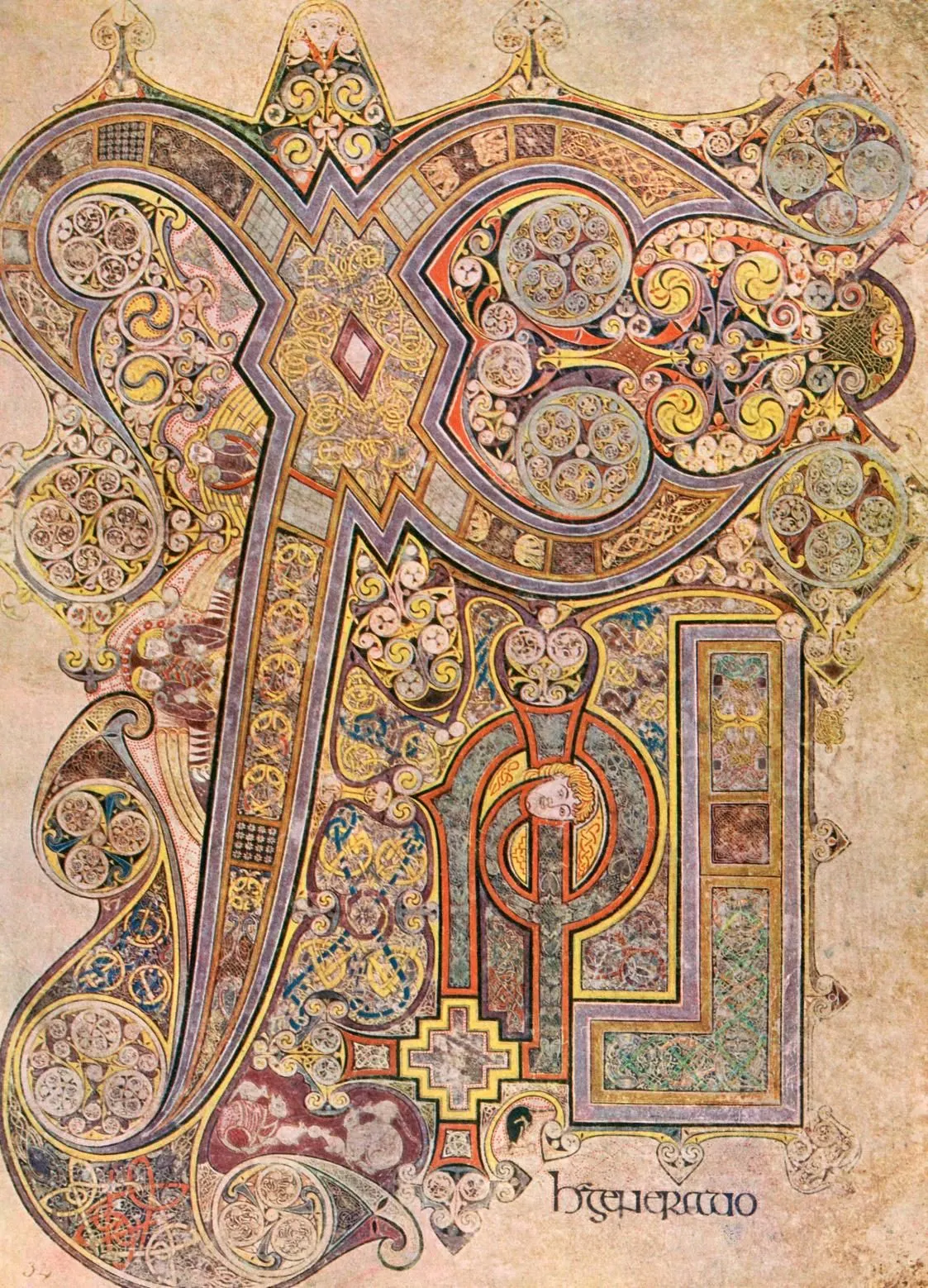
As printed in the Celtic Mirror, August 1995
Rarely does one have an opportunity to own an important piece of history.
Recognizing this fact, Ireland’s Trinity College has made available one of the most exclusive collections of art prints ever - The Book of Kells Collection.
Responding to a multitude of requests from international art collectors and investors for prints created from the lavish illustrations in the most famous of all medieval books, the Dublin-based institution, in whose care The Book of Kells has been for more than 300 years, has finalized an agreement with Heritage Resources Corp.
For the first time, the college’s directors have agreed to allow a strictly limited number of investment-quality prints to be made from the manuscript’s decorated pages.
The Book of Kells is the world’s most important decorated manuscript. It has been in the library of Trinity College for about 335 years. While no one is certain who created it, it was probably begun by monks on the island monastery of Iona and completed at the Irish monastery of Kells some time between the mid-8th and the early 9th century.
Essentially, it is a book of the four gospels with related commentary, charts and magnificently intricate full-page drawings in impossibly rich colors.
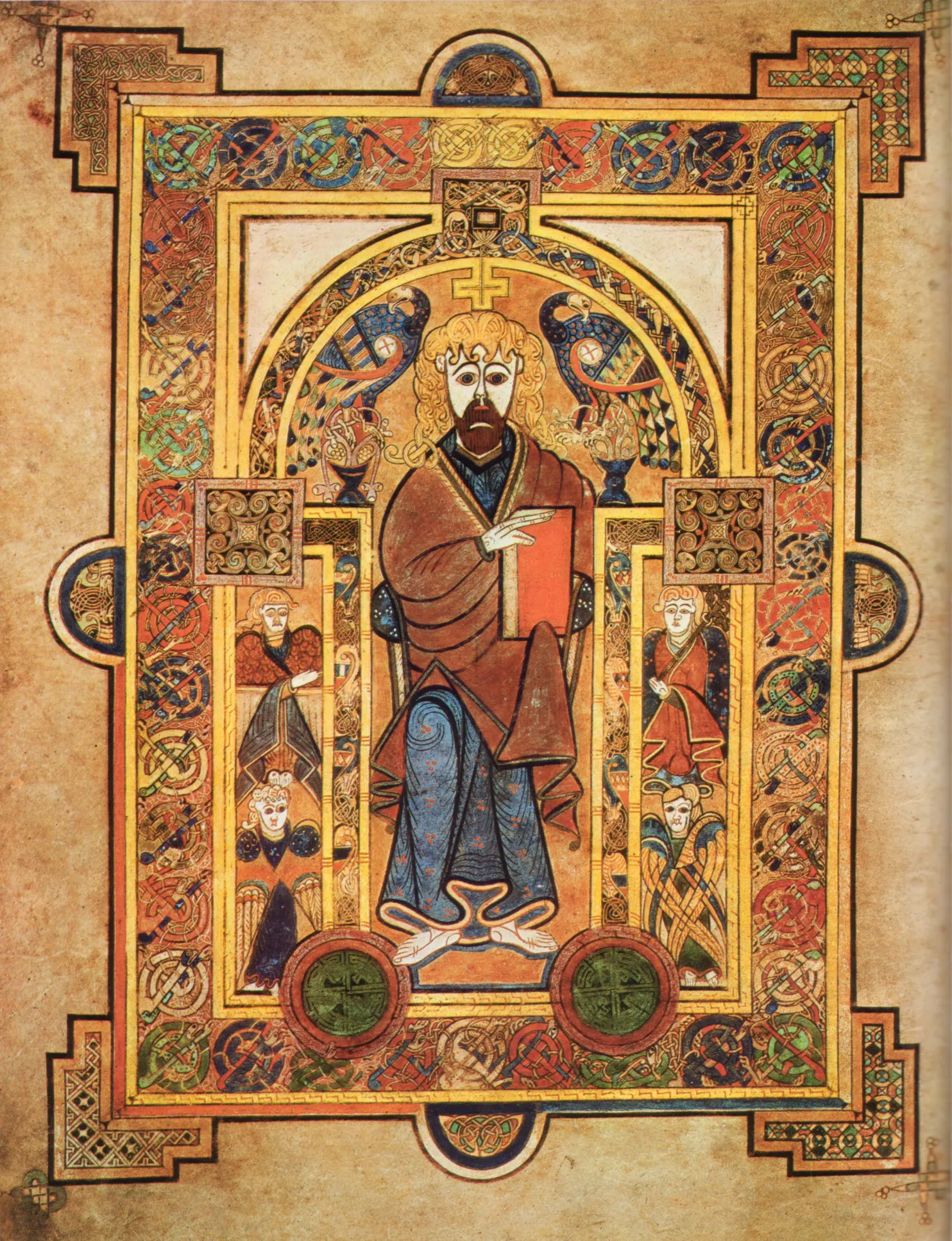
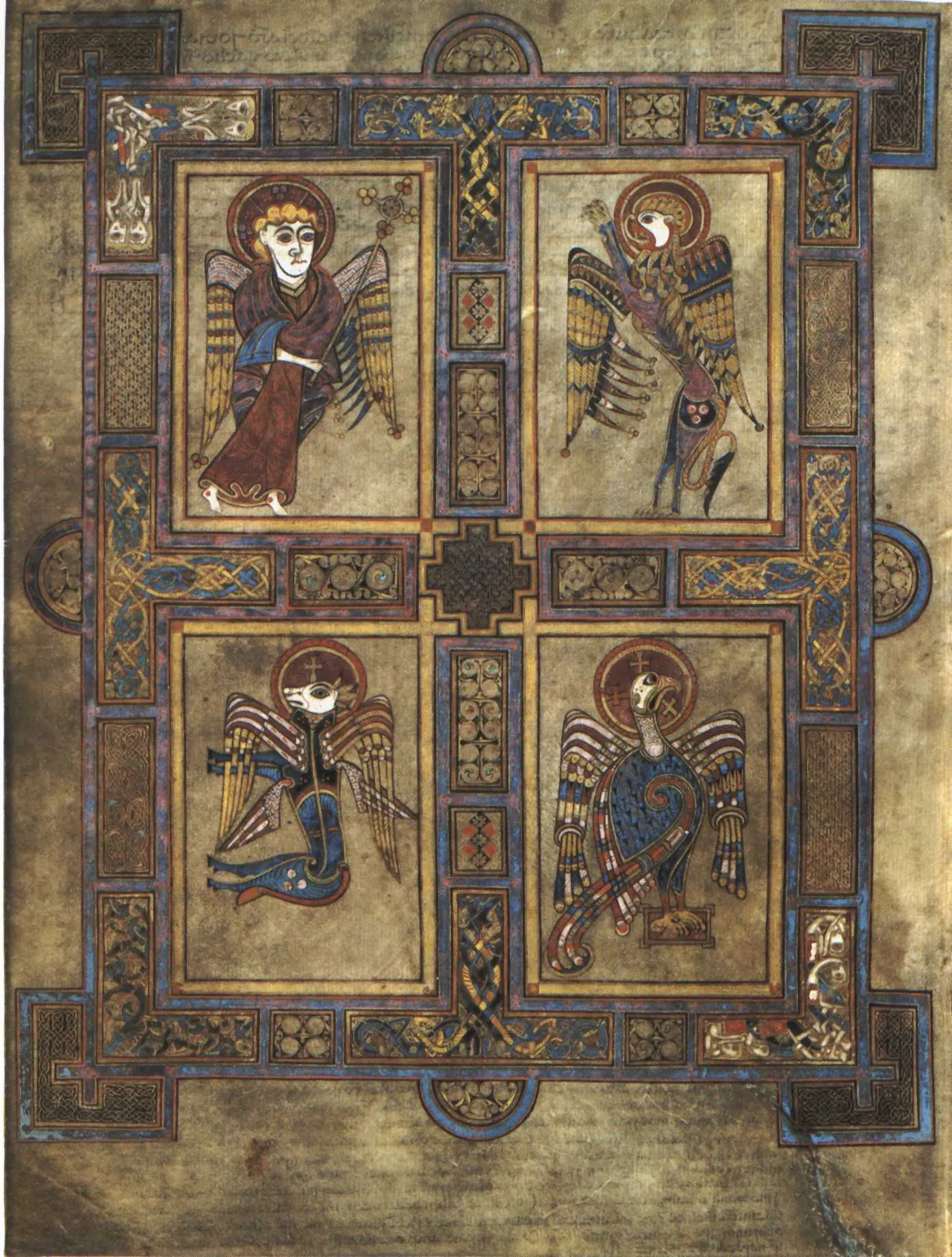
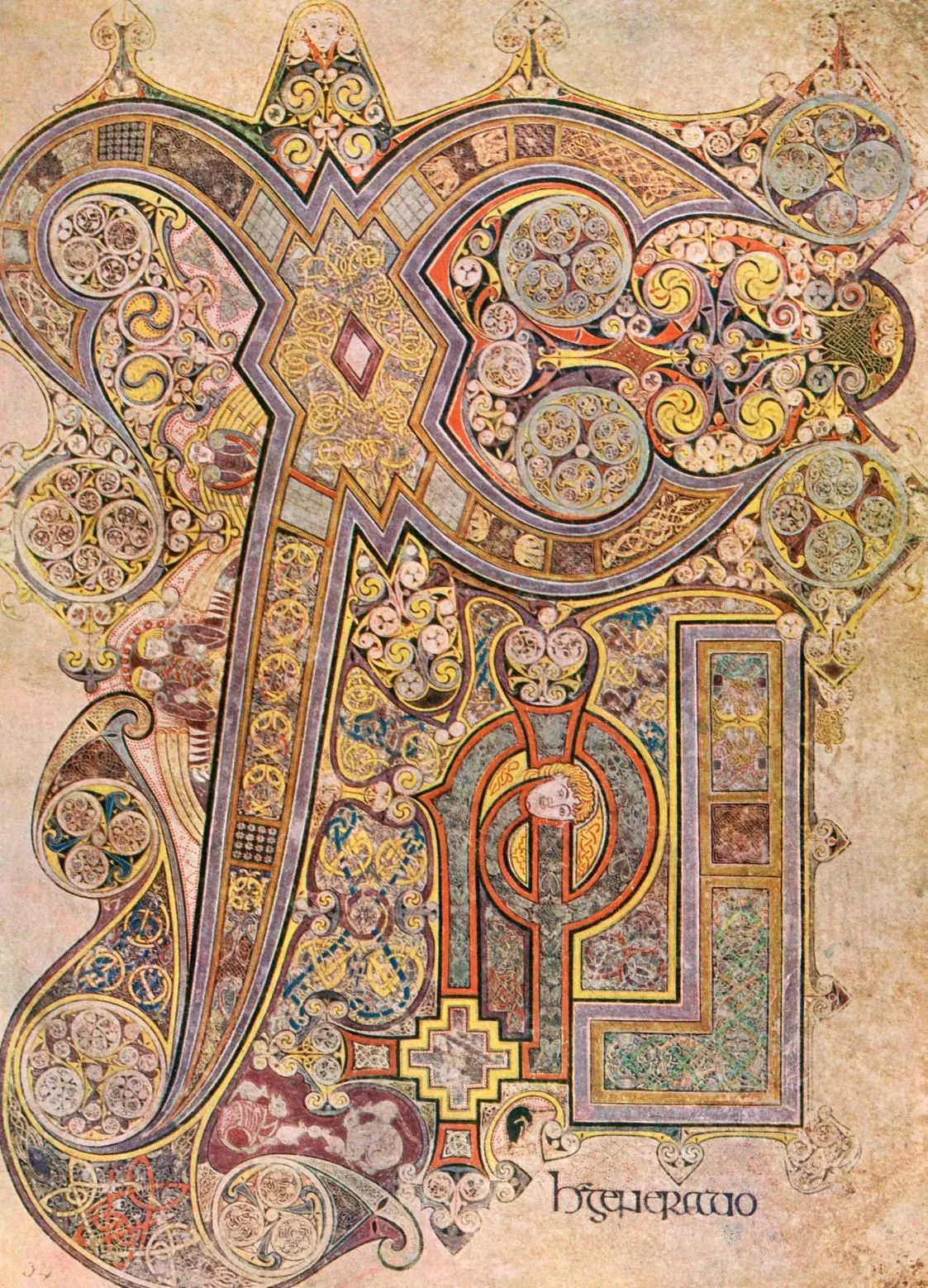
For the collection, Trinity and HRC selected three of the book’s most visually appealing art pages - Portrait of St. John with the Tools of a Scribe, the Chi-Rho page (one of the most celebrated images in the world of art) and Symbols of the Four Evangelists - to create a set of hand-made photographic serigraph silk-screen prints.
The resulting museum-quality prints, each measuring 14" x 18" are rendered in 30 colors on conservation rag mould paper. Each set of three will be shipped numbered, matted, and framed and will be accompanied by an inscribed brass plate, a specially-crated, limited-edition book on The Book of Kells, and a matching-numbered Certificate of Authenticity. In addition, each owner will be invited into membership of the friends of Trinity College Library free of charge for 10 years.
Owning The Book of Kells Collection provides a once-in-a-lifetime opportunity to study these masterpieces. To see the book in person, one must travel to Ireland’s Trinity College, then stand in a long line for a brief glimpse of just two facing pages of the dimly-lit manuscript. Even then, the pages viewed depend on luck, as only one page is turned per day.
The price of all three prints in The Book of Kells Collection, worldwide, is $6,250 plus $195 for shipping, handling and insurance.
The college’s share of the revenue from the worldwide sale of prints in the collection will be used, in part, to refurbish the Trinity College Library.
For more information about this collection, or to place an order, interested parties in the United States and Canada may call 1-800-550-6715.
The manuscript since
A note first: the 1995 offer and its phone number belong to the archive. We could not trace what became of the Heritage Resources sets, so we will not guess.
The manuscript itself has done well. It was presented to Trinity by Henry Jones, Bishop of Clogher, in 1661, after being sent to Dublin for safekeeping in 1654 when Cromwell’s cavalry were quartered at Kells. Its 340 surviving leaves have been bound in four volumes since 1953, when the bookbinder Roger Powell rebound it. One volume is on show in the Old Library at any time, open at two pages.
The line for that glimpse has not shortened, but the viewing has changed. A new display case installed in 2020 made it possible to show every page, including some that had not been seen in public for decades. You no longer need luck, or a plane ticket, to study the Chi-Rho page either: Trinity has put the entire manuscript, catalogued as TCD MS 58, online through its Digital Collections portal.
In 2011 UNESCO added the Book of Kells to its Memory of the World register. Travel remains rare and risky. When the volume containing Mark’s gospel went to Canberra for an exhibition in 2000, only the fourth time the book had gone abroad, it suffered minor pigment damage, thought to have been caused by engine vibration on the long flight.
The refurbishment the print money was meant to help has grown far beyond anything imagined in 1995. Since 2022 the Long Room, the 65-metre hall above the book, has been under a €90 million restoration with €25 million in government funding. The work centres on fire protection and environmental control, a priority that sharpened after the fire at Notre-Dame de Paris in 2019.
Questions readers ask
Can you see every page of the Book of Kells?
Only two pages of one volume are on display in the Old Library at Trinity College Dublin at any one time. A new display case installed in 2020 allowed all pages to be shown in rotation, including some unseen in public for decades. The complete manuscript, catalogued as TCD MS 58, can be viewed page by page online through Trinity College’s Digital Collections portal.
What is the Chi-Rho page in the Book of Kells?
The Chi-Rho page, folio 34r, marks Matthew 1:18, where the gospel’s narrative of Christ’s life begins. It is built on the Greek letters chi and rho, the medieval abbreviation for Christ. It is the most celebrated of the 33 pages in the manuscript that are dominated by decoration, and in 1995 it was one of three pages Trinity chose for its limited-edition silk-screen print set.
Where was the Book of Kells made?
Nobody knows for certain. Scholars weigh at least four theories: that it was begun on Iona and finished at Kells in County Meath, made entirely on Iona, made entirely at Kells, or produced at Dunkeld in Scotland. Most dates fall around 800. The earliest historical reference, in the Annals of Ulster for 1007, records its theft from the church at Kells.
How long has Trinity College Dublin had the Book of Kells?
Trinity College has held the Book of Kells since 1661, when Henry Jones, Bishop of Clogher and Vice-Chancellor of the University of Dublin, presented it. The manuscript had been sent to Dublin in 1654 for safekeeping after Cromwell’s cavalry were quartered in the church at Kells. It has been on public display in the Old Library since the nineteenth century.