Conservative Democrats will make the difference in presidential bid
In the summer of 1995 Pat Buchanan worked Pennsylvania's Reagan Democrats, sure they could carry him past Bob Dole and then Bill Clinton.
As printed in the Celtic Mirror, August 1995
Patrick Buchanan, the fiery TV conservative commentator and Republican presidential candidate, says there's one good reason the GOP should nominate him next year: He can beat Democratic President Bill Clinton.
If nominated, Buchanan believes that he can draw enough conservative Democrats away from Clinton to defeat the incumbent president. And it's those conservative Democrats that Buchanan has been gunning for during recent swings through the Keystone State.
“Pennsylvania is good conservative Democrat country, good Reagan Democrats,” said Buchanan, who has visited Philadelphia, Lebanon, Millersville, Harrisburg and York during recent campaign stops to the Keystone State.
Conservative Pennsylvanians seem to appreciate Buchanan's “this-is-how-it-is” approach to political, and sometimes complex, issues.
“He is clear where he stands. There is no gray area,” said Randy Hoffman of Lebanon County, who sponsored a fund-raiser for Buchanan. “He sings from the same hymn book every week.”
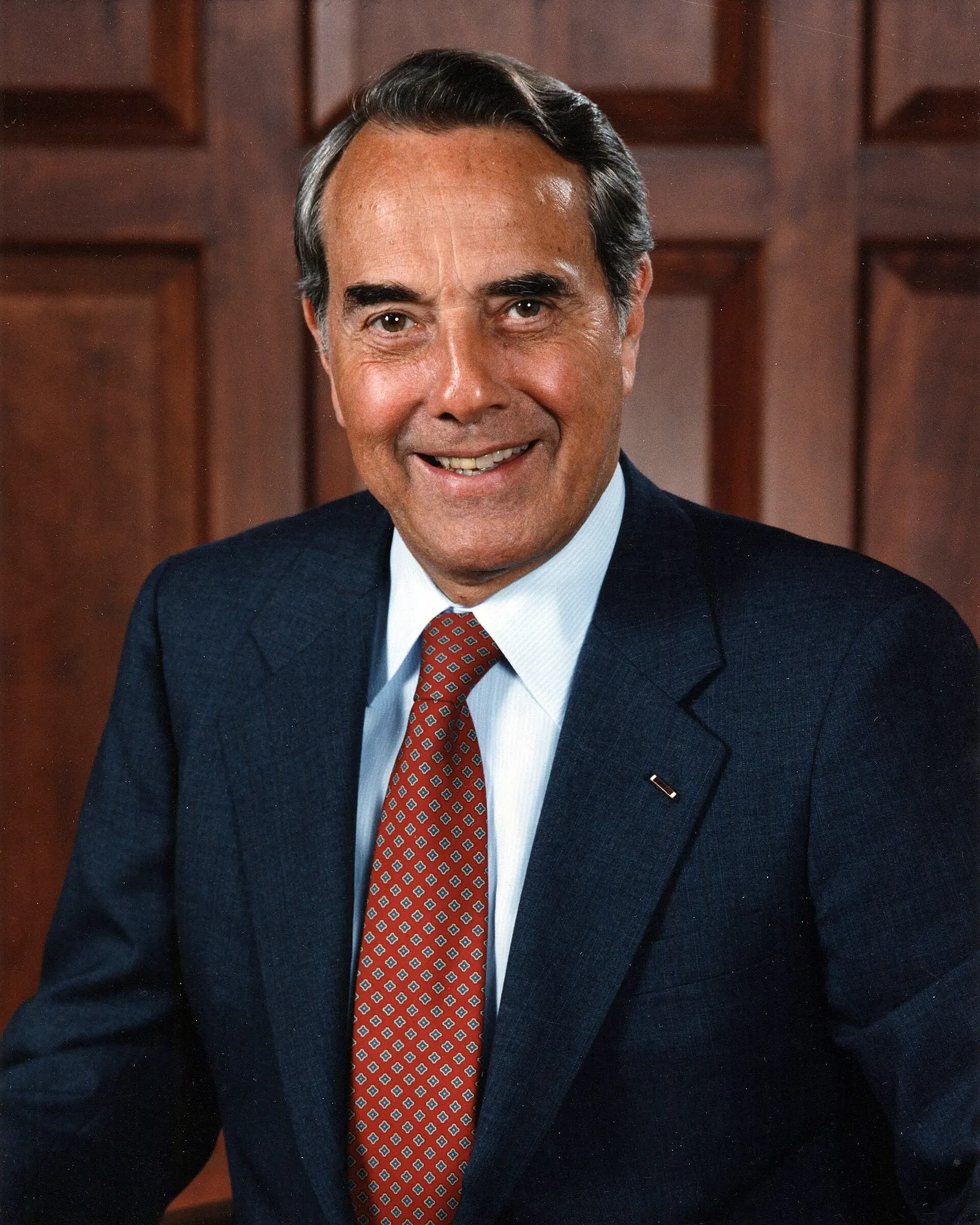
There is a major hurdle in Buchanan's path to the White House: U.S. Senator Bob Dole of Kansas.
Early polls have identified the Senate Majority Leader as indisputably the Republican front-runner.
Buchanan's strategy seems to be to claw his way into the second slot. He has challenged Senator Phil Gramm of Texas, who is considered Dole's chief rival, to a head-to-head live television debate.
“We ought to debate two things: Who is the authentic conservative in this race,” Buchanan said, “And who has the better chance, among the two of us, of not only beating Bob Dole but Bill Clinton.”
Buchanan, a Roman Catholic with Irish roots, grew up in the 1940s and 1950s in a blue-collar neighborhood in Washington, D.C. One of nine children, Buchanan went to parochial schools and Jesuit high school and college.
That conservative beginning shaped the politician of today, he said.
“We grew up the way millions of others grew up in that era. And a lot of folks in Philadelphia grew up that way, and in Pennsylvania,” he said.
In the Republican primary, Buchanan is targeting GOP voters in three separate camps: right-to-life voters, second-amendment supporters and those who voted for Ross Perot in 1992.
He believes he can build a base of voters among those groups, even though they seem diverse.
He even said he could attract some pro-choice voters.
“I think our party is basically a Ronald Reagan, right-to-life party that has in it individuals that don't agree with that position,” Buchanan said. “You say, ‘this is what we believe and stand for. If you don't believe in us 100 percent, come on and help us out and we'll beat Bill Clinton.’”
Buchanan noted that many pro-choice voters believe in other GOP ideals, such as lower taxes and smaller government. However, he isn't interested in compromising on the abortion issue.
“You know that you can't compromise on fundamental principles and convictions,” Buchanan said, equating the right-to-life movement with the civil rights movement.
If Buchanan can stake out the second slot in the GOP pack, he would then try to chip away at Dole's support by painting him as a liberal in conservatives' clothing.
The pugnacious politician said he would blast Dole's record of supporting tax increases and international trade agreements, and criticize his support of the Mexican economic bailout.
“Pat Buchanan is for America first,” he said.
How the bid played out
Buchanan got his second slot, and briefly more than that. Phil Gramm, the rival he wanted to debate, was out of the race before New Hampshire voted. On 20 February 1996 Buchanan beat Dole narrowly in the New Hampshire primary, after running close behind him in Iowa. He went on to carry Alaska, Louisiana and Missouri as well.
Then the party closed ranks. Dole clinched the nomination on 19 March 1996. Buchanan finished the primary season with about 3.18 million votes, 20.8 percent of the total. Pennsylvania, the state this story has him courting, voted on 23 April, when the race was already settled: Dole took about 64 percent there and Buchanan about 18.
His theory about Reagan Democrats was never tested in November, because he was not on the ballot. Clinton won Pennsylvania with 49.17 percent to Dole's 39.97, and won the country on 5 November 1996 with 379 electoral votes to Dole's 159. Ross Perot, whose 1992 voters Buchanan had hoped to collect, still took 8.4 percent nationally.
Buchanan tried once more. In 2000 he left the Republicans and ran as the Reform Party nominee, with Ezola Foster of Los Angeles as his running mate. He finished fourth with about 449,000 votes, 0.4 percent. His most famous total that year came from Palm Beach County, Florida, where he received 3,407 votes, a figure many saw as a product of the confusing ballot design there.
After that he went back to the work he had started with: writing and television. He co-founded The American Conservative magazine in 2002 and appeared on MSNBC until February 2012. He retired in 2023. The Jesuit schooling mentioned here was Gonzaga College High School and Georgetown University, where he took his English degree in 1960.
Read from 2026, the line that lasts is the last one. His slogan was America first. It has had a longer career than his campaigns did.
Questions readers ask
Did Pat Buchanan win the New Hampshire primary in 1996?
Buchanan won the New Hampshire Republican primary on 20 February 1996, narrowly beating front-runner Bob Dole. He also carried Alaska, Louisiana and Missouri. Dole recovered quickly, clinched the nomination on 19 March 1996 and went on to lose the general election to Bill Clinton that November.
How many votes did Pat Buchanan get in the 1996 primaries?
Across the 1996 Republican primaries Buchanan won about 3,184,943 votes, roughly 20.8 percent of the total. In Pennsylvania, which voted on 23 April after the race was decided, he took about 18 percent against Bob Dole's 64 percent. His best nights were early, in New Hampshire, Alaska, Louisiana and Missouri, before Dole clinched on 19 March.
What happened to Pat Buchanan in the 2000 election?
In 2000 Buchanan ran as the Reform Party nominee with Ezola Foster as his running mate. He finished fourth nationally with about 449,000 votes, 0.4 percent. In Palm Beach County, Florida, he received 3,407 votes, which many attributed to voters confused by the county's ballot layout.
Is Pat Buchanan Irish?
Buchanan, born in Washington, D.C., on 2 November 1938, is a Roman Catholic whose father, William Baldwin Buchanan, was of Irish, English and Scottish ancestry. His mother was of German descent. He was one of nine children and attended the Jesuit Gonzaga College High School and Georgetown University.