A fond farewell to a century of memories
Thomas Larkin, baptized in the parish, went home to Centralia, Pennsylvania, for the last Mass at St. Ignatius Loyola before the mine-fire town lost its church.
As printed in the Celtic Mirror, July 1995
You'll know it by its laughter, / You'll know it by its tears, / You'll know it by the warmth of heart / That lasts through all the years.
These words by Thomas Langan from his poem, "Where is Ireland?" can aptly be applied to the present and former parishioners of St. Ignatius Loyola Church in Centralia, Pa., who assembled to say good-bye to their beloved parish church, which closed its doors forever after 125 years of service to God and His people.
Having been baptized into the parish of St. Ignatius, I was there to share the tears of my brothers and sisters in Christ, to pray with them the Mass, and listen to the eulogy delivered by the presiding celebrant, Father Tom Marikovic, administrator of the parish.
As the bell, the voice of the parish which rang out the joys and tolled the sorrows of the parish for more than a century, sang for the last time, the entire congregation became hushed as we realized that this was the last time we would hear its clear dulcet tones proclaim the glory of God while calling his people to worship or to announce a death in the parish.
As Father Tom proclaimed "The Mass is ended, go in peace," a barely audible "Thanks be to God" could be heard as we realized the finality of these words.
We lingered afterward, reluctant to say good-bye to our church, to ourselves, knowing that once we walked away, it would be final and we could never come home again.
But we did walk away and all that is left now is to say good-bye St. Ignatius and thank you for the years of grace and wisdom gained through you.
Requiescat in pace. Amen.
Thirty-one years on
The Mass Thomas Larkin describes took place on 25 June 1995. It was the last service ever held at St. Ignatius Loyola. The cornerstone had been laid by Bishop Shanahan on 18 July 1869, and the church was finished and dedicated that November, which is where the 125 years come from. In November 1997 the building was razed.
Larkin does not name the cause in his farewell, because his first readers did not need it named. Beneath Centralia, Pennsylvania, a coal fire has been burning since 1962; its most likely origin was a landfill fire that May, although sources differ on the date. By the early 1980s the parish school had closed because parents feared the gases were making their children ill, and the priest had moved away. Mass carried on for more than a decade with whoever stayed. In the end there were too few parishioners left to keep it going.
The numbers since are stark. Congress set aside more than $42 million in 1983 for relocation. More than 1,000 people moved out and some 500 buildings came down. In 1992 Governor Bob Casey, father of the young politician profiled elsewhere in this same July 1995 issue, invoked eminent domain on every property in the borough. The Postal Service withdrew the town's ZIP code, 17927, in 2002. In October 2013 the last holdouts settled with the state, receiving payment for their homes and the right to stay for life. The census counted 1,017 people in 1980, the last count before the buyouts began, then 10 in 2010 and 5 in 2020.
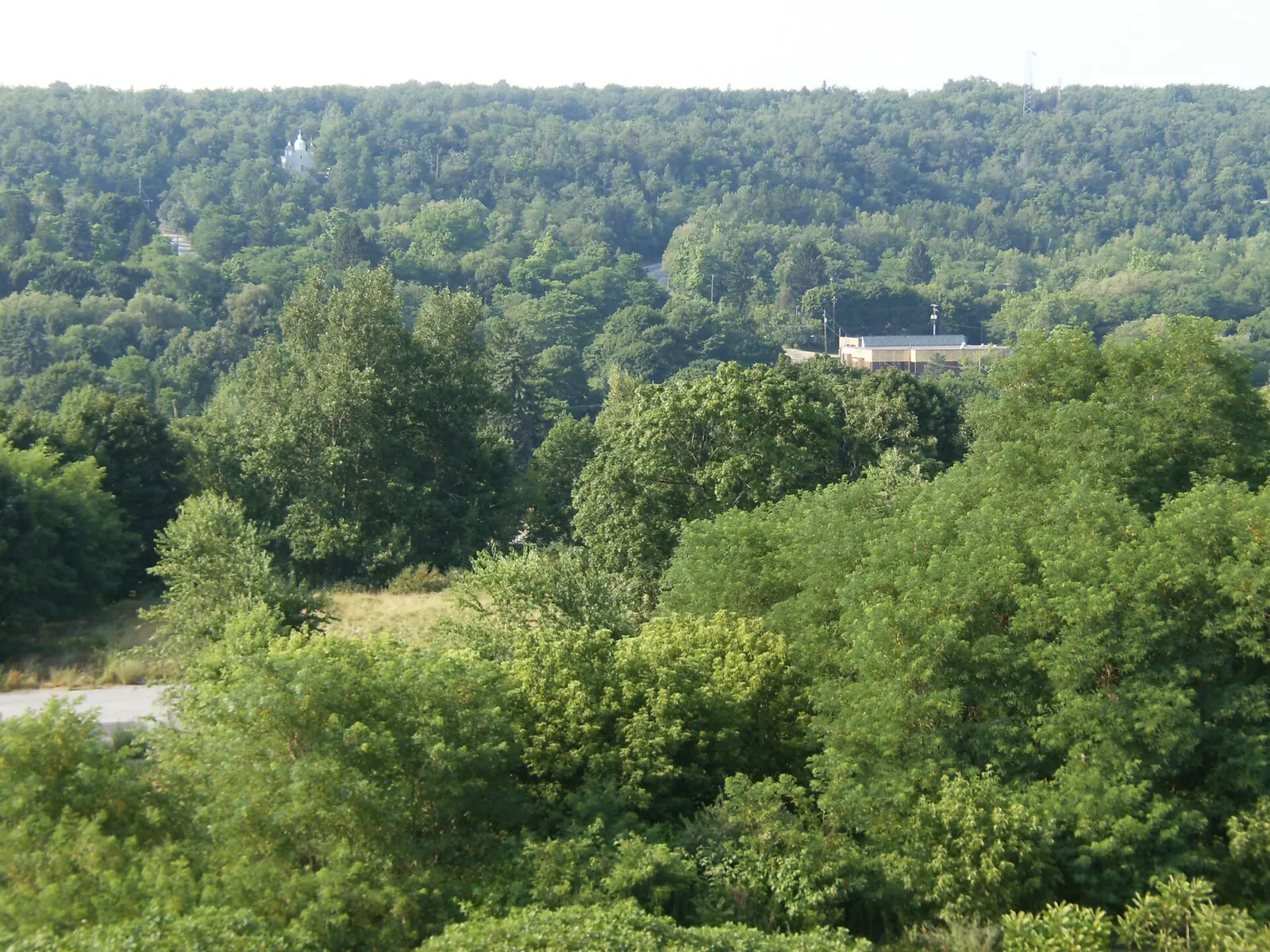
Two places of faith remain. St. Ignatius Cemetery, added to the parish near the end of the nineteenth century, still stands on the southern edge of town, and families still come to tend the graves; it is the only physical trace of the parish. The Assumption of the Blessed Virgin Mary Ukrainian Catholic Church still holds Sunday services. A geological survey found solid rock beneath it rather than coal, and the fire has not touched it directly.
Visitors know Centralia now for other reasons. For years a stretch of old Route 61 drew visitors with spray cans, until the property's owners buried the graffiti under several hundred mounds of dirt in April 2020.
A note on the poem. Larkin opens with four lines he credits to Thomas Langan's "Where is Ireland?" We have not been able to trace the poem or its author in any reference we trust, so we reproduce the lines exactly as he printed them and leave the attribution with him.
Read now, Larkin's line about never coming home again sounds less like grief and more like reporting. Two years after that Mass the church was gone.
Questions readers ask
What happened to St. Ignatius Church in Centralia?
St. Ignatius Loyola Church, whose cornerstone was laid in July 1869, held its last Mass on 25 June 1995, when too few parishioners remained to sustain it. The mine fire burning under Centralia had already forced its parish school to close in the early 1980s. The church was razed in November 1997, and only its cemetery remains.
Is anyone still living in Centralia, Pennsylvania?
A handful of people are. The 2020 census counted five residents, down from 1,017 in 1980 and 10 in 2010. In October 2013 the remaining homeowners reached a settlement with the state that paid them for their properties and let them stay for life. The town had already lost its ZIP code, 17927, in 2002.
When did the Centralia mine fire start?
The fire has burned beneath the borough since 1962. Its most likely origin was a landfill fire in May 1962, although sources differ on the exact date. In 1983 Congress allocated more than $42 million to relocate residents, and in 1992 Governor Bob Casey invoked eminent domain over every property in Centralia.
Are there any churches left in Centralia?
One is still in use. The Assumption of the Blessed Virgin Mary Ukrainian Catholic Church holds weekly Sunday services and has not been directly affected by the fire, since a geological survey found solid rock beneath it rather than coal. St. Ignatius, the Catholic church Thomas Larkin wrote about in 1995, was razed in November 1997.