A gamble that paid off: 'Major' change averted in Britain
In July 1995 John Major dared his party to sack him, won, and reshuffled his cabinet. The victory bought him less than two years.
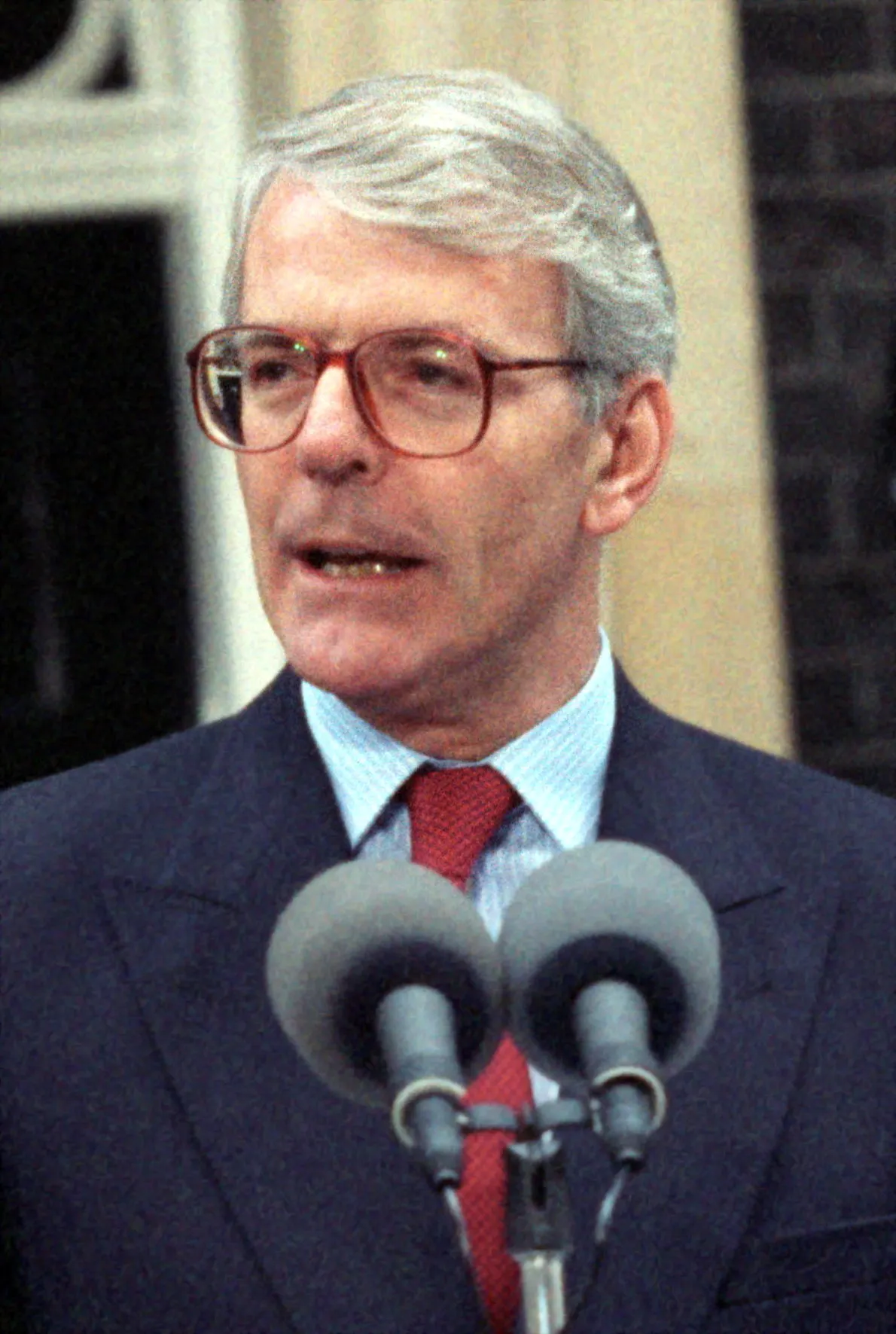
As printed in the Celtic Mirror, July 1995
LONDON - A pre-emptive challenge to Britain's Conservative Party by Prime Minister John Major paid off when he was re-elected party leader on July 4, 1995.
Attacks by right-wing rebels over his leadership style and his European policy had led Major to resign as party leader on June 22, 1995.
That move, described as being "uncharacteristically daring" for Major, whose standing in the polls was at an all-time low against a resurgent Labor Party, resulted in many of the party leaders to rally to support him.
John Redwood quit his cabinet post as Welsh secretary and challenged Major for the Tory leadership.
Major won the contest on July 4, polling 218 votes to Redwood's 89 among Conservative Members of Parliament.
Major, in the flush of victory, took steps to shake-up his 23-minister cabinet, hoping to relaunch the flagging political fortunes of the Conservative members who are tailing the opposing Labor party in the polls.
Five new ministers joined the cabinet and the Employment Department was scrapped in the shuffle.
Michael Heseltine, who was expected to contest the leadership battle if Major lost, was appointed deputy prime minister and first secretary of state. He will have the responsibility for formulating policy and selling it to voters in the run-up to the general election by May 1997.
Major rewarded those loyal ministers who helped him win re-election by promoting them to key cabinet posts, but offered very little to the opposing right.
There was no cabinet post for Redwood.
Michael Forsyth, appointed to the Scottish Office, was the only recognized member of the right to be brought in.
Malcolm Rifkind returns to the top post of Foreign Secretary after stints in the foreign office as a junior minister from 1982-1986. He replaces Douglas Hurd, who announced his retirement in June.
William Hague, who at 34, is the youngest member of the cabinet in about 50 years, since the late Labor leader, Harold Wilson, who died this year.
Other cabinet posts
Michael Portillo, promoted to the Ministry of Defense, had been the standard bearer of the party's right wing.
"It's an enormous privilege to be made Secretary of State for Defense, to be responsible for the marvelous fighting men and women of Britain who, at the moment, are serving in places around the world. I think particularly of Bosnia and those who are serving in Northern Ireland," he said.
Ian Lang, former Scottish Secretary and a key player in the Major campaign team during the leadership battle, was appointed secretary of the Department of Trade and Industry.
Roger Freeman was promoted from the Ministry of Defense to become Chancellor of the Duchy of Lancaster, with responsibility for civil service issues and deregulation.
William Waldegrave was made the new Chief Secretary to the Treasury.
"I am delighted to be asked to do a job which is central to the government's priorities," he said of his appointment.
Kenneth Clarke remains as Chancellor of the Exchequer (finance minister); Michael Howard remains as Home Secretary; and Sir Patrick Mayhew, a key figure in the Northern Ireland peace process, remains as Northern Ireland Secretary.
Major, in a statement announcing his cabinet, said it will "lead the country into as challenging a world as we have ever faced."
"It is a cabinet which balances all shades of Conservative opinion. It is a cabinet behind which the whole party can and must unite.
"And above all, it is a cabinet with an agenda of change designed to build on the transformation of the United Kingdom we have achieved over the past 16 years.
"It combines experience and judgment with a refreshing willingness to embrace new and radical solutions to solve today's problems and grasp tomorrow's promises."
The gamble, reckoned
The margin was thinner than the headline suggests. Major took 218 votes to John Redwood's 89, with 10 abstentions and 12 spoilt ballots among 329 Conservative MPs. He had privately set himself a floor of 215 and later said he would have resigned outright below it. He cleared it by three.
The reshuffle reported here also moved William Hague into Redwood's old job as Welsh Secretary. Nobody in July 1995 could know how much that promotion would matter.
The general election came on 1 May 1997. Labour under Tony Blair won 418 seats and a majority of 177; the Conservatives fell to 165 and were wiped out in Scotland and Wales. Several of the ministers named above lost their own seats, among them Michael Portillo, Malcolm Rifkind, Ian Lang and William Waldegrave. Major stood down as leader after the defeat, remarking that when the curtain falls it is time to get off the stage. Hague, 34 in this story, won the leadership that same year. There were no further Conservative leadership contests between this one and that defeat.
For readers of this magazine the Northern Ireland thread mattered most. Sir Patrick Mayhew stayed at the Northern Ireland Office, and that same month he signed Private Lee Clegg's release licence, the subject of our riots report in this issue. The IRA ceasefire Major was trying to protect ended in February 1996 with the Docklands bomb in London. The Good Friday Agreement was signed on 10 April 1998, under Blair.
Questions readers ask
Why did John Major resign as Conservative leader in 1995?
Major resigned the party leadership on 22 June 1995 to force his critics into the open. Right-wing rebels had attacked his leadership style and his European policy, and he dared them to put up a candidate. John Redwood quit as Welsh Secretary to stand, and Major beat him on 4 July 1995 by 218 votes to 89.
How many votes did John Redwood get in 1995?
John Redwood won 89 votes, or 27.1 percent, in the 4 July 1995 Conservative leadership ballot, against John Major's 218. There were also 10 abstentions and 12 spoilt ballots among 329 MPs. Major had privately decided he needed at least 215 votes to carry on, so he cleared his own threshold by only three.
When did John Major lose power?
Major's Conservatives lost the general election held on 1 May 1997. Tony Blair's Labour Party won 418 seats and a majority of 177, while the Conservatives were cut to 165 seats and lost every seat in Scotland and Wales. William Hague, promoted to the cabinet in the 1995 reshuffle, succeeded Major as party leader that year.