A talk with Uris: 'Trinity' was the seed, 'Redemption' was the unplanned progeny
Leon Uris, laid up with a bad back, told us by telephone why the Larkin family saga needed a second book, and where the Larkin name came from.
As printed in the Celtic Mirror, July 1995
When novelist Leon Uris finished writing “Trinity” almost two decades ago, he had no plans to write a continuation of the story of the Larkin family and Ireland.
Interviewed recently via telephone, Uris, suffering from a bad back, talked about why “Redemption,” published in June as the continuation to “Trinity,” was due.
“It evolved from some of the fallout from ‘Trinity,’” he said. “I realized there was more to be said about the Larkin family and certainly more to be understood about the Easter Rising and the significance of it.
“What evolved was really an unplanned pregnancy, and when the time came for me to get to the typewriter again, ‘Redemption’ was what I wanted to get to the typewriter with.”
“Trinity” was published in 1976, and it became a beloved novel. One that is still talked about among writers’ and readers’ circles. Tremendous amounts of fact are given to the reader through prose like only Uris can write, fans note.
The key to both novels was research, Uris said.
“Most people are staggered by research, but this is, after all, how I make a living,” he said. “The first thing you have to do is get immersed in the project, organizing yourself, knowing what you are going after and not going after. It is extremely important to know what you don’t want to find.
“Research to me is as important or more important than the writing. It is the foundation upon which the book is built.
“I have a sense of duty toward history, not to distort it and to keep within the framework of the basic truth.”
Uris said he thinks that he has come a long way from “Battle Cry,” his first novel.
“I think ‘Redemption’ is a notch above the others just in its use of the language and the depth of the relationships.
“I’m really proud of this book. I’m older now, writing from a different level and even though the writing was easier, the energy expended was greater. I really put a lot of effort in the Gallipoli segment and it took the vinegar out of me,” he said.
Gallipoli, a mountainous, barren Turkish peninsula between the Dardanelles and Saros Gulf, was a Turkish stronghold highly prized by the British High Command during World War I and probably the scene of the greatest blunder in British military history.
Uris asserted that there are many morals to Gallipoli. Two nations, possibly three with modern Turkey, emerged, he said.
“New Zealand was not a defined nation until then - it was sort of an extension of an English garden. After Gallipoli, they became their own people with not so great a liking for the British,” Uris said.
When asked about his use of Winston Churchill as a character in “Redemption,” Uris asserted that Churchill was a valid figure because of his father, Lord Randolph, and because of Gallipoli.
“I thought it was a wonderful way to keep the reader focused on what the history was without going into long prose about it. I thought it was very interesting to write it that way. It’s really remarkable how Churchill managed to recover from the disaster,” Uris said.
“I am very proud of this work because it is more about the meaning of the Easter Rising and its relationship to what this whole century has been about, people liberating themselves, freeing themselves,” he said. “Although it was small potatoes in the grand scheme of massive things that happened in this century, it is certainly one of the greatest events of the century.”
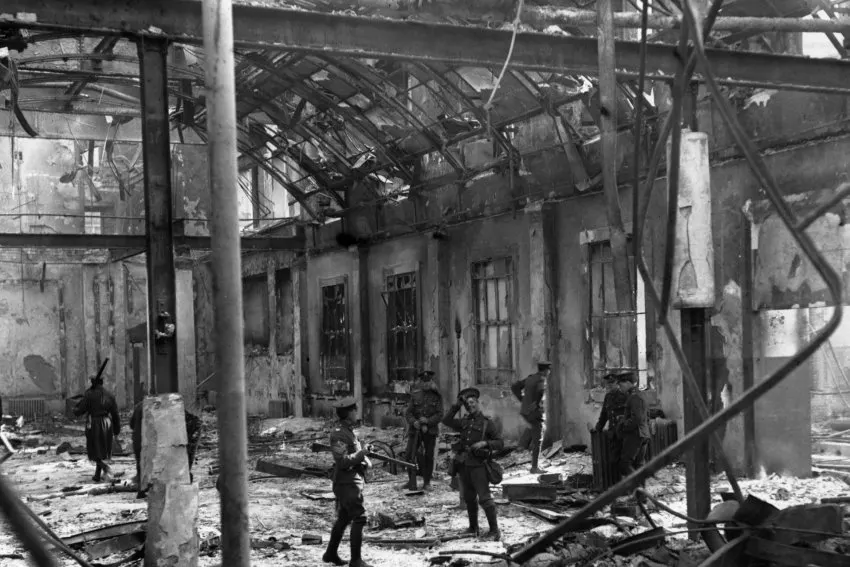
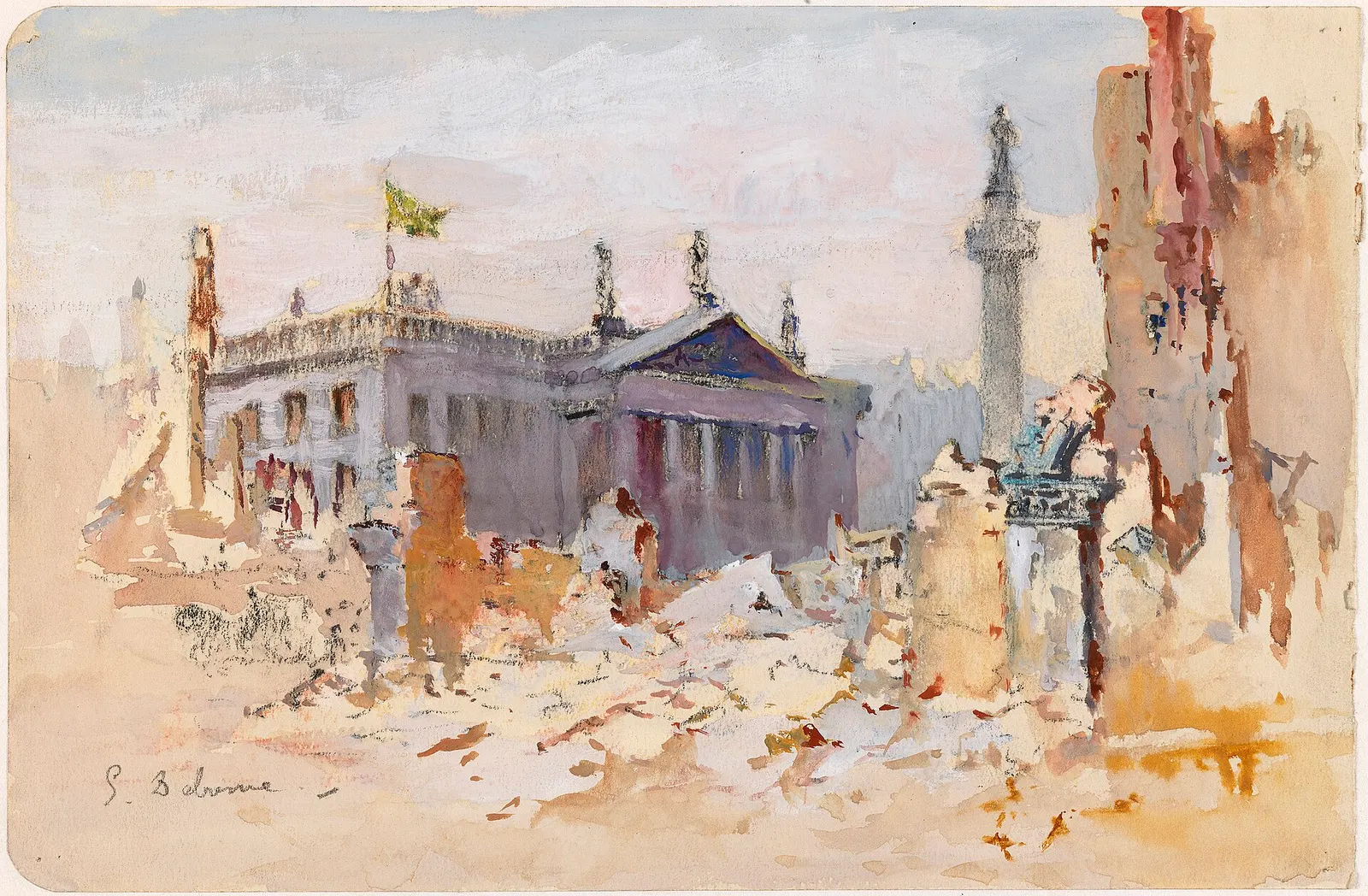
The Easter Rising took place on Easter Monday, 1916 in Dublin and even though it failed, the Rising was the catalyst for the eventual formation of the Irish Republic.
Asked how he came to write about Ireland, Uris said he was traveling, looking for a specific story that he never did write. His wife, who had undergone brain surgery and could not travel beyond Istanbul, went to Ireland with her sister. Soon after, she sent Uris a letter, stating that she had found “the golden place.” He joined her in Ireland. That was the trigger that became “Trinity,” he said.
This writer met Uris for the first time in 1976, and Uris was quick to note that Tom shared the last name of Trinity’s protagonist, Conor Larkin.
This latest interview with Uris presented an opportunity to ask him from where he had taken the Larkin name.
“I lived in San Francisco, just off Larkin Street. James Larkin, for whom the street is named, was a labor organizer in Ireland and San Francisco. I loved the name, so I used it,” Uris said.
What happened next
“Redemption” turned out to be the next-to-last stretch of a long career. Uris published two more novels after this conversation: “A God in Ruins” in 1999 and “O’Hara’s Choice” in 2003. He died of kidney failure on June 21, 2003, at his home on Shelter Island, New York. He was 78.
“Trinity” remains the book people mean when they put Uris and Ireland in the same sentence. It spent 21 weeks at the top of the New York Times best-seller list in 1976 and another 14 weeks there in 1977. Its sweep runs from the Great Famine to the Easter Rising, following the Larkins, Catholic hill farmers from a fictional Donegal townland, alongside Protestant shipyard families in Belfast. “Redemption” picks up the same family and carries Rory Larkin, a New Zealander, into the Gallipoli campaign.
That New Zealand thread was not a random choice. Uris served with the 6th Marines in the South Pacific during the Second World War and was stationed in New Zealand before Guadalcanal and Tarawa. When he talks above about New Zealanders and the English garden, he is talking about people he had lived among.
One correction for the record, with affection. San Francisco’s Larkin Street is named for Thomas O. Larkin, the American consul in Mexican-era California, not for the Irish union leader. Big Jim Larkin did pass through San Francisco, briefly working with the Industrial Workers of the World there before settling in New York, so the novelist’s memory had a real Larkin in it. Just not the one on the street sign.
His papers, covering almost all of the novels and his screenplays, are held at the Harry Ransom Center at the University of Texas at Austin. Ira Nadel’s biography, “Leon Uris: Life of a Best Seller,” followed in 2010. We reread this interview with a modern ear and the line that holds up best is his own: research first, and know what you do not want to find.
Questions readers ask
Is Redemption by Leon Uris a sequel to Trinity?
Redemption, published in 1995, is the direct sequel to Trinity (1976). It follows Conor Larkin’s family into the early twentieth century: his brother Liam emigrates to New Zealand, Liam’s son Rory fights at Gallipoli, and brother Dary wrestles with his vows as a priest. Uris told this paper in July 1995 that the book grew out of what he called the fallout from Trinity, rather than from a planned series.
When did Leon Uris die?
Leon Uris died of kidney failure on June 21, 2003, at his home on Shelter Island, New York, at the age of 78. His last novel, O’Hara’s Choice, appeared the same year. Born in Baltimore in 1924, he had served as a Marine radioman in the Pacific and drew on that experience for his first novel, Battle Cry, published in 1953.
Why is Trinity by Leon Uris so popular?
Trinity was a huge commercial success, spending 21 weeks at number one on the New York Times best-seller list in 1976 and 14 more weeks in 1977. Readers valued its sweep, from the Great Famine of the 1840s to the 1916 Easter Rising, told through Catholic farmers in Donegal and Protestant shipyard workers in Belfast. Uris said its foundation was research, which he rated as highly as the writing.
Where did Leon Uris get the name Larkin for Trinity?
In this 1995 interview Uris said he took the name from Larkin Street in San Francisco, near where he lived, and believed the street honoured the labour leader James Larkin. In fact the street is named for Thomas O. Larkin, the only United States consul to Alta California in the Mexican era. James Larkin did spend time in San Francisco with the Industrial Workers of the World.