Morgan Llywelyn captures spirit of Easter Uprising in epic novel
Thomas Larkin's advance review of 1916, the Morgan Llywelyn novel that walks a Titanic survivor from a Kerry farm into the Easter Rising.
As printed in the Celtic Mirror, March 2003
Over the years, Morgan Llywelyn has become one of the world's most respected writers of historical fiction, which marries history with a cast of fictional characters around whom the historical events occur.
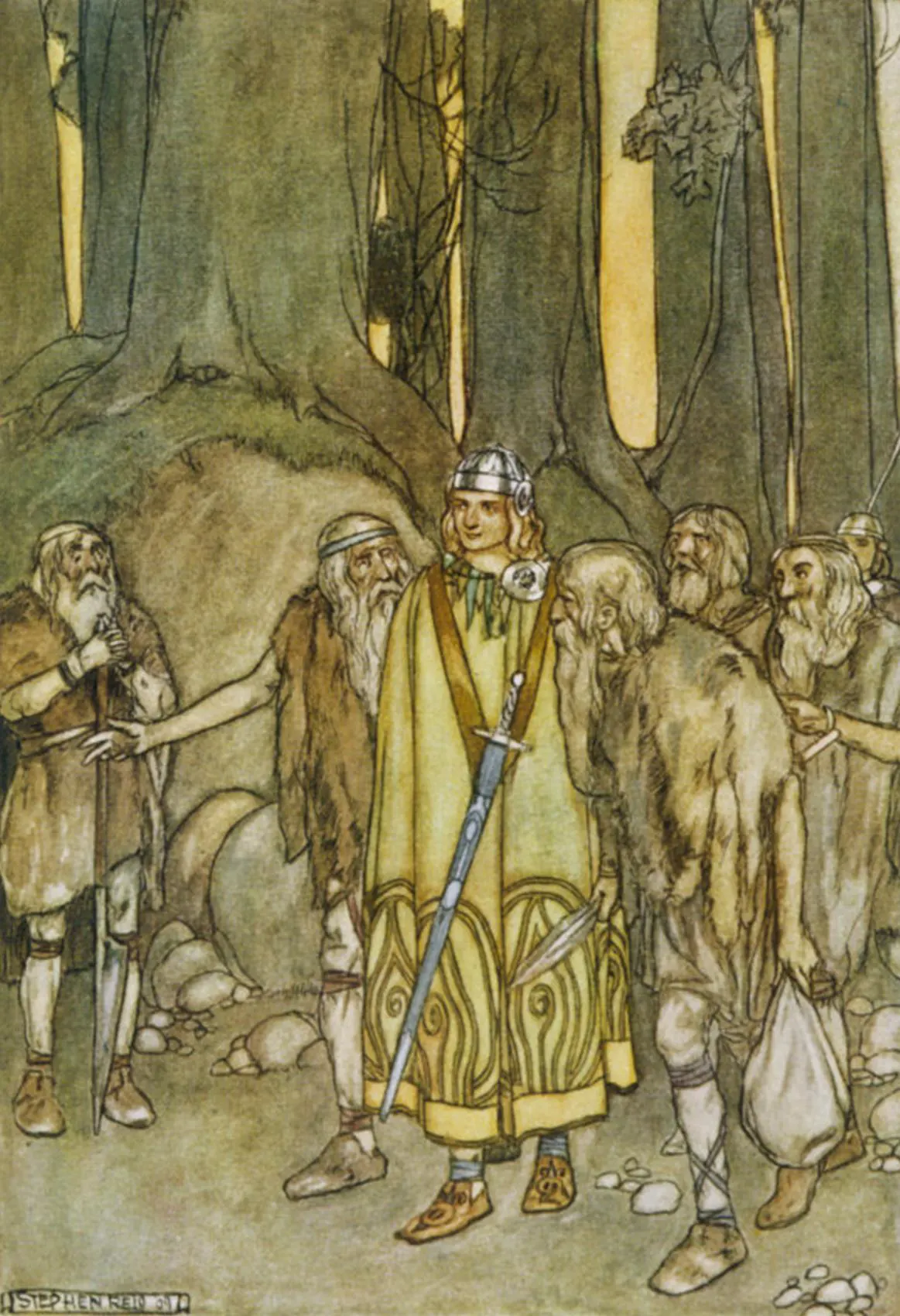
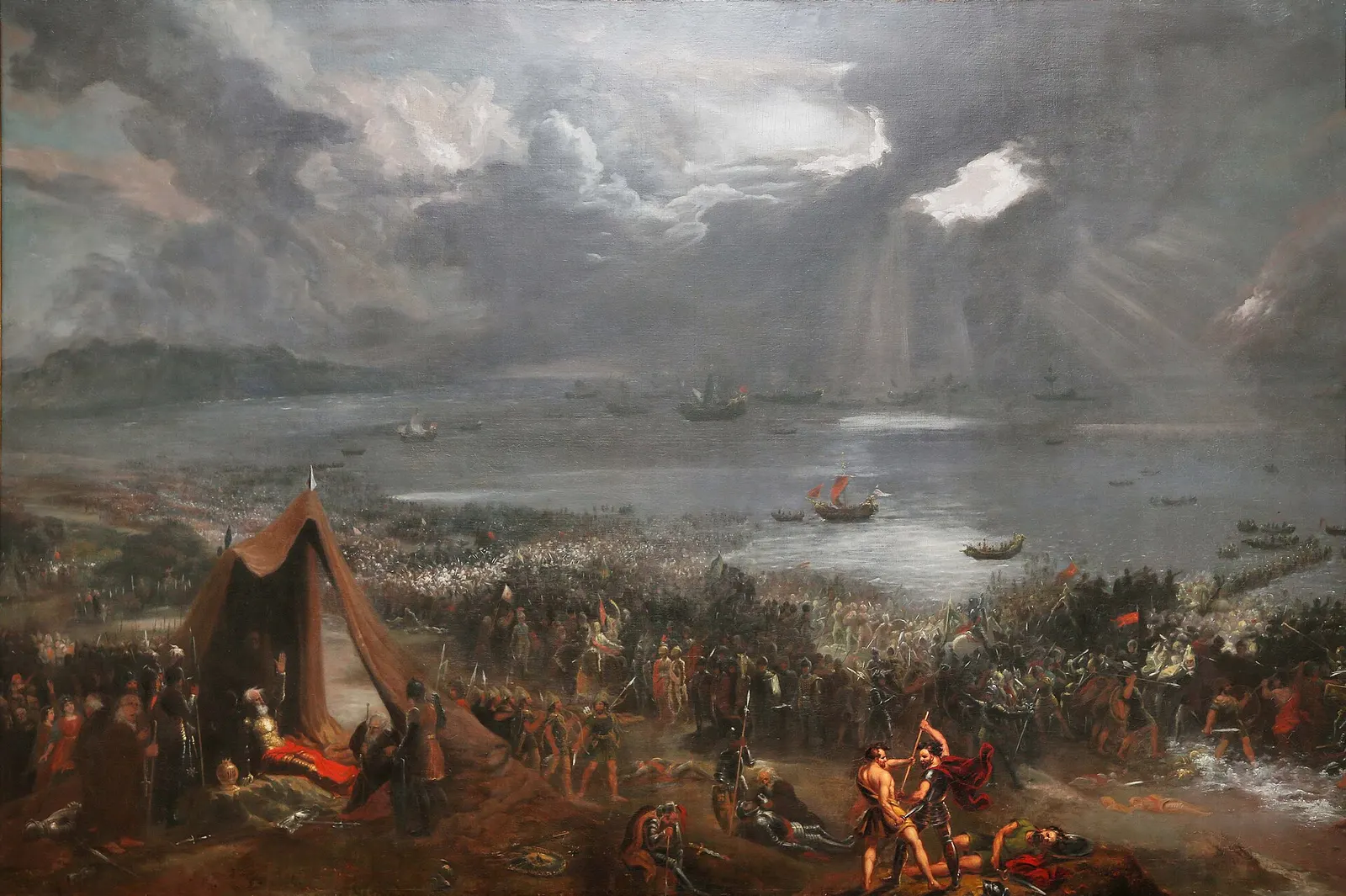
Llywelyn has written of Amergin, the bard who brought the Milesians to Ireland; of Fin MacCumhaill, founder and leader of the Fianna; of Brian Boru, the great king who defeated the Vikings and united Ireland for the first time; of the O'Sullivan Beare, who led his defeated army on a tragic journey across Ireland after the Battle of Kinsale.
Llywelyn's brilliance at weaving fictional characters into actual historical events is at its best in her latest novel, "1916," the story of a lad whose experiences are linked with the great men and women who planned and executed the Easter Rising of 1916.
The central character of "1916" is Ned Halloran, who survives the sinking of the Titanic while en route to America with his parents for the marriage of his sister, Kathleen.
Devastated by the loss of his parents, Ned spends some time with his sister and her fiance, Alexander Campbell, a minor executive with the White Star Line, owners of the Titanic. Although offered the opportunity to stay in America, Ned insists on returning to Ireland to help his older brother work the family farm.
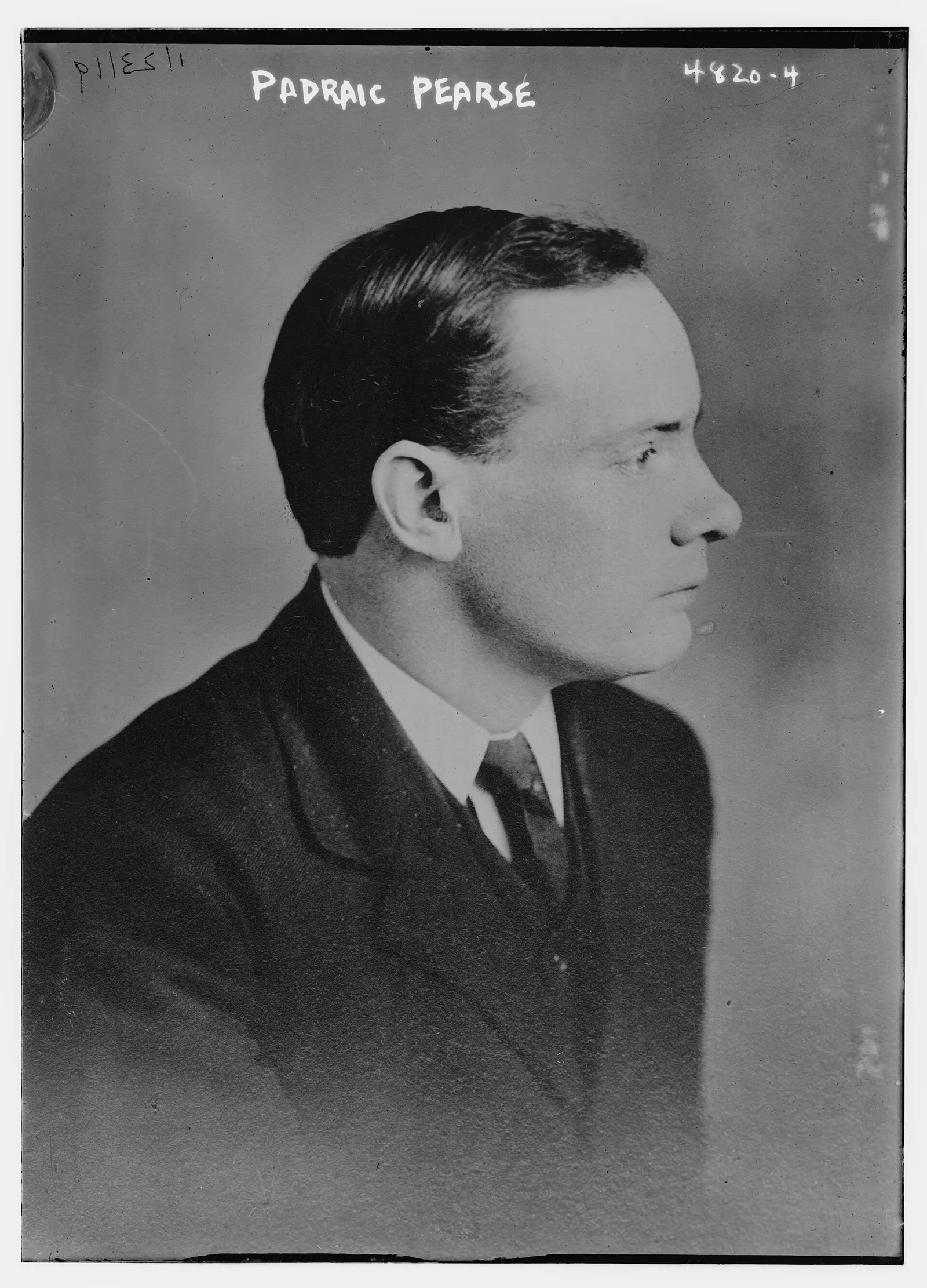
Unable to readjust to life on the farm after the deaths of his parents, Ned is given the opportunity to go to Dublin to attend St. Enda's School, which was founded for the advancement of Gaelic studies by Padraic Pearse.
Arriving at St. Enda's, Ned finds a new world opening to him, a world in which he learns about the history, culture and language of Ireland. More important, he meets Padraic Pearse, who becomes teacher and friend and introduces Ned to the great scholars, poets and philosophers who are the movers and shakers in the movement to free Ireland from British rule.
Through Pearse and his associates, Ned becomes involved in the movement. As a courier carrying messages back and forth between Pearse and leaders of the Irish Republican Brotherhood, and other rebel leaders, he meets republican leaders like James Connolly, Countess Markievicz and Thomas James Clarke, who were involved in creating the stratagems that led to the Easter Rising.
Through correspondence between Ned and his sister, we learn of Kathleen's growing unhappiness at being trapped in a marriage to a tyrannical and abusive husband as well as her growing support of Clan na Gael, an American movement supportive of Irish independence. Kathleen becomes involved with her parish priest, Father Paul O'Shaughnessy, and when Campbell hears of the relationship, he has the priest beaten by thugs. To avoid scandal, the priest is forced to take a sabbatical in Ireland. Father Paul meets Ned and tells him about the abuse Kathleen has endured from her husband. Ned talks with Thomas Clarke about the problem, and Campbell soon feels the long arm of the IRB in New York.
Ned meets Henry Mooney, a reporter for a Dublin newspaper, who becomes a friend and confidant. Mooney introduces Ned to Mary Cosgrove. As Ned's first love, Mary engenders in him a love that, like Romeo's idealistic love for Rosalind, blinds him to her shallowness.
The great love of Ned's life is to be Sile Duffy, a Dublin prostitute and sister of a friend of Ned's who perished on the Titanic. Caught up in his love for Mary Cosgrove, Ned almost lets Sile slip away, but he eventually sees through the superficial Mary and devotes himself to Sile, who leaves her life of prostitution and joins the movement to free Ireland.
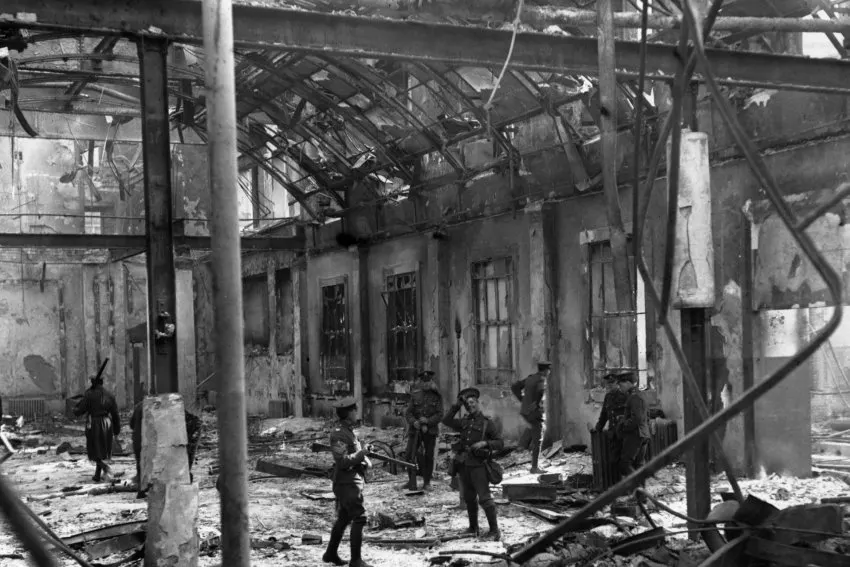
The denouement comes on Easter Monday in 1916, when a ragtag army led by visionaries and idealists strikes a blow for freedom from British rule. Through Ned, you will live the excitement of those chaotic days of glory out of which "a terrible beauty was born."
"1916" reaffirms Llywelyn's place as a master storyteller, and is sure to be one of the great epic novels of the year. To be published in April 1998. Forge Books, New York, N.Y., 450 pp.
What happened next
Larkin was reviewing from an advance copy. The novel came out from Forge in 1998 as 1916: A Novel of the Irish Rebellion, and it became the first of five: 1921 followed in 2001, 1949 in 2003, 1972 in 2005 and 1999 in 2008.
The historical frame Ned walks through is exact. The Rising began on Easter Monday, 24 April 1916, when Pearse read the Proclamation of the Irish Republic outside the General Post Office, and it ended with his surrender on Saturday 29 April. Wikipedia counts 485 dead, more than half of them civilians, and over 2,600 wounded. Sixteen leaders were executed from May onwards, Pearse and Connolly among them.
Countess Markievicz, one of Ned's contacts, fought with the Irish Citizen Army at St Stephen's Green. She was sentenced to death at her court-martial on 4 May 1916, but the sentence was commuted to life imprisonment. In December 1918 she became the first woman elected to the House of Commons, and following Sinn Féin policy she never took her seat. She died in Dublin on 15 July 1927.
St. Enda's, where Ned goes to school, was real as well. Pearse founded it in 1908, and fifteen of its former pupils took part in the Rising.
Larkin ends with "a terrible beauty was born." The line is W. B. Yeats's, the refrain of his poem "Easter, 1916," written between May and September 1916 and first published in 1921 in the collection Michael Robartes and the Dancer. Yeats names Pearse and Connolly in it and alludes to Markievicz without naming her. A novelist borrowing it for an ending is in good company.
Questions readers ask
What is Morgan Llywelyn's 1916 about?
1916: A Novel of the Irish Rebellion, published in 1998, follows Ned Halloran, a teenager who survives the Titanic, loses his parents and goes to Patrick Pearse's school, St. Enda's, in Dublin. As a courier for the rebel leaders he meets Pearse, James Connolly, Thomas Clarke and Countess Markievicz, and the story ends in the Easter Rising of 24 to 29 April 1916.
Where does "a terrible beauty is born" come from?
The phrase is the refrain of W. B. Yeats's poem "Easter, 1916," written between May and September 1916 in response to the Rising and first published in his 1921 collection Michael Robartes and the Dancer. The poem names Thomas MacDonagh, John MacBride, James Connolly and Patrick Pearse, and it alludes to Constance Markievicz without naming her.
How many people died in the 1916 Easter Rising?
Wikipedia gives a total of 485 deaths: 260 civilians, 143 British military and police, and 82 Irish rebels, counting the 16 leaders executed afterwards. More than 2,600 people were wounded. The fighting lasted six days, from Easter Monday, 24 April, until Patrick Pearse surrendered on Saturday, 29 April 1916.
Was Countess Markievicz executed after 1916?
Constance Markievicz was sentenced to death at her court-martial on 4 May 1916, but the court recommended mercy solely on account of her sex and the sentence was commuted to life imprisonment. In December 1918 she was elected MP for Dublin St Patrick's, the first woman elected to the House of Commons. She died in Dublin in July 1927.