Morgan Llywelyn talks, with pride, of 'Lions'
Over tea in New York, Morgan Llywelyn explained why Pride of Lions is not a sequel, and why Lion of Ireland must be filmed in Ireland.
As printed in the Celtic Mirror, March 2003
Speaking of the inspiration for one of her most famous works, Morgan Llywelyn says, "After I published my first novel, 'Wind from Hastings,' which was about one of my ancestors, Edyth Llywelyn, wife of Harold the last Saxon king of England, my father gave me a copy of Seumas MacManus's 'Story of the Irish Race,' telling me to read and learn about my Irish heritage. The first page I turned to was material about Brian Boru, and I was mesmerized by what I read. I began to research Boru, and out of that grew 'Lion of Ireland.'"
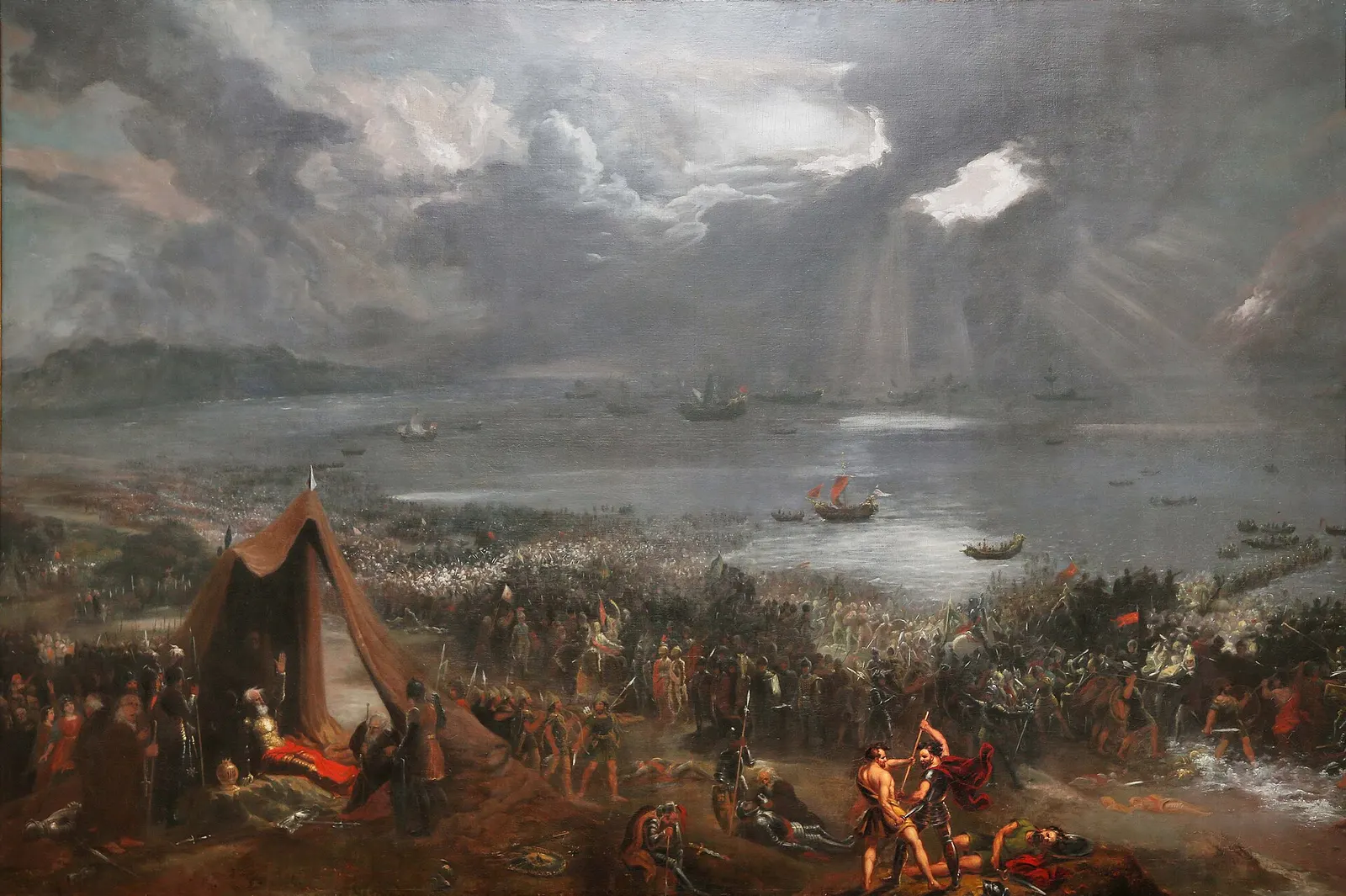
Three years of research went into writing "Lion," and what Llywelyn produced was the definitive historical novel about the man who united Ireland and defeated the Vikings at the Battle of Clontarf. The man was so powerful that a century after his death when the English entered the place of his burial, they half expected him to emerge from the shadows.
Llywelyn, who was in the United States promoting her latest novel, "Pride of Lions," the long-awaited continuation of the Boru saga, sat for an interview and discussed her many accomplishments while drinking a pot of tea at Doral Park Hotel in New York City. She talked candidly about her career and her love for Irish history.
She was adamant about the fact that "Pride of Lions" is not a sequel to "Lion of Ireland."
"It is its own story about the son of Boru, who was as heroic as his father," she informs us. "He fought different wars. His wars were inside. What happens with Donough sets the stage for everything to come in the 800 years afterwards."
It was that son of Boru, Donough MacBrian, who presented his father's ring and sword to the Pope, the same Pope who gave the crown of Ireland to England's Henry II.
Writing about Finn MacCool, in "Finn MacCool," gave Llywelyn the opportunity to look at him as an individual in a historic time, present him in that time, and see if she could figure out how he became mythologized. She wrote the novel as a psychological study of a real man, not as a retelling of the tales of the Ulster Giants.
The most difficult of her books to write, she says, was "Bard," because in a sense it was all speculative history dealing with a people perceived as mythological, the Tuatha de Danann, who were in fact the last of the Bronze Age Celts.
"I wanted 'Bard' to be a poetic work, so I wrote in Celtic triads. You will find groups of three adjectives, phrases, etc. I wanted to capture the poetry, the mystery, the magic. 'Bard' is right on the cusp of folklore history and myth. The magic had to come together and ends with the question of which wins Ireland, the sword or the harp, and the jury is still out."
Three of her novels have been optioned for filming: "Lion of Ireland," "Grace O'Malley" and "O'Sullivan's March" (which was published in this country as "Last Prince of Ireland.")
She said that "Lion" has been optioned three times and has come close to being made into a film, but each time an obstacle arose to prevent production, sometimes financing, sometimes Morgan Llywelyn, because she insists that the film be made in Ireland with an Irish cast. Very much like Gormlaith (wife of Boru, mother of Donough), Llywelyn is a commanding woman, standing firm in the strength of her convictions. There is no resisting her. "I don't want to see a film about an Irish hero made somewhere on the coast of Africa, or anywhere else. It should be made in Ireland," she asserts. "It must be made in Ireland."
That said, Llywelyn informs us that she is already at work on her next project, about the events in 1916.
Donough after the novel
The real Donough is better documented than most eleventh-century princes. Donnchad mac Briain was the son of Brian Boru and Gormflaith, the queen Larkin compares Llywelyn to in this interview. He became King of Munster, was deposed in 1063, went on pilgrimage to Rome and died there the following year. He was buried in the basilica of Santo Stefano al Monte Celio.
The story about the crown needs a footnote. The interview says Donough gave his father's regalia to the same Pope who handed Ireland to Henry II. The tale comes from Geoffrey Keating's history of Ireland, Foras Feasa ar Éirinn, which has Donnchad offering the crown of Ireland to the Pope and asking for help to win back power. Keating names Urban II and dates the episode to 1092, nearly thirty years after Donnchad died. Older popular histories repeated it to explain Laudabiliter, the papal bull the interview has in mind, and Keating himself doubted other parts of the Rome story. Good novel material. Shaky history.
Brian himself died at Clontarf on Good Friday, 23 April 1014. His army won; he did not survive the day. His body was carried to Armagh and is said to lie in the north wall of St Patrick's Cathedral there, the burial place the English were supposed to have entered a century later. Pride of Lions was published in 1996, sixteen years after Lion of Ireland.
The last line of the interview came true. Her next project, the Easter Rising, appeared as "1916" in 1998, and Thomas Larkin's interview about that book sits in this same feature. As for the film she wanted shot in Ireland with an Irish cast, we have found no record of it reaching the screen.
Questions readers ask
Who was Brian Boru's son Donough?
Donnchad mac Briain, anglicised as Donough, was the son of Brian Boru and Gormflaith. After Brian was killed at Clontarf in 1014 he rose to become King of Munster. He was deposed in 1063, travelled to Rome as a pilgrim and died there in 1064. He is buried in the basilica of Santo Stefano al Monte Celio in Rome.
Is Pride of Lions a sequel to Lion of Ireland?
Publishers and reviewers often called it one, but Llywelyn disagreed. In this interview she insisted that Pride of Lions, published in 1996, is its own story about Donough, Brian Boru's son, whose wars were "inside." It picks up after Brian's death at Clontarf in 1014, so reading Lion of Ireland (1980) first gives useful background.
Where is Brian Boru buried?
Brian Boru was killed at the Battle of Clontarf on Good Friday, 23 April 1014, even though his army won the day. His body was carried north to Armagh, and tradition places his grave in the north wall of St Patrick's Cathedral there. He had been High King of Ireland since 1002 and King of Munster since 978.
Did Brian Boru's son give the crown of Ireland to the Pope?
The story comes from Geoffrey Keating's history Foras Feasa ar Éirinn, which says Donnchad offered the crown of Ireland to the Pope and sought papal help to regain power. Keating names Pope Urban II and dates the episode to 1092, long after Donnchad died in Rome in 1064. The dates do not fit, and Keating himself doubted other stories about Donnchad's time in Rome.