Celtic Tattooing: Primitive art form emerges in America
From woad-stained warriors to Book of Kells knotwork inked in Seattle and Boston: a 1995 essay on why the diaspora started wearing its heritage on its skin.
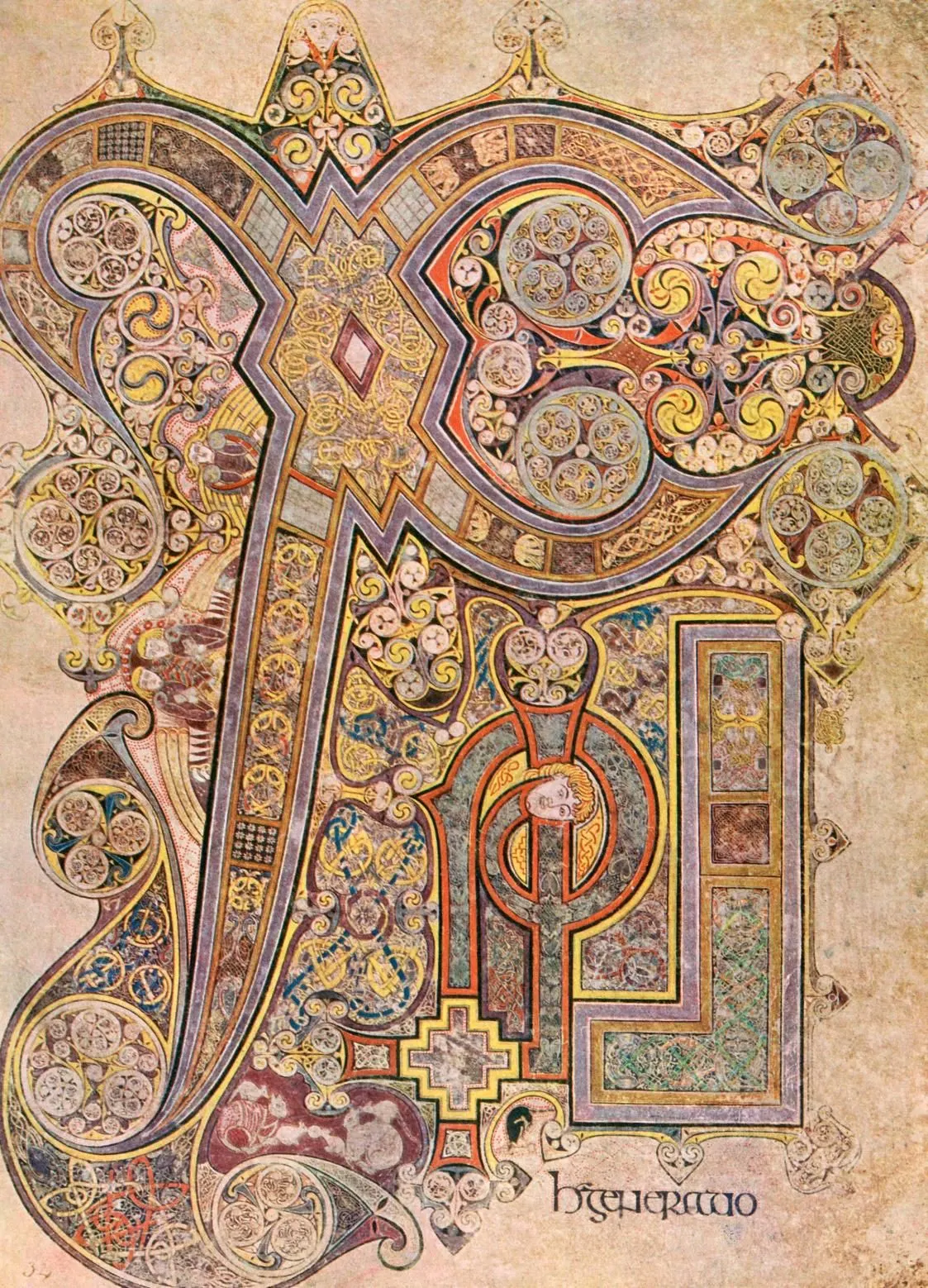
As printed in the Celtic Mirror, November 1995
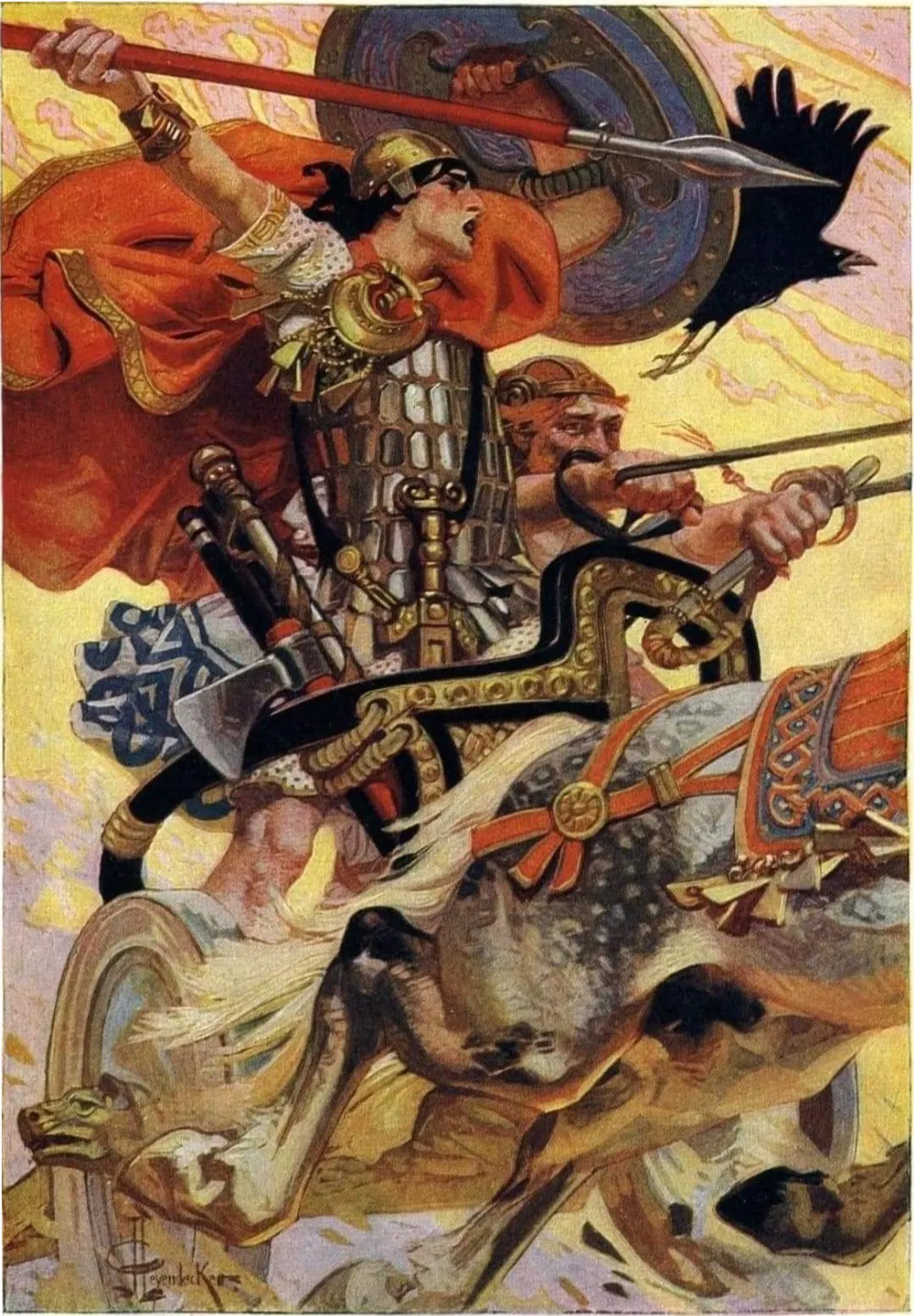
It is known that the Romans never conquered Ireland, and it is amusing to contemplate the visual of a boatload of Italians drawing up to the shore, only to be confronted by a band of entirely naked, painted and tattooed warriors, whose hair stuck out in spikes.
Add to it the fact that their women would have been fighting at their side, with their presumably bared breasts sporting artistic embellishment, and we can imagine the legions retreating in haste.
Julius Caesar wrote in his "The Gallic Wars" in 55 B.C. that "All the Britons dye their bodies with woad, which achieves a blue color." But the Lindow Man, a bogbody excavated in Cheshire, showed traces of copper-based pigments in his skin, which would have created blue tattoos.
Until a preserved specimen of a tattooed person is unearthed from an Irish bog, the exact nature of the tattoos in Ireland's antiquity will remain shrouded in supposition.
In the first century B.C., Herodian wrote, "They mark their bodies with various figures of all kinds of animals," but it is not clear if these "marks" were actually tattoos. They may well have been the stain left by applications of woad, a dark blue dye made from the native British plant Isatis Tinctoria.
The woad that was commonly used to create designs on warriors before battle could have been easily confused with tattoos by observers, but actual tattoos were most likely pricked into the skin with a liquid solution suspending lampblack or copper.
Woad stains the skin and imparts a mild psychotropic effect, enhancing a mood or exciting a warrior to feats of prowess. Its highly astringent and antiseptic properties make it an unlikely candidate for subcutaneous insertion.
Tattoos would have been executed on a more intimate scale, and probably applied in a ritual manner that marked rites of passage, attainment of status, or purification.
Ancient tattooing techniques varied from culture to culture around the world, but usually involved pricking the skin with a sharp object that had been dipped into a pigment that would remain inert in the skin layers.
In a time-consuming and laborious process, the design was built up from thousands of tiny dots.
Modern electric-method tattooing, which dates back only to the beginning of this century, utilizes a small electromagnetic device to rapidly puncture the skin to a measured depth.
The high degree of accuracy and speed of application allows for replication of highly detailed designs. Tattoo artists of today are able to draw from the entire catalog of historic art patterns, adapting them to the medium of skin.
The usual method is to first draw the design on paper, then stencil transfer it onto the skin, leaving a pattern that can be slowly inked in.
In a culture that valued highly the craft arts, the Celts were experts in the working and decoration of iron, bronze, silver and gold.
Ephemeral objects in daily use took on embellishment as a matter of course, and it is logical to expect people to have extended that decoration to the human form.
To decorate utilitarian objects with "unnecessary beauty" brought them into the realm of the sacred, celebrating the creations of the gods with the clever hands whose abilities were inspired by the bounty of the natural world.
Interlacings, a common motif on stone, high crosses and in illuminated manuscripts, may well have begun as the leather braidings of horse bridles and trappings.
To reproduce such detail with primitive tattoo tools would have taken much time and patience, but we have examples worldwide of the importance of such ritual dermagraphics.
The 5th century B.C. body of a Scythian chieftain preserved in Pazyryk, Siberia, was covered in tattoos with animal motifs. The "Iceman," found recently in the Alps, was likewise patterned.
It is entirely logical to suppose that the Celts, like many cultures worldwide, viewed the act of tattoo application to be an important, universal rite.
As interest in Celtic heritage grows in those of Irish descent, flung wide across the world by the diaspora, they search for a way to link themselves to their ancestral past.
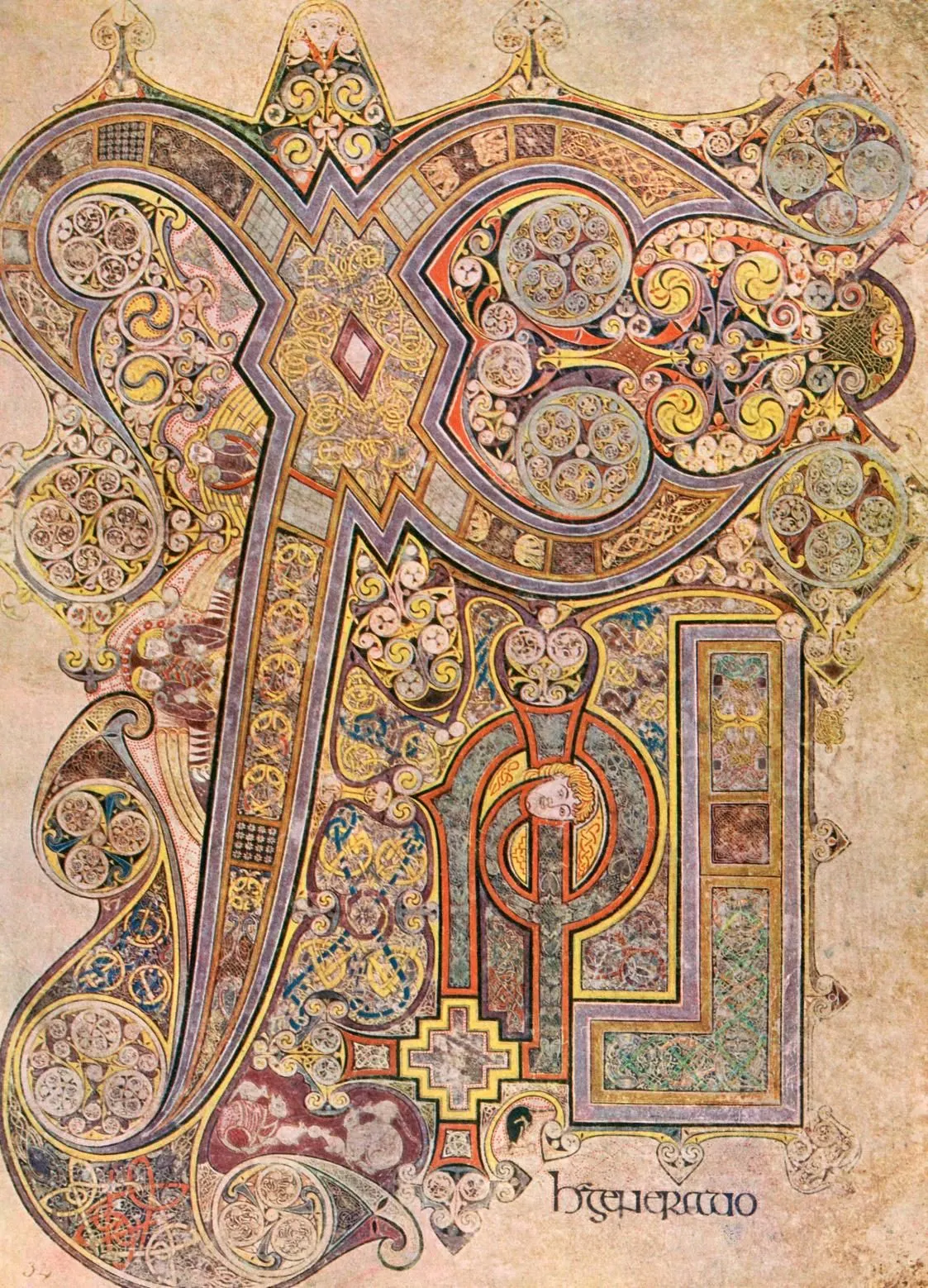
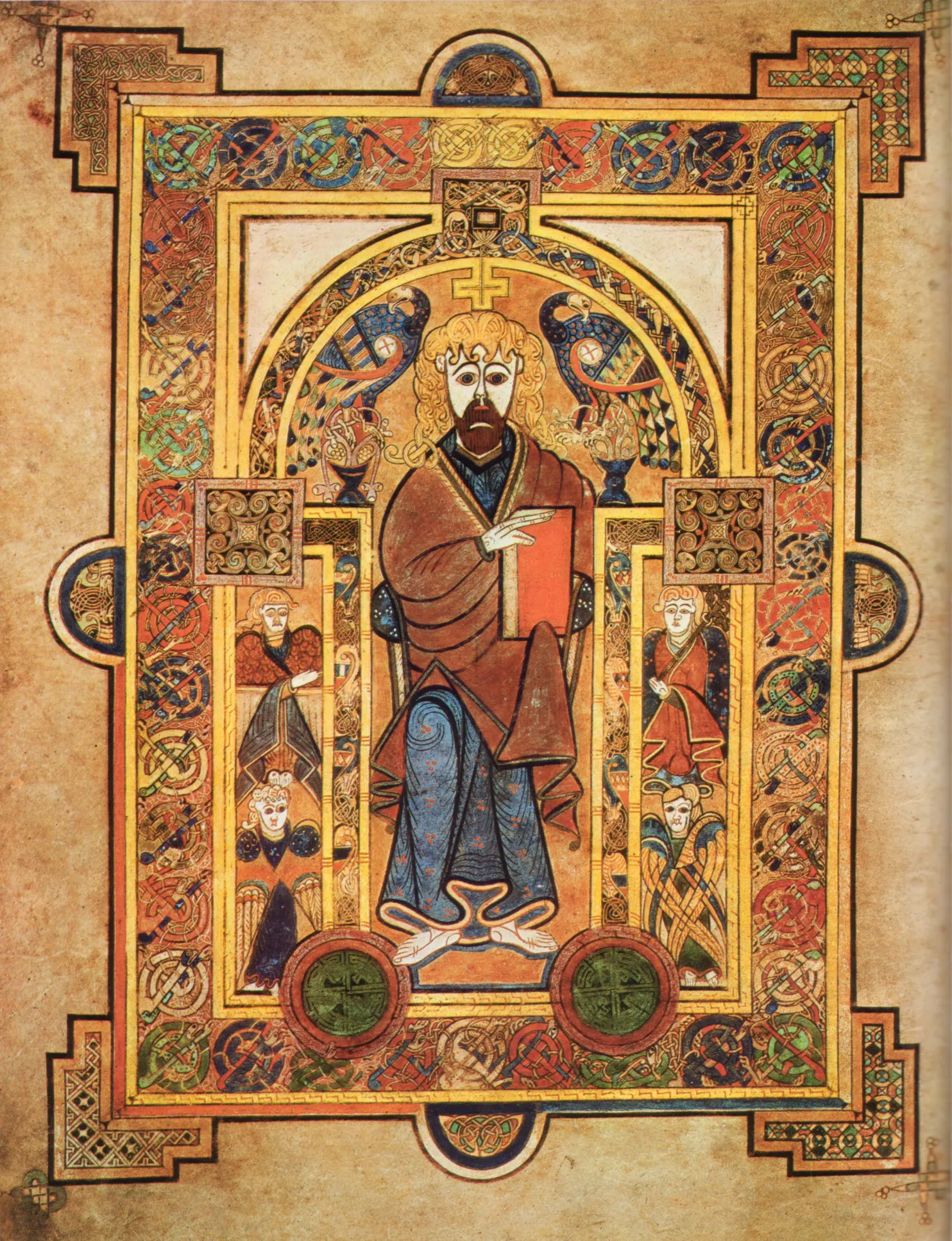
For many, this leads to an investigation of the art forms of illuminated manuscripts. It is from this resource material, widely recognized as the finest achievement in decorative arts of its age, that the modern "Celtic Revival" tattoos take their genesis.
Technically, illuminated manuscripts are referred to as "post-Roman dark-age Anglo-Celtic religious art," encompassing such masterpieces as the Book of Kells, the Lindisfarne Gospels, and the Book of Durrow, created in the 6th century.
While they may little resemble the La Tene style warrior's marks favored by the Irish of ancient days, they serve as the style book of patterns for today's new tattoos.
The most common designs used as modern Celtic tattoos are the bands of weaving and tiny interlaces that filled the borders of the manuscripts.
Looking at the actual Book of Kells in the Trinity College archive is a most humbling experience for any artist.
The miniaturization of the designs, some painted on vellum with single-hair brushes, bespeaks a patience and dedication to the task almost unfathomable in today's instant-gratification electronic age.
Translated into tattoos, the knotworks carry with them their mystery of the endless line that returns to the source. For the monks, they were a meditation and a prayer, a visual representation of the eternal mysteries.
For the modern tattoo collector, they often serve as a link to a proud family lineage and ethnic heritage.
They serve the same purpose of identification as the Scottish clan tartans, serving as marks of affinity.
In this, they hearken back to a great golden age whose illuminated gospels seemed then, as they do to contemporary observers, to have been the work of angels, not men.
If once these patterns brought a glimpse of heaven and embellished the interpretation and understanding of the gospels for the illiterate masses, now they present, on skin, a fascinating and beautiful example of a native Irish art form transformed into dermagraphics.
By wearing a tattoo whose source is uniquely Irish, those of Irish descent are able to bring alive in their bodies, an outward manifestation of their connection to their heritage.
The people who choose to incorporate a design of timeless beauty into their skin does more than purchase art.
They become art.
What the bodies have told us since
Thirty years on, the essay holds up better as a statement of taste than as a statement of evidence, and that is no criticism. The evidence has moved. A few corrections first. Herodian, whose line about animal figures is quoted here, was a Greek-writing Roman civil servant who lived from about 170 to 240 AD, so he wrote nearly three centuries later than the essay says. And the Book of Kells, the source book for most knotwork tattoos, is now generally dated to around 800, long after the lifetime of St. Columba, rather than to the 6th century.
Lindow Man is still the key witness from these islands. Peat cutters found him at Lindow Moss in Cheshire on 1 August 1984, and he went into the bog some time between 2 BC and 119 AD. Tests did find raised copper in the skin of his torso, and one research team proposed a copper-based body paint. The published conclusion was ambiguous: the levels could be environmental, and green deposits in his hair once taken for pigment turned out to be a reaction between keratin and the acid of the peat. Experiments have also failed to make woad work as a tattoo pigment, because it is too caustic, which supports the author's hunch.
The Iceman has said far more. Ötzi, found in the Ötztal Alps on 19 September 1991, turned out to carry 61 tattoos in 19 groups of short black lines, many over worn joints, which suggests a medical purpose rather than decoration. Some were invisible to the eye until multispectral photography in 2015. In 2018 tattoos turned up on Egyptian mummies of nearly the same age, so he lost his title as the oldest tattooed mummy.
The manuscript itself is easier to see now than in 1995. Trinity College Library shows two pages at a time and turns them every twelve weeks, and a full digitised copy is online, which is where a good many tattoo stencils start these days.
Questions readers ask
Did the ancient Celts have tattoos?
Possibly, but the evidence is thin. Julius Caesar wrote that the Britons coloured themselves blue for battle, which may describe paint rather than tattoos. Lindow Man, a bog body from Cheshire deposited between 2 BC and 119 AD, had raised copper levels on his skin that might come from body paint, though researchers call the finding ambiguous. Without a preserved tattooed body from the period, the question stays open.
Was woad used for tattoos?
Woad, the dye plant Isatis tinctoria, gave the blue colour Roman writers linked with the ancient Britons. Experimental attempts to use woad as a tattoo pigment have been unsuccessful because it is too caustic for the skin. That points to paint rather than ink, and analysis of Lindow Man suggests copper or iron-based pigments may also have been used for body decoration around the 1st century AD.
Where do Celtic knot tattoo designs come from?
Most modern Celtic knot tattoos borrow from Insular manuscripts such as the Book of Kells, the Book of Durrow and the Lindisfarne Gospels, and from carved high crosses. The Book of Kells, made in a Columban monastery around 800 AD, is kept at Trinity College Dublin. The interlaced borders and animal knots in these books became the pattern source for the Celtic Revival and later for tattoo artists.
How many tattoos does Ötzi the Iceman have?
Ötzi, the 5,300-year-old mummy found in the Ötztal Alps on 19 September 1991, has 61 tattoos arranged in 19 groups of black lines between 1 and 3 millimetres wide. Many lie over joints and the lower spine that show wear, so researchers think they may have been a form of pain treatment. Several were only discovered in 2015 using multispectral imaging.
Can you see the Book of Kells in person?
The Book of Kells is on display in the Library of Trinity College Dublin, where visitors see two pages at a time and the opening is changed every twelve weeks. The manuscript has been in Dublin since the 1650s, when it was sent from Kells in County Meath for safekeeping after Cromwell's cavalry was quartered in the church there. A complete digitised version is also available online.