Clinton, Adams point of Devlin's sharp wit: Bernadette slams Sinn Fein, demands President Bill Clinton pardon Irish prisoners in the United States and calls for massive protest
At a New Jersey college in October 1995, Bernadette Devlin McAliskey accused Sinn Féin of secret dealing and told Clinton to pardon Irish prisoners before visiting Ireland.
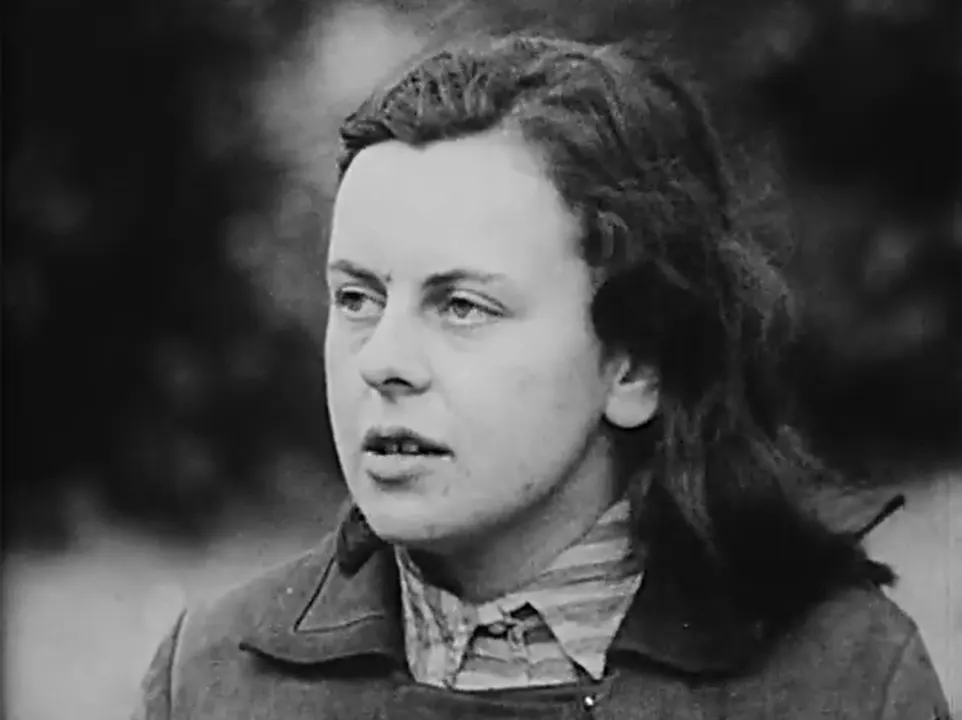
As printed in the Celtic Mirror, November 1995
GLASSBORO, N.J. - Veteran Irish Republican leader Bernadette Devlin McAliskey, speaking Oct. 18 at Rowan State College, demanded that President Bill Clinton pardon 24 Irish prisoners held in American jails (as well as Native American freedom-fighter Leonard Peltier) or face large scale protests during Clinton's planned visit to Ireland this month.
Devlin challenged Sinn Fein to join the protest against Clinton, calling on Gerry Adams and other Sinn Fein leaders to "show which side they are on, the American President's or the Irish people's side."
Displaying the fire and sharp wit of her early days leading mass protests and street-fighting in Belfast and Derry, Devlin lambasted the Sinn Fein party leaders for their "undemocratic" actions in negotiating secretly with British, Loyalist and "Free State" leaders for years "without even telling their constituents and comrades in arms that negotiations were going on."
In a later interview, Devlin asked how, in good conscience, the present Irish Republican leadership could have been negotiating the war's end "from 1987 on," while at the same time "sending out our volunteers to die," and letting the northern Nationalist population suffer the horrors of death squad murder and "the bitterest years of a long, bitter war."
"In my book," Devlin said, "you cannot preach democracy and not practice democracy!"
She accused Adams and his colleagues of arrogant disregard for the Irish tradition of open discussion on policy and of a betrayal of the democratic principles of the civil rights movement she helped to found almost three decades ago.
Devlin said that while she believes Adams is personally operating from "the purest motive," he is being "misled by American fat cats," "middle-class Irish back room politicians," and his own inadequate knowledge of American political reality.
Ridiculing the notion that "the vast Irish diaspora" will stand behind Adams in a quest for a united, democratic, economically-reformed and socially-just Ireland, Devlin said most of the wealthy Irish-Americans now lionizing Adams "have no experience of poverty and no interest in the lives of the poor, whether in Ireland or in America."
Devlin accused Sinn Fein of "a sad naivete" in trusting Clinton to force Britain to negotiate or to honor commitments to the Irish peace process.
She predicted that the British government will stall any meaningful negotiations until Clinton is out of office, and then will force the Irish to accept an unsatisfactory settlement.
Devlin criticized Adams for "hobnobbing with reactionary, hypocritical American politicians who trot around West Belfast like royalty while their American slums rot!"
Devlin traced the history of British manipulation of the Irish Republican leadership back to 1972, when a young Gerry Adams and Martin McGuinness were flown to England and were offered minimal British concessions in exchange for an IRA surrender.
Sinn Fein refused to surrender at that time and the war continued until the 1994 IRA cease-fire.
"When all the talk about arms decommissioning and other nonsense is over," Devlin predicted, the British will simply offer the Irish "the same unacceptable terms that were rejected in 1972, but by then, the Irish negotiators may then have no choice left.
"It will be like what the British and their Yankee allies did to Michael Collins. They destroyed him!" Devlin said.
Devlin said those British terms likely will include a redesigned power-sharing "Stormont" parliament, with Loyalists in de facto control, working class Nationalists excluded from real influence, and partition still in effect.
While she held out hope that "Gerry Adams well may jump off the bus before we get to that point," she expressed fear that the Sinn Fein leaders may first lose most of their waning credibility and that the discrediting of Sinn Fein is, in itself, a primary goal of British policy.
Noting that life has changed markedly for herself and her fellow Northerners during the past year of the "absence of war," Devlin denied any possibility that the war will resume in the near future.
She dismissed rumors the IRSP or Republican Sinn Fein or some outfit nobody's ever seen would resume the armed struggle.
"Everyone knows that one shot fired by anyone on the Republican or Nationalist side would give the British the excuse they want to reintroduce internment and send out their death squads to kill off all our leaders in short order, all with the blessings of Sinn Fein's fine rich American supporters and their Irish pals!" Devlin said.
Instead, she predicted a prolonged period of worsening social unrest in Ireland as Nationalists slowly discover their dreams have been betrayed and take to the streets in frustration, "just as we did back in 1968."
She said this unrest may well lead to resumed war by another generation of Irish Republican youth, but that this will not happen "for at least 15 years."
Devlin expressed hope that the Irish people, particularly working-class Northerners, can use the present period of "absence of war" to build an organized and effective mass democratic movement.
This, she said, will ultimately force British withdrawal and advance social and economic democracy throughout the island, conceivably without the necessity of a return to guerrilla warfare.
She called on Sinn Fein to return to its Republican, Socialist ideals and to join this democratic struggle, rather than waste any more time on pointless sham-negotiations with the British.
Devlin reserved her most stinging criticism for the "boys club" of Sinn Fein/SDLP/Irish government negotiators and termed it "a sorry disgrace" that women had been excluded from the negotiating process and from Sinn Fein's public delegation to America.
She drew loud applause for her demand that women of Ireland, herself included, act as the leadership and guiding force of the new Irish mass movement to be formed in the wake of the imminent collapse of the "peace process."
As an initial action of that new mass-movement, Devlin called for large-scale protest, which she personally will lead, when Clinton visits Ireland.
"We'll be at every dinner he attends and on every golf course he visits!" she said.
She demanded Clinton show his seriousness about justice and peace by issuing presidential pardons to each of the 24 Irish nationals now held in American prisons on immigration charges (including Jim Barr of New Jersey and Matt Morrison of St. Louis) and to Native American prisoner Leonard Peltier (whom she described as "a comrade of our struggle in solidarity, who has been held longer than any Irish fighter").
Devlin said Clinton's failure to act on this demand for amnesty before coming to Ireland will demonstrate he "is not seriously on our side," and should be made unwelcome in Ireland.
Devlin called for Sinn Fein "to decide which side they are on" and to join her protest demonstration against Clinton and against British intransigence.
She was asked how she has adjusted to the changed atmosphere in Ireland since the IRA cease-fire.
Devlin, herself a victim of a 1981 assassination attempt, said her children can move about with much less daily fear of harm from Loyalist squads or British security forces, but that relief is counterbalanced by growing unease with the shallowness of the "peace momentum" on the British side, and by a feeling of dread and impending collapse. "The British and Sinn Fein themselves, to a sad extent, have attempted to marginalize the likes of Desmond Wilson, Mary Nelis, myself and other longtime community organizers and rights activists," she said.
She said she has not been invited to a Sinn Fein public forum in more than a year.
Devlin's talk at Rowan State College drew a full house, an extended question and answer period and a standing ovation at its end.
The forum, part of an ongoing series on the Irish struggle and on human rights issues generally, was organized by Dan Dougherty and Herb Douglass of the Rowan State faculty and by longtime local Irish rights activist Ann Gaughan of American Protestants for Truth About Ireland.
Her predictions, checked
Bernadette Devlin McAliskey made several forecasts in Glassboro, and the record lets us score a few. Her confidence that the war would not resume "in the near future" lasted less than four months: the IRA ended its ceasefire with the Docklands bomb on February 9, 1996. Her warning that Sinn Féin would end up in a redesigned power-sharing Stormont with partition intact is, broadly, what the Good Friday Agreement of April 10, 1998, delivered, though Sinn Féin chose to go in. Martin McGuinness became deputy First Minister there in 2007.
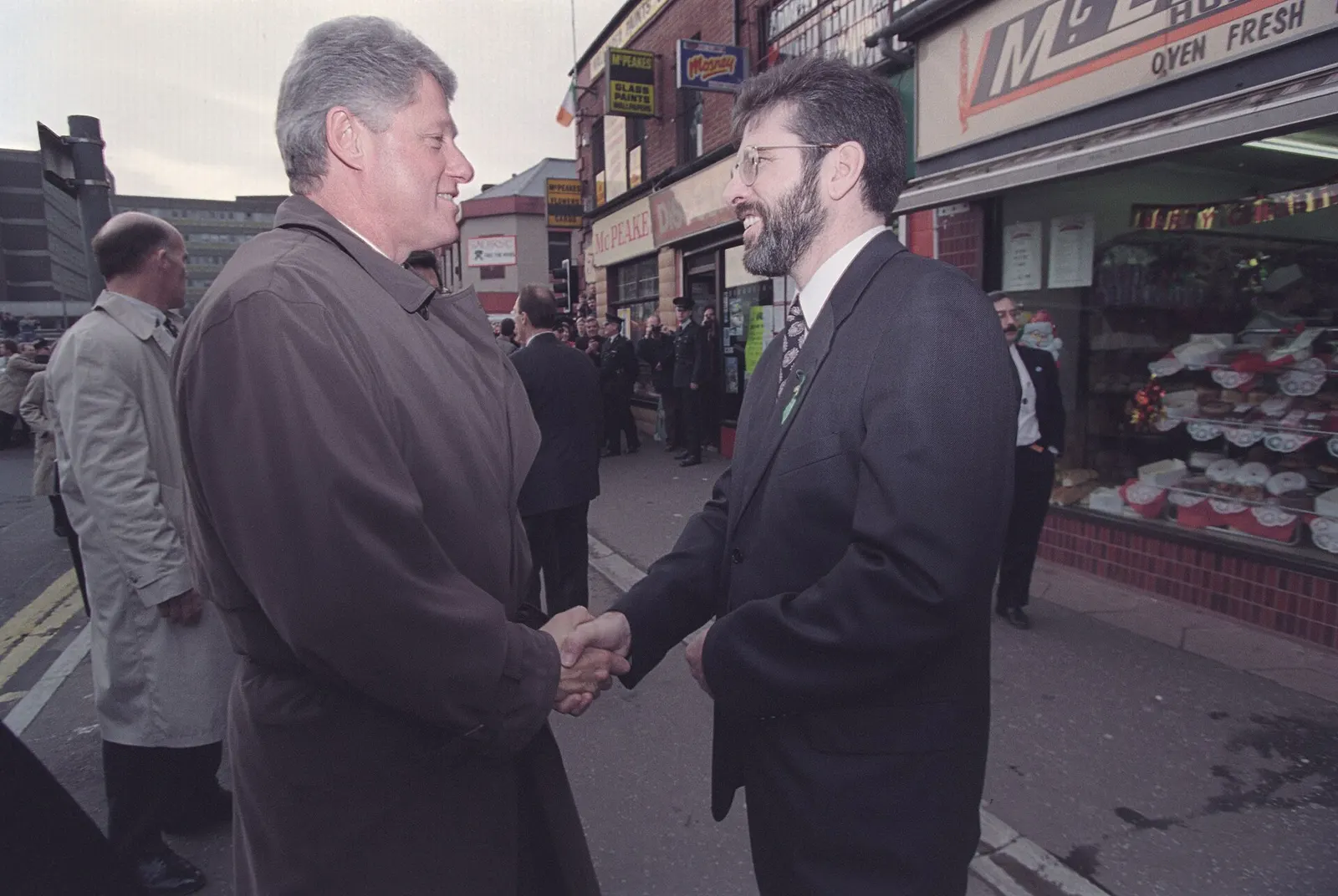
The Clinton visit she promised to picket went ahead on November 30, 1995, with a rally at Belfast City Hall. We have not found a reliable account of the protest she planned, so we leave that question open.
The Leonard Peltier demand had the longest tail of all. Clinton never granted him clemency, despite rumours near the end of his presidency in 2001. On January 19, 2025, his last full day in office, Joe Biden commuted Peltier's life sentence to home confinement, and on February 18, 2025, Peltier left prison for the Turtle Mountain reservation in North Dakota. He had been convicted in 1977 of killing two FBI agents at Pine Ridge in 1975.
McAliskey herself kept to the community work she described. In 1997 she helped found the South Tyrone Empowerment Programme, which works on community development and support for migrants, and she became its chief executive. In 2003 she was refused entry to the United States and deported, with the State Department calling her a security threat, an episode linked to her 1969 conviction for incitement to riot. Leila Doolan's documentary Bernadette: Notes on a Political Journey appeared in 2011. The college where she spoke became Rowan University in 1997.
Questions readers ask
How old was Bernadette Devlin when she became an MP?
Bernadette Devlin was 21 when she won the Mid Ulster by-election on April 17, 1969, making her the youngest MP at Westminster at the time. She remained the youngest woman ever elected to the House of Commons until 2015. She later married and became known as Bernadette Devlin McAliskey.
Was Bernadette Devlin shot?
On January 16, 1981, gunmen from the Ulster Freedom Fighters, a cover name for the Ulster Defence Association, attacked her home near Coalisland and shot her nine times in front of her children. She survived the attack and continued her political and community work through the 1980s and 1990s.
Why was Bernadette McAliskey banned from the United States?
In 2003 Bernadette McAliskey was refused entry to the United States and deported. The State Department described her as a serious threat to the security of the United States, a ruling linked to her 1969 conviction for incitement to riot. She had spoken in America before, including at Rowan in 1995.
When was Leonard Peltier released?
Leonard Peltier was released on February 18, 2025, after President Joe Biden commuted his life sentence to home confinement on January 19, 2025, his last full day in office. Peltier moved to the Turtle Mountain Indian Reservation in Belcourt, North Dakota. He had been convicted in April 1977 for the deaths of two FBI agents at Pine Ridge in June 1975.