An observation on Northern Ireland: What the troubles have brought
A 1996 Belfast interview with Sinn Féin councillor Bobby Lavery, whose brother and son were shot dead by loyalists, published days before the Good Friday Agreement.
As printed in the Celtic Mirror, April 1998
To most in this country, mention of the "troubles" in Northern Ireland often invokes images that reflect only the actions of those embroiled in a bloody and bitter conflict that has spanned almost 30 years.
Some impressions, formed from 30-second news clips perhaps viewed on CNN or a local affiliate, might cause one to mutter the word "terrorist." Or "murderer."
Stare at a body outside a pub, draped in white and surrounded by police, as a news correspondent recites another grim tale of random execution. Regard a throng of people trailing behind a casket borne on the shoulders of six solemn-faced men, moving slowly in a procession of death in what might as well be a nameless province in a land that has hosted the resistance to a call for final identity since 1969.
In no way can a brief news item reveal the complexities of the Northern Irish conflict, nor can it examine the origins of that conflict.
At the outset, this article was to be a historical reference on the modern troubles. The memory of an interview conducted in Belfast in 1996 has nagged at this reporter, however, as have some recent news reports from that beleaguered city. Their effect has been to prompt the writing of something other than a dry synopsis. To this end, only the most pertinent detail to that conflict need be given: Since 1969, 3,217 people have lost their lives in the six counties of Northern Ireland.
The roll call of the deceased numbers Catholics, Protestants, security forces, innocents and assassins.
Divided by a treaty accord in 1921, Ireland originally consisted of 32 counties. By the terms of that treaty, 26 of those counties were recognized as the independent Republic of Ireland, while six counties lying in the geographic northeast of the island remained part of the United Kingdom.
This "partition" of Ireland has brought about much more than a geographic separation. The partition of Eireann has nurtured religious bigotry, economic discrimination and the defiance that will always accompany such social climates. Some claim that the strife in Northern Ireland is a conflict on religious lines; others claim it is of a territorial-political nature. The reality of the moment suggests that it is both, braided together in a fashion in which the past beckons and the vacant future offers only uncertainty.
The questions of cause and blame in this tragic war are ones that elicit varied responses, and it will be left to the reader to decide whether and in what measure they are addressed here. This article is about just one of the people who figure in the statistics of tragedy. His name is Bobby Lavery.
A councillor for the republican political party Sinn Fein, Lavery lives in Ardoyne, a nationalist enclave in north Belfast. Recently, his face began showing up on ominous posters that also bore threats against his life. These harbingers of ill will were issued by the Loyalist Volunteer Force, a splinter paramilitary group that has opted not to participate in the current cessation of hostilities.
This is not the first time Lavery has been the target of those who trade in violence.
Belfast itself is quite unsettling to an American hailing from a small community. A quixotic paradox, the city is surrounded by peacefully rolling hills that belie the sectarian tension simmering within its limits.
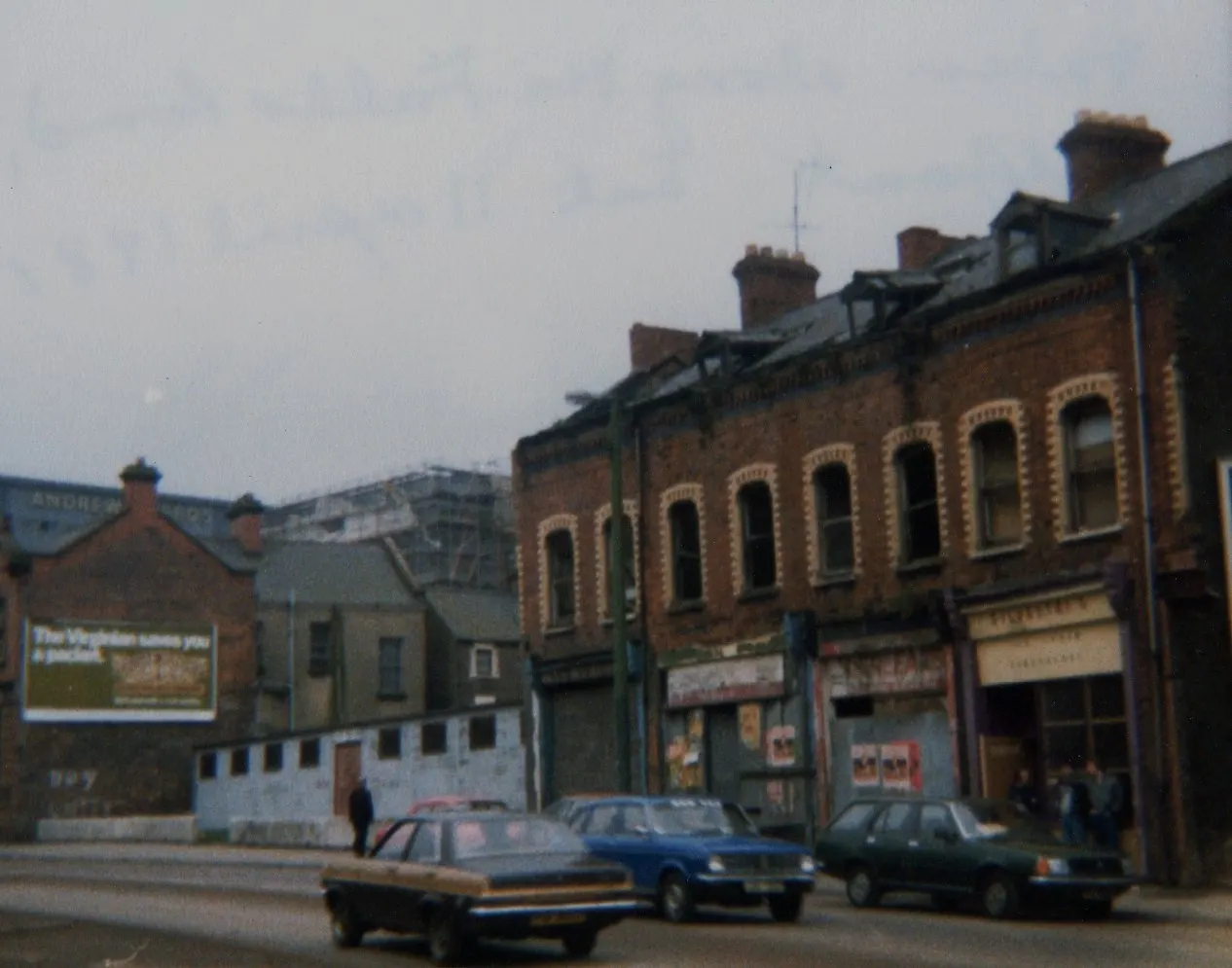
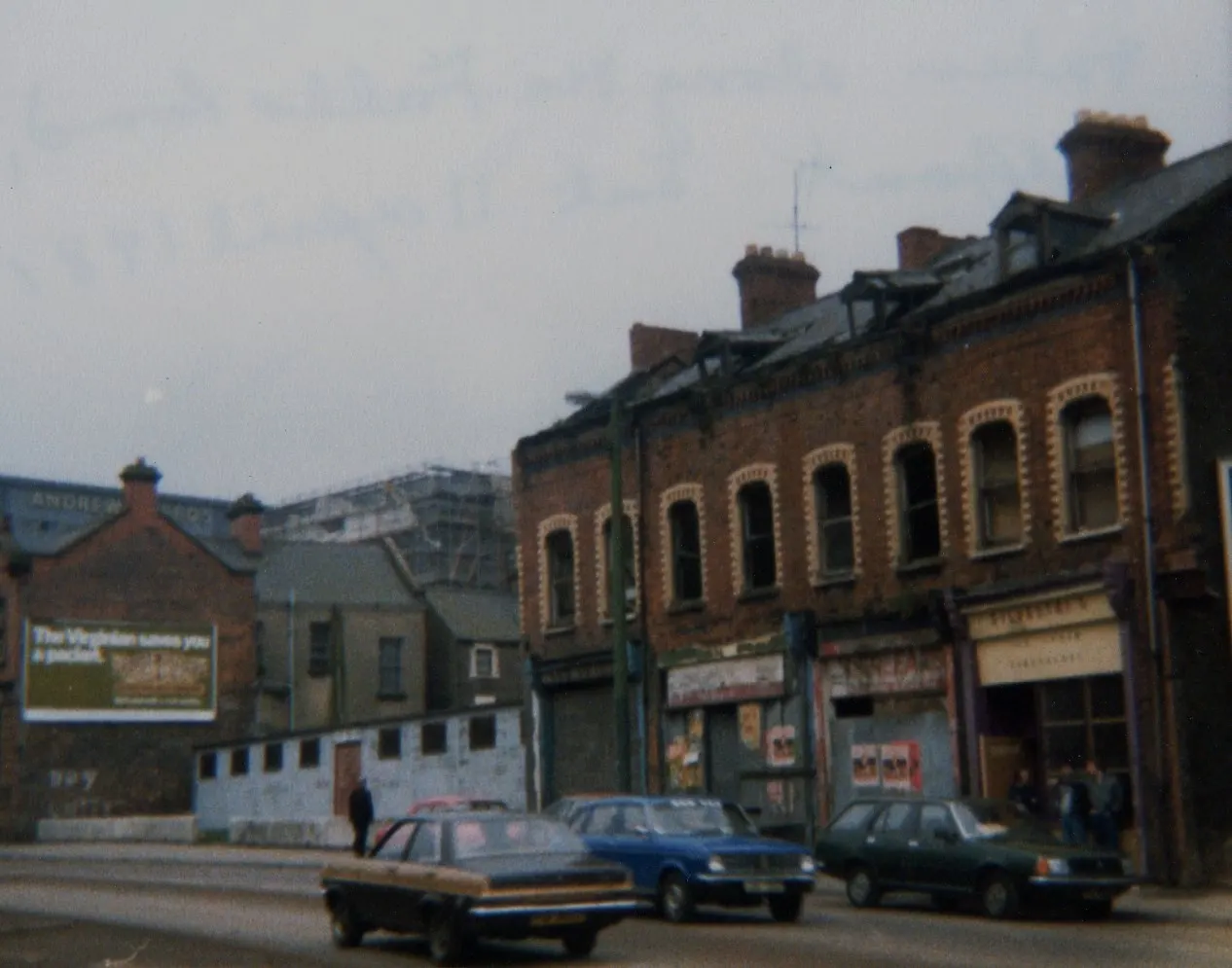
The streets are a topographical Rubik's Cube, which can lead one to think that finding one's way out of a carnival funhouse maze might be easier than finding one's way around the city. Many urban settings offer a gradual deterioration in the aesthetics of one's surroundings to alert one to potential danger. Not so Belfast. The red brick housing developments with slate roofs, some of which are disintegrating and some of which are not, seem to fit endlessly into one another, like the pieces of a puzzle. One could find oneself in the soup quite easily.
Then there is the paranoia. It is palpable. Surveillance cameras are mounted on light posts. If it is true that knowledge is power, then here, collected information is God.
Most Protestant unionists mistrust the Catholic nationalists, as do the police and the members of the British military units. Feeling that they have played against a stacked deck for 30 years, the Catholic nationalists in turn regard all three with a tangible leeriness.
Martin, a Belfast resident and friend, advises caution when placing phone calls. Every call in Northern Ireland is taped, he claims, and whom you call and what you say may reach strange ears. Big Brother is listening.
Be careful not to stray close to Sandy Row or the Shankill Road, he warns. The license plate on the rental car is white, not yellow, and is indicative of a vehicle from the Republic of Ireland. This, he states, is sure to rouse suspicion if one loses direction and strays into a loyalist area.
Attention, at once subtle and obvious, is paid to a reporter when he rings the entrance bell at the Connolly House on the Andersonstown Road. Eyes peer from the windows of black taxis to register the features of someone who would be calling at the Connolly House on a Saturday afternoon. Peace is a rare commodity here, available for public consumption only when opposing factions deem it to be. Understandably, the natives are wary of strange faces.
The reporter, already anxious, becomes even more so when misleading directions necessitate a phone call to Martin from a booth somewhere in the southern part of the city. "Read the nearest street sign to me, so that I know where you are," he urges. When that information is given, Martin advises an expeditious departure due north.
Naively, the reporter asks, "Why?"
"Ay, just do it and call me from another booth when you drive for five minutes." Click.
Sinn Fein's Belfast press center is plunked in the middle of this madness, and interviews are the order of the day, a resplendently sunny one in the month of April. The exterior of the building is emblazoned with a mural of Bobby Sands, striking in its likeness of the republican prisoner who died on a hunger strike in 1981. Belfast is full of these portrayals, painted by those on both sides of the divide, and most warrant the respect of even the most talented artist.
The inner sanctum of the press center is dilapidated, and would immediately dispel any notion that those who ply the trade of politics on the Falls Road in Belfast do so for material gain. Then again, this is West Belfast, not 1600 Pennsylvania Avenue.
Bobby Lavery enters a windowless room, extends a hand, and sits directly across from his interviewer. Accommodations are sparse: table, three chairs and an ashtray. Tall, slender, wearing thick glasses, Lavery evidences nervous energy bordering on frenetic. He quickly shifts in the wooden chair, pats his chest in search of something. His eyes flicker constantly while somehow focusing on his questioner. "Well, what would you like to know?" he asks.
"Your story," replies the reporter.
A brief pause. "Okay." The hand patting his chest has found what it was seeking. "Do you mind if I smoke?"
Arrested in 1971 for possessing ammunition for a firearm, Lavery was imprisoned for four years. Unjustly, he declares. "They did not find a weapon, just ammunition." He waves his hand dismissively. Declaring that his arrest was followed by beatings at the hands of Royal Ulster Constabulary officers, the police force in Northern Ireland, Lavery also claims that he was drugged at one point. "It's the kind of thing that happens to a nationalist, to republicans, in Northern Ireland," he claims.
Upon his release from prison, Lavery rededicated himself to the politics of Sinn Fein, which he had joined in 1970. The year in which he joined the political fray in Northern Ireland is indicative of the point in history when the situation rapidly deteriorated, sowing the seeds of social discontent.
In the late 1960s, Catholic citizens began to organize civil rights groups, in an attempt to redress inequitable employment rates and poor housing. At the time, a Protestant citizen in Ulster was almost three times as likely to hold a job as was a Catholic.
When the groups began to lobby and gain substantial support, many Protestant-unionist citizens, sensing that their majority rule and their very culture were in jeopardy, were alarmed. For many Catholic-nationalists, a hellish nightmare ensued. Brandishing cudgels, torches, petrol bombs and concrete missiles, unionist lynch mobs ran amok in the streets. Homes of Catholic families were destroyed, and families were forced to flee their communities. Some modern Irish historians consider this to be the flashpoint of the modern troubles.
British military troops were assigned to the North, and many nationalist citizens expressed relief, assuming that the forces of the Crown would be a panacea for the malicious behavior that was threatening the Catholic communities. Those hopes quickly faded, however, as British soldiers, in many instances, stood idle as the trashing of lives continued unabated.
Lavery remembers. "They did nothing.... At first the troops were welcomed by the communities. That changed. Soldiers stood by as people were torn out of their homes ... chased away by mobs in the middle of the night."
Amid the mayhem, the Irish Republican Army, which at the time was little more than a name and unable to defend the nationalist community, was reborn. Cryptically, Lavery offers only this observation on the subject of the IRA: "They did not appear out of a vacuum or anything like that. There is a specific reason that they exist. One must look at the cause of this conflict."
The coming years would see Lavery knee-deep in furthering the objectives of his party, but now ferociousness had become a way of life in Belfast, as the IRA waged war with the British forces in Northern Ireland.
Pro-Irish and mostly Catholic, the IRA was also engaged in urban and rural guerilla warfare with pro-British Protestant paramilitary groups, such as the Ulster Defence Association and the Ulster Freedom Fighters. The death toll was mounting daily, as was the deepening emotional divide.
Sinn Fein has been widely described as the political wing of the IRA. In fact, its enemies widely refer to the party as Sinn Fein-IRA, in an attempt to muddy the line between the political and the paramilitary.
While the fact or fiction of that claim has long been debated, there are no denials offered in discussions of the crux of Irish republican idealism: British withdrawal from Northern Ireland and unification with the Republic of Ireland.
Two separate acts of malevolence, however, would forever change Lavery to his core, would alter his very existence.
On Dec. 20, 1992, while opening a Christmas gift in his home, Lavery's brother Martin was shot and killed. Those responsible were members of the Ulster Volunteer Force, a paramilitary group that at the time was unleashing a rash of indiscriminate sectarian slayings. Catholics were being shot on buses, in factory parking lots, in their own homes.
Yet the face of violence wears the mask of hypocrisy, and the fact that Lavery was a member of a republican political party marked him as fair game in the eyes of his transgressors. Apparently, it marked his family as well.
Less than eight months later, a car carrying gunmen screeched to a halt in front of the Lavery residence. They loosed a hail of gunfire in which 60 armor-piercing bullets were fired into the home, shattering the door and windows. In the line of fire was Lavery's young son Sean, who was killed instantly. This time, it was the unbridled violence of the Ulster Freedom Force that sent Lavery into an anguished downward spiral.
Yet another attempt was made on the lives of Lavery and his wife in November 1993. More than 30 rounds were fired into his home. The residence has since been fitted with bulletproof windows.
Asked why his family was the target of such attacks, Lavery bluntly states, "Sinn Fein. I mean, several Sinn Fein councillors have been shot dead."
Lavery sprinkles tobacco into rolling paper, rolls it up, seals the white paper with a lick, lights the cigarette, and speaks through a wisp of gray smoke. It is a process he will repeat several times over the course of an hour.
Collusion, they say, is a word often heard in republican circles. Accusations are that loyalist killers, such as those who gunned down Lavery's son and brother, have long been afforded the aid of British intelligence services and military forces.
"You know, after the attack, I went down the street to talk to an RUC commander. I asked him for a tape of the killers, 'cause certainly they had to have gotten them on tape. Because there is a camera at the end of my street, and the security forces have known just about every move I had made in the last 20 years." He grimaces. "'No tape,' they told me." To date, no arrests have been made in the killings.
A dull, steady whop-chump can be heard in the distance - the noise of a British military helicopter hovering in the sky, somewhere close. An all too familiar sight on the Falls Road, the helicopters are an imposing specter as they hang seemingly motionless for an eternity against the skyline, then suddenly bolt away, only to repeat the process somewhere else.
Lavery's interviewer stops scribbling for a moment, cocks his head, and waves his pen at the heard but unseen pounding rotor blades. "Those helicopters - don't they drive you crazy?"
Lavery's lips crease in a genuine smile. "You get used to them."
If there were a handbook on humanity, certainly there would be a section on vengeance. Surely it would seethe in the heart of one whose child and brother were taken in acts of violence, and be brought to bear on those responsible.
Not according to Lavery. "There are no feelings of hatred or revenge. Those emotions will eventually serve to destroy the person who harbors them." He pauses. "They will surely destroy those who act on those feelings."
He admits to experiencing emotions of a different nature, which come to haunt him, casting their recriminations as to the path he has chosen. "Many times, I ask, Why, God? Why have they taken my son, my brother, and not me? What if I had not been with Sinn Fein? If I wasn't a republican? Would my family be alive?"
As his voice trails off, there is a long pause. For the first time in the discussion, Lavery's eyes are downcast. As he stubs the cigarette out in the ashtray, his hand trembles noticeably. "It's a difficult question to wrestle with."
Some time after the killing of his son, Lavery was interviewed for an NBC news telecast. His interviewer, in a fumbling attempt to rationalize the motives of those who killed his son and brother, asked, "But you [members of Sinn Fein] kill Protestants, don't you?"
Lavery angrily retorted, "People like you are just as responsible for my son's death as are those who pulled the trigger. Because you have demonized the existence of my party with disinformation like that!"
Conflict, and its harsh residual prints, will either break a person's spirit or harden his resolve. In Lavery's case, it seems to have done the latter.
"Just recently, my wife asked me why. She said 'Bobby, why push through? Let someone else do it.'
"And I said, because I have to see this through. For my children, for the memory of my child and brother. And for all the children of Ireland, so they will not have to endure this in the future. I am staying with this until it ends. I want to see peace."
When asked if he could possibly sum up the experiences of the last 25 years, bedeviled by tragedy and strife, in one word, Lavery gently shook his head. "No ... I don't believe I possibly can. Not with one word."
The reporter expressed gratitude for the time given, and the Ardoyne councillor responded in kind.
The clasp on the notebook was not yet shut when suddenly Lavery reentered the room. He was kneading his hands together, as though to squeeze from them the answer he sought.
"One word?" He ran a hand through his salt-and-pepper hair. "Justice," he said. "That's what this is all about." And with that, he was gone.
For the record, this story is not meant to magnify the suffering of one particular group in Northern Ireland, nor is it meant to minimize the suffering of others. It is meant to convey the experience of one in the eye of a storm.
When blood is spilled by the stroke of a violent brush, it is always colored with sorrow.
There are others like Bobby Lavery in Northern Ireland. Other Catholics, and many Protestants, have suffered much loss. There are many visionary and courageous people who, like him, have endured despair, and who have vowed to ensure a final truce in the conflict.
It is the resolve of such people that will determine the future in Northern Ireland.
History will settle the questions of cause and responsibility in the "troubles." It has a way of doing so. A lasting peace will add Godspeed to that task, and only then will the healing commence.
After the interview
This piece went to press in April 1998 with a figure of 3,217 dead since 1969. The count kept rising for a while. The standard tally now used for the whole conflict is 3,532 deaths, and the worst single day was still ahead when McCormick wrote: the Real IRA bomb in Omagh on 15 August 1998 killed 29 people.
Bobby Lavery did see his peace, more or less. He had been elected to Belfast City Council for the Oldpark area in 1985, alongside Gerard McGuigan, among the first Sinn Féin councillors to sit in City Hall in more than 60 years. He was returned in 1993, the same year his son was killed, and held his seat on the first count in 1997. He stepped down from politics at the 2001 local elections and afterwards divided his time between Belfast and San Francisco.
The dates in the article match the record. His brother Martin, 40, was shot dead in December 1992 in his home on the Crumlin Road while wrapping Christmas presents, in front of three of his children. Later reporting linked the killing to the same south Down UVF unit associated with the Loughinisland massacre. Sean Lavery, 21, an Ulster University student, was shot in August 1993 when gunmen opened fire on the family home on the Antrim Road; the CAIN database at Ulster University attributes his death to the Ulster Freedom Fighters. One small correction: the family home was in north Belfast, but the sources place it on the Antrim Road rather than in Ardoyne proper.
Bobby Lavery died in San Francisco on 26 December 2022, aged 74. His funeral was held at St Patrick's Church on Donegall Street in Belfast. Asked in 1996 for one word, he gave the reporter "justice." We leave it there.
Questions readers ask
Who was Bobby Lavery?
Bobby Lavery was a Sinn Féin councillor in north Belfast, first elected for the Oldpark area in 1985 and re-elected in 1993 and 1997. Loyalist gunmen killed his brother Martin in December 1992 and his son Sean in August 1993. He left politics in 2001 and died in San Francisco on 26 December 2022, aged 74.
How many people died in the Troubles in Northern Ireland?
The commonly cited total is 3,532 deaths for the conflict that ran from the late 1960s to 1998. In April 1998 this magazine reported 3,217 deaths since 1969. The deadliest single incident in Northern Ireland came after the Good Friday Agreement: the Omagh bombing of 15 August 1998, which killed 29 people.
Who killed Sean Lavery in 1993?
Sean Lavery, a 21-year-old Ulster University student, was shot dead in August 1993 when gunmen fired into his family's home on the Antrim Road in north Belfast. The CAIN victims database records the Ulster Freedom Fighters, a cover name used by the UDA, as responsible. His father reported that no arrests had been made by 1998.
What was Connolly House in Belfast?
Connolly House on the Andersonstown Road in west Belfast served as a Sinn Féin office and press centre during the Troubles. Reporters visiting in the 1990s, like this magazine's correspondent in April 1996, interviewed party figures there. Its walls carried a mural of Bobby Sands, the republican prisoner who died on hunger strike in 1981.