Celtic Music: A blend of old and new
Producer Brian Keane explains in 1998 why Celtic music was suddenly big business on both sides of the Atlantic, and who was carrying the tradition forward.
As printed in the Celtic Mirror, April 1998
The term "Celtic music" conjures up diverse images. To some, it may evoke the hypnotic sounds of Enya's chanting or William Jackson's passionate work on the harp; to others, it will mean a medley of fiddle, squeeze box and rumbling bodhrans. To a new generation, it is the innovative rock sound of bands like Black 47 and groups like the Cranberries.
Today, when Celtic nations come together to play at festivals, people ask who's new in the Celtic music scene. No doubt about it, Celtic music is hot business. People are buying the music, and the bands are playing major venues on both sides of the Atlantic.
In an interview with this reporter, record producer and composer Brian Keane said, "The Celtic influence is nothing new." Keane's most recent production was the sound track for Disney's "Irish in America" project and the "Long Journey Home" sound track. "The most obvious Celtic influence," said Keane, "was on America's Appalachian music. It evolved into bluegrass, country music, then certain types of rock and roll and folk sounds. The Scottish and Irish immigrants who settled those southern regions brought their music with them." In a 1790 United States census, people of Celtic ancestry outnumbered Anglo-Saxons two to one in those regions.
Keane calls musicians like the Chieftains "the keepers" of traditional Irish material, saying their music has inspired a new generation of musicians. "They are bringing a new awareness of Celtic music," he said of musicians like Cherish the Ladies, Solas, Seamus Egan and Mick Moloney. He also credited some of the music's current popularity to the show "Riverdance."
"Today," said Keane, "Celtic music is diverging. There are the commercially successful ethereal and New Age forms." In describing Enya's sound, Keane said her style "is achieved by overdubbing layers of voices." Another rising star in that genre is the Norwegian singer Sissel, who contributed music to the film "Titanic." Keane recently worked with her on his "Long Journey Home" sound track.
Enter, also, new record companies like the Hearts of Space, which started as a small but popular syndicated late-night radio program specializing in alternative music, space, New Age and ethnic sounds. Today it is a multifaceted business of radio, records and music publishing. Its "Celtic Twilight" release, a compilation of Scottish and Irish traditional music, stayed on the alternative music charts for two and a half years, ranking as Billboard's number one New Age album.
Honest Entertainment, of Nashville, Tenn., is another company riding high on this music. With a catalogue dedicated to Celtic performers, the company has just celebrated its sixth anniversary.
But it is a small New Jersey record company, Shanachie Records, that Keane credits with doing the most to forward Irish music. "And it was Shanachie Records that brought the Chieftains out as leaders in the record business," Keane added.
He also noted that there is much experimentation with Irish music. Citing Eileen Ivers and Joanie Madden as two performers to watch, Keane said, "They are taking this music to a new place."
Madden, better known as one of the forces behind the music group Cherish the Ladies, is an accomplished traditional whistle player. "Madden is taking the ethereal, operatic style in another direction. She does with whistles what Enya and Sissel are doing with voices."
Talking about this new generation of Celtic musicians, Keane said, "They are first-generation Americans with parents from Ireland." There is a tight-knit community of musicians centered in New York's Bronx region. "Eileen Ivers and Seamus Egan [from Solas] are part of that core group," said Keane. These are the movers and shakers who are taking traditional music onto its next level. This is modern-day immigrant music with a reverence for the traditional and enthusiasm for the new. Keane explained, "They are not just doing rock and roll and appearing on a record singing a song that their parents sang. These people are carrying on the Irish music tradition. Having learned the music that has been passed down through the generations, they remain open to modern society's influences."
Keane defined the uniqueness of the Celtic sound as having a strong rhythmic, tonal center. Its foundations he attributes to the ancient Moorish people, the North African empire. Along that line, Keane noted a connection between the Irish sound and linked it to a Spanish influence.
Talking about the longevity and recent popularity of Irish music, Keane attributes some of its favor to "sheer numbers," saying, "Consider that there are four million Irish people in Ireland, and there are 44 million Irish Americans.
"Of the Irish that came to this country during the famine, 77 percent didn't make it past the first year," explained Keane. "They had a difficult time of it. Even slaves were considered more valuable because slaves were valued property. So the Irish men had the distinction of being used for the most dangerous of work in coal mines, working on the canals, while the women took on domestic work."
Determined to have a better life, the Irish banded together to form an Irish identity. In Ireland, they lacked this cohesiveness. There, they were either from Cork or the west, but in America they forged one identity. "Add the Irish pride to the numbers of Irish here," said Keane, "and it is understandable why this music has longevity."
Talking about the obvious names in the music industry like Van Morrison, Elvis Costello and Sinead O'Connor, Keane characterized Morrison and Costello as rock and roll performers. But he singled out O'Connor for not ignoring Irish musical tradition. "Sinead O'Connor has done a lot for traditional music. She sings and makes a point of performing traditional music on her own records."
Keane, who works with all kinds of music, talked about the nature of music, saying that "music in its best is a true representation of the human heart, and that is why it connects so universally. There is music that involves the mind, and music that involves the body, music that makes you feel good or music that makes you sad or longing. But good music makes you feel and makes you feel what the artist is trying to make you feel or evoke."
No matter which Celtic nation the music comes from, Celtic music is a tradition handed down from generation to generation, whether it be in the parlor or the pub. This music has traveled time and distance and is now drawing fans of listeners with and without Celtic heritage. In summing up this music, Keane said, "It is just a hell of a lot of fun to listen to. It can be strikingly beautiful or a raucous good time."
Where the players went
Most of the names in Joan Farrell's piece are still in the record bins, though some of the elders are gone. Paddy Moloney, who founded the Chieftains in Dublin in 1962 and played on all 44 of their albums, died on 12 October 2021, aged 83. The band had won six Grammy Awards. Mick Moloney, the Limerick-born scholar and musician Keane lists among the torch carriers, died at home in Manhattan on 27 July 2022, less than a week after playing the Maine Celtic Festival. It was Mick Moloney who had dreamed up Cherish the Ladies as a New York concert series in January 1985, to give women players a stage in a scene run by men.
Joanie Madden, Bronx-born and the first American to win the senior All-Ireland title on tin whistle (1984), has led Cherish the Ladies ever since. Eileen Ivers, a founding member of that group, joined Riverdance as its fiddler in 1995. Seamus Egan founded Solas in 1994, has played on every one of its records, and co-wrote 'I Will Remember You' with Sarah McLachlan and Dave Merenda, which is a long way from the Bronx sessions.
The ethereal wing did well too. Enya has sold the equivalent of more than 80 million albums and won four Grammys for Best New Age Album, while insisting she makes 'Enya music', not New Age. Sissel, who sang the Olympic hymn at Lillehammer in 1994, toured America with the Chieftains in 1997 before recording for Titanic.
Keane himself went back mostly to film. He scored more than 700 film and television productions and in 2001 became the only composer to take every Emmy nomination for music composition in a single year. Hearts of Space, which began in 1973 as a late-night show on KPFA in Berkeley, is still syndicated on public radio and is described as the longest-running program of its kind. Shanachie, founded in New Jersey in 1975 and named for the Irish storyteller, the seanchaí, is still in business. One caution for readers: some of the statistics quoted in this interview, like the 77 percent figure for famine immigrants, we could not trace to any reliable source.
Questions readers ask
Who are the most famous Irish-American traditional musicians?
Among the best known are flute and whistle player Joanie Madden of Cherish the Ladies, the first American to win a senior All-Ireland whistle title in 1984; fiddler Eileen Ivers, who toured with Riverdance from 1995; and multi-instrumentalist Seamus Egan, who founded Solas in 1994. The late Mick Moloney (1944 to 2022) did much to organize and record the scene from New York.
When did the Chieftains form and how many Grammys did they win?
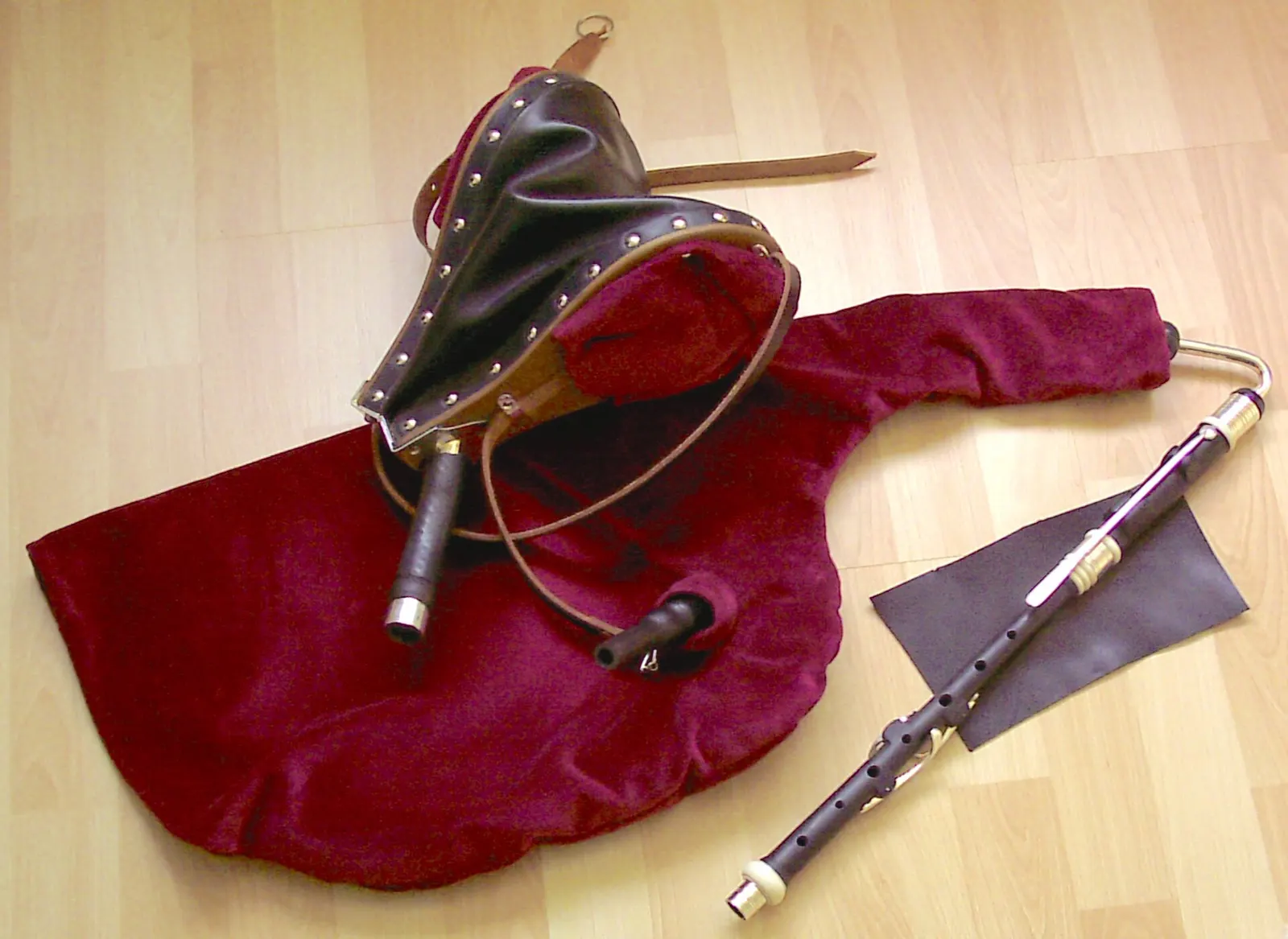
The Chieftains formed in Dublin in 1962, founded by Paddy Moloney with Seán Potts and Michael Tubridy. Their mostly instrumental sound, built around the uilleann pipes, became a byword for traditional Irish music. They won six Grammy Awards from eighteen nominations and released 44 albums with Moloney, who died in Dublin on 12 October 2021 at the age of 83.
Is Enya considered Celtic or New Age music?
Enya's albums are usually filed as New Age, and all four of her Grammy Awards came in the Best New Age Album category, starting with Shepherd Moons in 1993. She draws on Irish language and Celtic melody, but she rejects the New Age label and has called what she does simply Enya music. With more than 80 million album equivalents sold, she is among Ireland's best-selling artists.
What does Shanachie mean in Shanachie Records?
Shanachie Records takes its name from the Irish word seanchaí, anglicised as shanachie, meaning a traditional storyteller. The New Jersey label was founded in 1975 by Richard Nevins and Dan Collins and began with fiddle music before releasing Celtic groups such as Planxty and Clannad. It later branched into Latin American, African, soul, country and ska, and acquired Yazoo Records in 1989.