A celebration of James Joyce: Bloomsday
Every June 16, Dublin and its imitators walk the route of Leopold Bloom. Joan Farrell explains the fuss over a once-banned novel about one ordinary day.
As printed in the Celtic Mirror, June 1998
June 16 is forever designated as the day when Joycean imagination and the history of Dublin city rise from the pages of James Joyce's landmark novel "Ulysses." Each spring in cities the world over, amateur actors, Joycean revelers and ordinary folk set out to re-create a day in the life of Leopold Bloom, an insignificant advertising agent.
Why all the fuss? It's only a book about one single day in the lives of three Dubliners: Bloom, his lusty wife Molly, and Stephen Dedalus, a young poet and teacher (and the spitting image of Joyce's younger self). Yet "Ulysses" is much more than a mere novel. This once banned book has been proclaimed a literary masterpiece and is now included on nearly all serious literature syllabuses. Moreover, Leopold Bloom has evolved into a cult figure since the book's publication.
In Dublin, Bloomsday pilgrims visit the famous Martello Tower; another essential stop is for a glass of Burgundy and a Gorgonzola sandwich at a Duke Street pub. On foot, aboard the DART (Dublin's urban train), and in all manner of other vehicles, revelers zigzag about the city on a trek mapped out by 24 copper plaques. Homage is paid before the bust of Joyce on St. Stephen's Green. Crossing O'Connell Bridge and heading down O'Connell Street, women in frilly dresses with parasols and men in morning coats join in the celebration. Festivities continue into the afternoon with live theater and lectures until the clock strikes five. Then it's Guinness time, and revelers belly up to the pub bars elbow to elbow.
In "Ulysses," Joyce wrote graphically about Irish society the way he saw it, leaving erstwhile literary barriers in ruins. His books were often banned in Ireland, England and the United States. At one point, it was illegal to read Joyce in any English-speaking nation. Unafraid to stab away at hypocritical late-Victorian morality, he candidly used realism and invented characters that were interesting and all too human. Joyce's father and former circle of friends had no trouble recognizing themselves and some of the more colorful Dublin characters within the pages of his work.
Joyce also had an uncanny ability to depict a setting vividly. He didn't just describe Dublin; he captured its sounds and smells. He created a graphic portrayal of the city's landmarks, pubs and people. Joyce once said that if Dublin were to disappear from the face of the earth, the sheer detail in his novel would be enough to guide its rebuilding.
So just as Joyce immortalized Dublin, now every June, Dubliners - and make-believe Dubliners the world over - immortalize Joyce's masterpiece as they try to recapture that spring day in 1904 when Leopold Bloom rose from bed and began preparing breakfast for his wife Molly. While Bloom's mind was on frying kidneys with thick giblet soup and liver slices fried with crustcrumbs and hencods roe, Molly was pondering adultery that afternoon with a man by the name of "Blazes" Boylan.
Intriguing though it is, the book is not an easy read. The writing style varies with each chapter, and the chapters become increasingly baffling and obscure. Even scholars who praise the book argue vehemently over various points. Dozens of "how to" guidebooks have been written to assist the serious-minded reader. The novel is packed with symbolism and riddles. Yet tucked away in Joyce's intellectual wordplay are jokes and crude slapstick. Joyce himself remarked that he wished the reviewers, instead of worrying about the book's obscenity, would at least note that it was funny.
The most original thing about Joyce's writing is his inventive mastery of internal monologue. In the course of "Ulysses," which comprises 700-odd pages narrating the events of a single day, the reader is taken deeply into the minds of the three characters. The novel closes with one of these monologues: a soliloquy by Molly Bloom as she lies in her bed waiting for sleep.
The reader follows the ramblings and workings of her mind as she reviews the events of her life, particularly the day when she said yes to Leopold Bloom's marriage proposal. "I shall wear red yes," Molly reflects, "and how he kissed me under the Moorish wall and I thought well as well him as another and then I asked him with my eyes to ask again yes and then he asked me would I yes to say yes my mountain flower and first I put my arms around him yes and drew him down to me so he could feel my breasts all perfume yes and his heart was going like mad and yes I said yes I will yes."
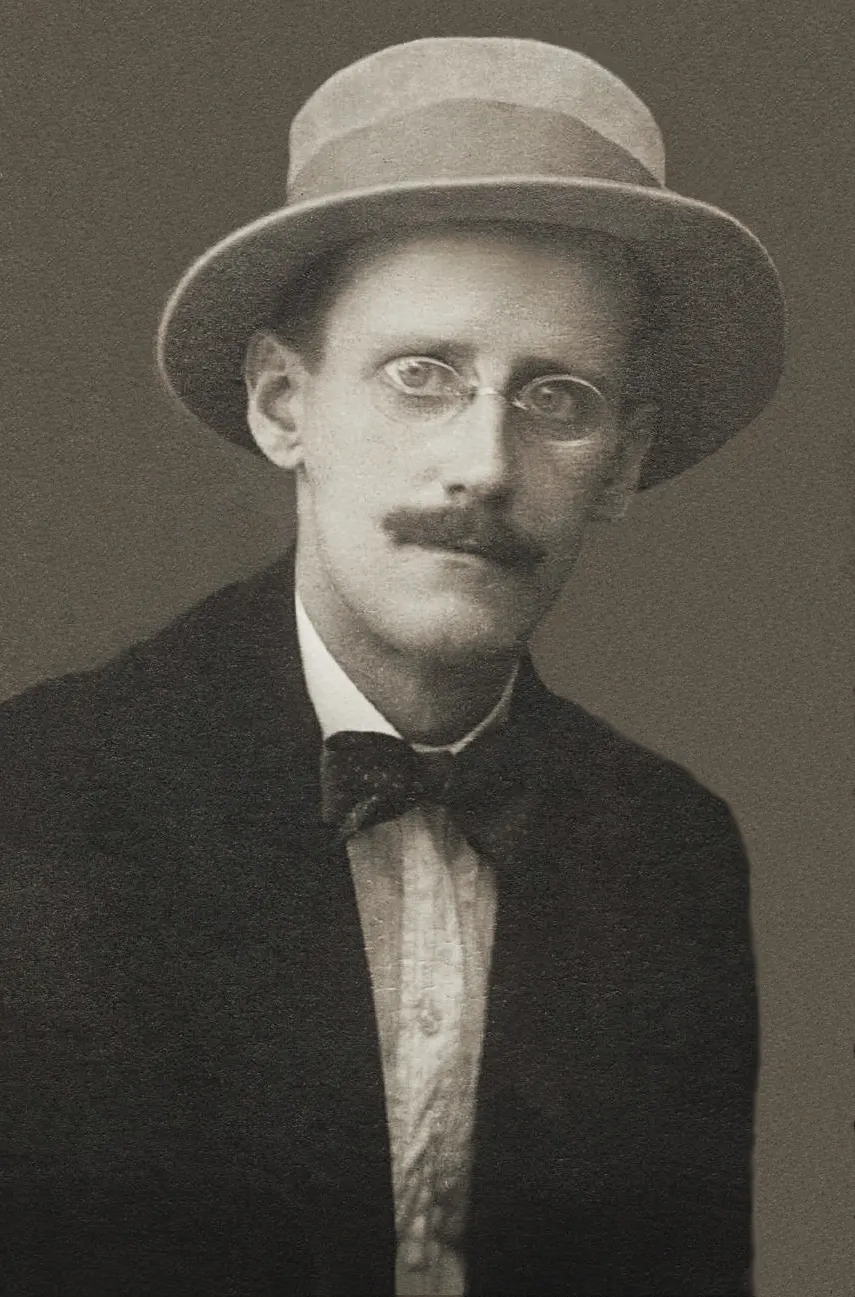
Joyce's enduring popularity can be attributed in large part to his originality. And as a man, Joyce reinvented himself as an enigma. While in his teens, he turned his back on the Catholic religion. In 1904, he met his long-time lover and companion, Nora Barnacle. He was 24, and the couple left the country for good. Two children and 27 years later, the pair married; they returned to Ireland only for two brief visits. Although Joyce exiled himself from his country and the church, Catholic ritual and the Ireland of his youth figured largely in all his writing.
For readers who want to sample Joyce but may be scared off by his use of literary devices, a good starting point is his collection of short stories, "The Dubliners." Other books are his two works of fictionalized autobiography, "Portrait of the Artist as a Young Man" and "Stephen Hero," followed by his play "Exiles," numerous works of poetry and finally his epic novels "Ulysses" and "Finnegans Wake."
The day since
Joan Farrell wrote this for the June 1998 issue, and most of it holds. A few dates are worth pinning down. "Ulysses" came out in Paris on 2 February 1922, Joyce's fortieth birthday, from Sylvia Beach's Shakespeare and Company. The American ban she mentions ended on 6 December 1933, when Judge John M. Woolsey ruled in a New York federal court that the book was not obscene. Random House printed its first copies in January 1934.
One small correction for the record. Joyce was born on 2 February 1882, so he was 22, not 24, when he and Nora Barnacle left Dublin in 1904. They married at a civil ceremony in London in 1931. He died in Zurich on 13 January 1941 and lies in Fluntern Cemetery, moved in 1966 to an honour grave with a seated statue by Milton Hebald. In October 2019 a motion went before Dublin City Council to plan for bringing the family's remains home, subject to their descendants' wishes.
The festival itself is younger than people assume. The first organised Bloomsday was the fiftieth anniversary, 16 June 1954, when John Ryan, Brian O'Nolan, Patrick Kavanagh, Anthony Cronin, the dentist Tom Joyce (a cousin) and the Trinity lecturer A. J. Leventhal set off along the novel's route. They gave up halfway, at the Bailey pub. The Martello tower at Sandycove opened as a museum on Bloomsday 1962; volunteers of the Friends of Joyce Tower Society keep it open now, free of charge.
The centenary in 2004 was the big one. The ReJoyce Dublin festival ran from April to August, and about 10,000 people sat down to a free breakfast on O'Connell Street. The habit keeps spreading: Szombathely in Hungary has marked the day since 1994, the Rosenbach in Philadelphia since 1992, and Gibraltar held its first Bloomsday in 2025, with a play staged beside its Molly Bloom statue. Our readers in Seattle and Vancouver need only a kidney, a pint and a free afternoon.
Questions readers ask
Why is Bloomsday celebrated on June 16?
James Joyce set the whole of "Ulysses" on a single day, 16 June 1904, following Leopold Bloom, Molly Bloom and Stephen Dedalus around Dublin. Fans mark that date each year by retracing Bloom's route, dressing in period costume and reading the text aloud. Joyce himself mentioned a group keeping "Bloom's day" in a 1924 letter to Harriet Shaw Weaver.
When was the first Bloomsday?
The first organised Bloomsday pilgrimage took place on 16 June 1954, the fiftieth anniversary of the novel's events. John Ryan, Brian O'Nolan, Patrick Kavanagh, Anthony Cronin, Joyce's cousin Tom Joyce and A. J. Leventhal set out to follow the book's route through Dublin, but they abandoned the walk halfway, at the Bailey pub.
Was Ulysses banned in the United States?
Publication was prohibited in the United States after the 1922 Paris debut, and pirated copies circulated for years. On 6 December 1933, Judge John M. Woolsey ruled in United States v. One Book Called Ulysses that it was not obscene. Random House then issued the first legal American edition in January 1934.
Where is James Joyce buried?
Joyce died in Zurich on 13 January 1941 and is buried in the city's Fluntern Cemetery. His body was moved in 1966 to a more prominent honour grave marked by a seated statue by the sculptor Milton Hebald. In October 2019 a motion was put to Dublin City Council about planning for the return of his remains to Ireland.
What happens on Bloomsday in Dublin?
People in period costume follow Bloom's route through the city, from the Martello tower at Sandycove to the pubs and streets named in the novel, with readings and street theatre along the way. For the 2004 centenary, about 10,000 people were served a free outdoor breakfast on O'Connell Street. The James Joyce Centre now organises the Dublin festival for the city.