Black 47 ... and the roots of Celtic rock in America
Larry Kirwan of Black 47 on Paddy Reilly's, Michael Collins, Bobby Sands and why St. Patrick's Day shows in America have to be all ages.
As printed in the Celtic Mirror, April 1998
The year was 1964, when four young men who called themselves the Beatles bounded onto the stage of the Ed Sullivan Show and in an instant ignited a cultural phenomenon that forever changed the landscape of music. It was called the British invasion.
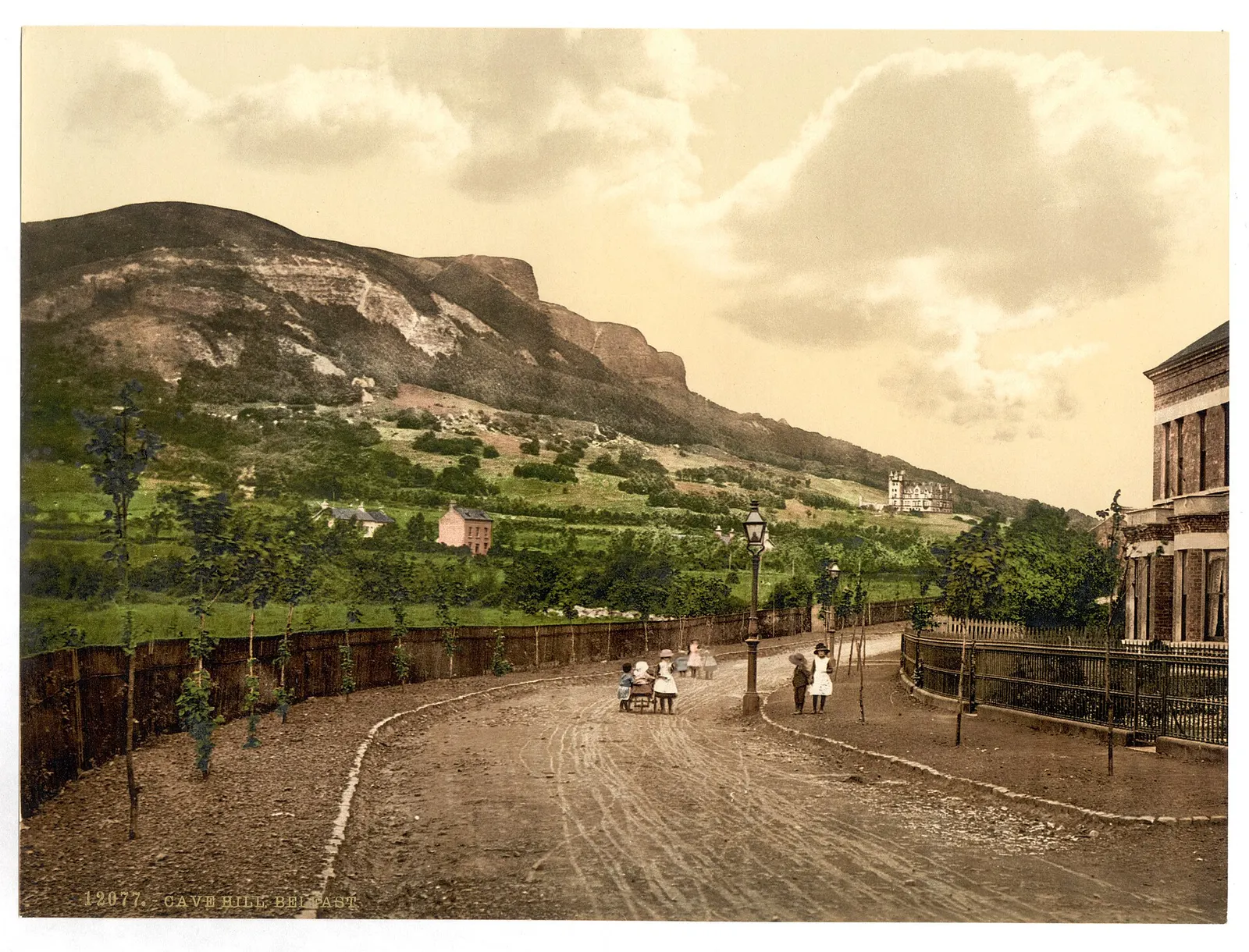
In 1998, the Anglo invasion of that day has been replaced by a musical eruption of recording talents imbued with Celtic influences. In recent years, Irish bands in particular have offered some of the best material in regard to commercial success and critical acclaim. The roots of the success in contemporary rock music by such musicians can be traced to the man who recorded the 1966 hit "Brown Eyed Girl" - the incomparable Van Morrison. The Belfast singer's dusky crooning in some ways paved the way for future acts, and many have followed.
Indeed, the last five years have brought an unprecedented rise in the number of musicians with some sort of Celtic influence. They have been able to tap their creative wells and carve a niche for themselves in the mainstream consciousness - which is defined as air play. Of course, the oft-labeled supergroup U2 can be recognized as being in the vanguard of modern Celtic rock, as can Sinead O'Connor. But for every U2 or O'Connor, there are many musicians perched on the mantel, patiently waiting for a "breakthrough," the one four-minute song that can catapult them from the shadows into the mainstream.
One such band is Black 47, a band that scintillates in live performance, and one that delivers with panache a mixture of traditional Irish music, American rock and an occasional splash of Brooklyn rap, New Orleans jazz and whatever else the spirit may move them to. No stranger to critical acclaim and lambasting alike, the five-member band has opted, it would suffice to say, to barge through the gamut, instead of running.
Larry Kirwan, lead vocalist and chief lyricist for Black 47, is a native of Wexford, Ireland, and to be sure he knows well the intricacies involved in making the big time. "Well, I certainly think that it's a bitch of a business," he opines. "Don't go for it unless you are totally into it. I mean, there are no pension plans for musicians. Keep your day job, unless you are totally committed for life."
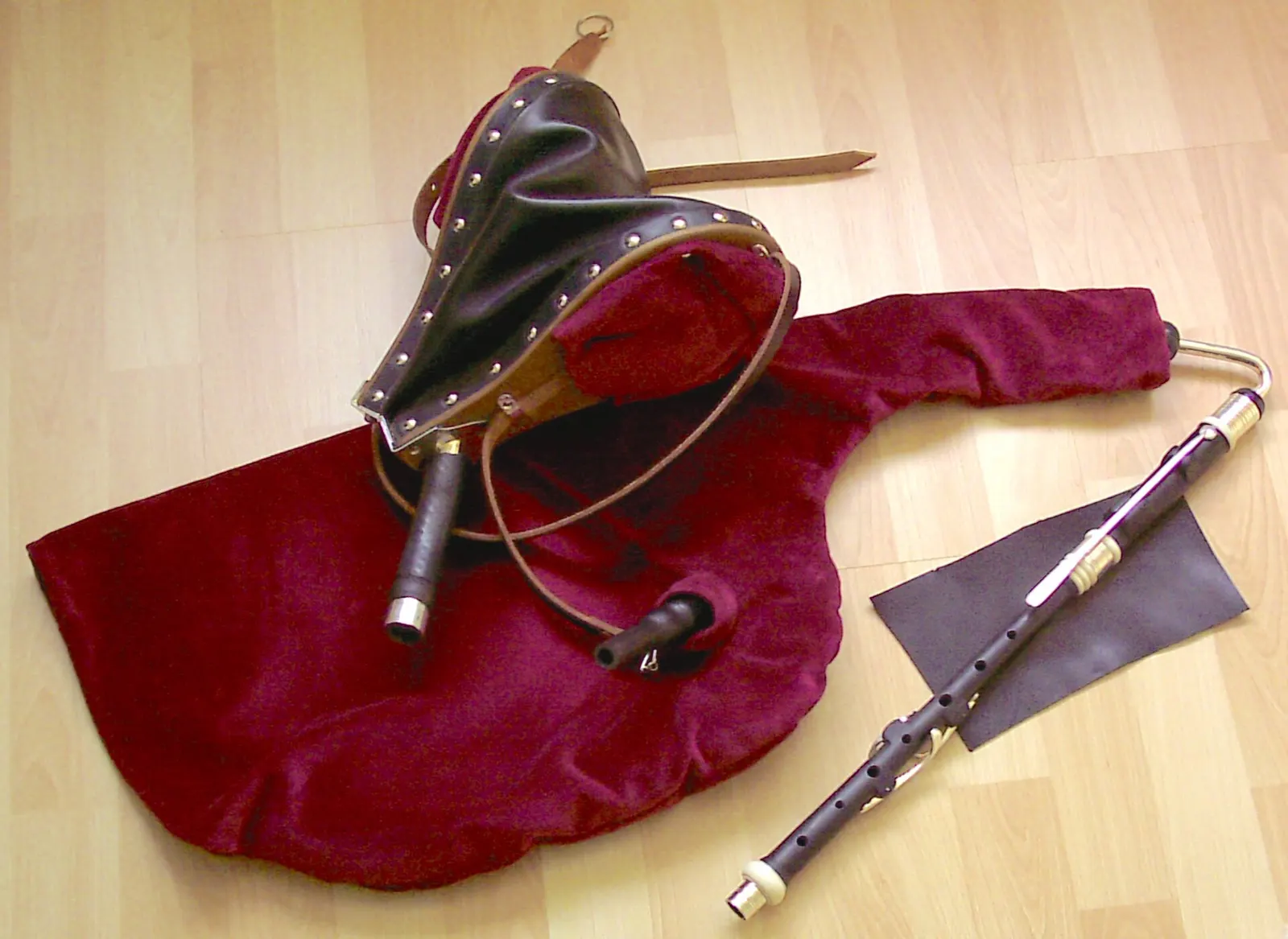
The antics of Black 47's rise to prominence have been well documented by now. Kirwan and fellow bandmate Chris Byrne, who is a police officer in New York, met in Paddy Reilly's, an establishment that was less than flourishing at the time. On a blustery night in October 1989, Kirwan walked into Reilly's and found Byrne playing the uilleann pipes, a traditional Gaelic instrument. After some frank discussion regarding the sorry state of lyrical content in contemporary music at the time, interspersed with a few numbers and quite a few beverages of choice, Black 47 was born.
"It's funny ... I was from Wexford, yet I didn't even know the difference between a jig and a reel until I met Chris. Chris has a background in traditional Irish music, while I was influenced by Otis Redding and James Brown. The sound we developed was certainly different."
The gig was on, and although Kirwan claims that he and the boys were given the unceremonious boot from venues numerous times early on, in the past nine years the band has developed a fanatical following. A central booking didn't hurt, as the band headlined Saturday nights at Paddy Reilly's exclusively from 1989 until its recent move to Connolly's. The move was necessary because Reilly's could no longer accommodate the surging crowds arriving to see Black 47.
In fact, the loyal fans of Kirwan's band, who come from all walks of life, include some who themselves are celebrities. Matt Dillon and Liam Neeson, for example, have caught their act.
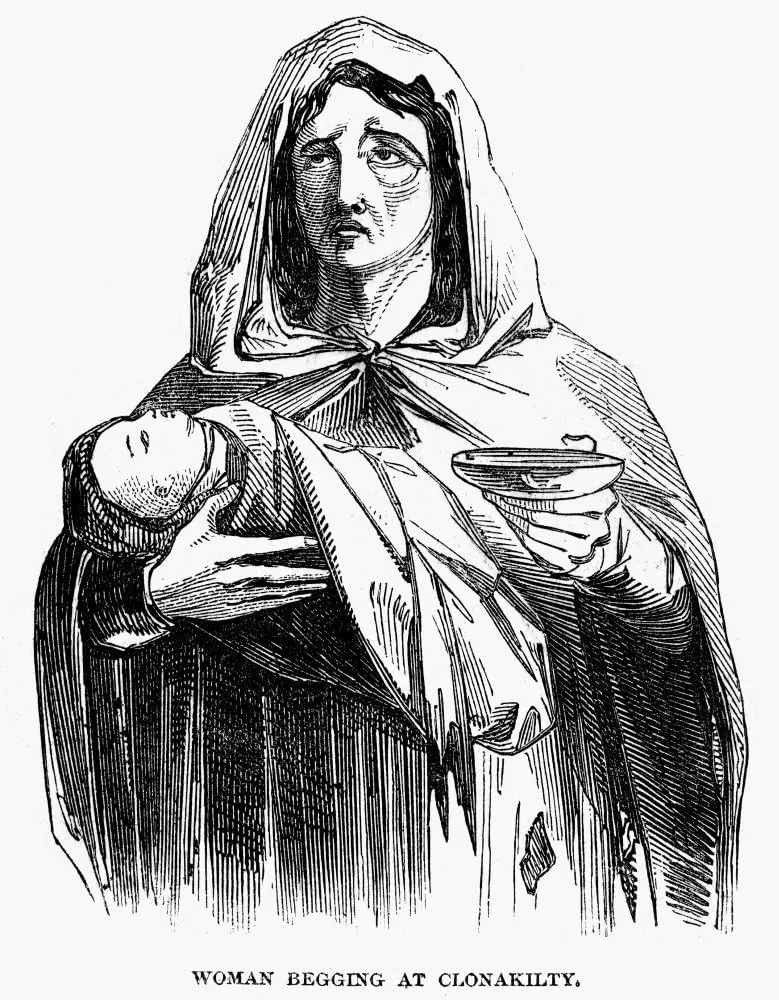
Deriving its name from Ireland's Great Hunger, which reached its height of despair in 1847, Black 47 has released three albums to date. The lyrical content on its second album, "Home of the Brave," spurred a writer from Time magazine to declare "finally ... rock and roll again that means something."
Kirwan, who pens most of their songs, oscillates from personal issues to strong political opinion, and the impetus for such songs varies as widely as the topics. On "Home of the Brave," Kirwan was inspired to scribe "The Big Fellah," an ode to legendary Irish hero Michael Collins, by a visit to a museum in western County Cork in Ireland. The Irish republican leader was assassinated by members of his own party in 1922 after negotiating a pact with the British that many in Ireland opposed.
"I've always been a huge admirer of Collins; he was a boyhood hero of mine. My grandfather was totally republican - we would sit and argue about him for hours. So some years back, I was in a museum in Collins' home county when I came across letters written by young men who had joined the resistance movement because of him. But, things turned to idealism ... and, well, I felt that I was seeing Michael Collins through their eyes."
Lamenting the loss of Collins, Kirwan states his belief that his native land would have been "a far better country if he had lived." Citing Tim Pat Coogan's book, "The IRA," he noted how the author, "at the end of the book, described how he saw Ireland if Collins had lived. Collins was so progressive ... he wanted to bring to his culture a vision he had for Ireland. What we were left with was the alternative, and DeValera's vision was so xenophobic."
Another historical Irish figure whom Black 47 has made the subject of a song is Bobby Sands. On the most recent Black 47 album, "Green Suede Shoes," the title song is one Kirwan had wrestled with for years. "A lot of different things went into writing that song ... but the difference, of all those things, was the fact that Bobby Sands reached back into Gaelic past to make the ultimate protest. Irish peasants used to starve themselves on the doorsteps of English kings. And I wanted to memorialize what the hunger strikers had done."
Never one to shy away from a discussion of the current political climate in Ireland, Kirwan states that the peace process is "barely there" and that one "explosion can blow up all the good intentions." Still, Kirwan believes that the key to a successful resolution of violence lies in the ability of the politicians to assuage the fears of not only the paramilitaries, but also the poor. "In Ireland, the situation is very quid pro quo - and it's not just what you do, it's what you seem to do. There are so many issues and questions. You don't see a united Ireland, the question of policing the community is always a concern. But you have to talk to the guys with the guns. Wherever you go with this process, you have to take those guys with you. And probably with that are the concerns of the poorer people in the poorer areas."
As for the present direction of Black 47, the primacy of the band has given way to a little side trip for Kirwan. In February, he released a solo effort titled "Celtic Kids." "It was an idea which I had ... having children of my own, I wanted to make an album which appealed to adults and children. We play a lot of festivals, and some of our lyrics are risque. We write some pointed lyrics, and I was conscious of that. I realize that children are a lot more aware than we credit them for, but I saw it as a challenge to move into this territory."
Musically, "Celtic Kids" is steeped in the same diversity as Black 47's other offerings. "There are a lot of the same influences ... rock rhythms, accordion, Celtic influences ... I mean kids today are not interested in folk music. While we can relate to it, they see it as archaic. I tried to look at myself. How do my kids see music?"
The ultimate stamp of approval for "Celtic Kids" would indeed come from the Kirwan kids. "They like it," declares Kirwan. "But it is their whole experience - you know, daddy's a rock 'n' roller."
On the heels of "Celtic Kids" will come the expected summer release of "Trouble in The Land," which will be the fourth Black 47 album. Advance snippets have song titles such as "Bobby Kennedy" and "Countess Markievicz" appearing on the forthcoming album, and the lead vocalist promises the touch of yet another musical influence. "There will be a bit of jazz in the new album, more horns. We're always experimenting. I've been listening to Astor Piazzolla, whose music is a mixture of South American and Europa. As for lyrically; what I hear on the radio sometimes is so ... banal. I mean, I can't listen to English lyrics. I just can't.
"I hope we can get it out by summer. It was originally planned for March, but I came down with a bad case of bronchitis. And we play over 150 shows per year, work 50 weeks out of 52, so the studio work comes when we can."
Will "Trouble in The Land" contain a commercial breakthrough hit for Black 47, one that will grace the air play list of FM stations? Kirwan seems unfazed by that question.
"We do what we do, and we'll continue to do it. Take it like this - T.V. is running the world, ya know. And Black 47 hasn't been picked yet. I'm not pessimistic about it, 'cause I believe that the material is there and has been there. I thought we had a shot with 'Funki Ceili' [a song on 'Home of the Brave'], but you have about a six-week window to market and things didn't work out. Maybe on this album we get our shot at the publicity machine."
If that does happen, expect to see Kirwan and Black 47 tackle the job of marketing with what they brought to the dance in the first place - rousing live performances. "Actually, it seems that our audiences are growing younger. We have had to turn down some promoters who wanted us to do shows on St. Patrick's Day with over-21 crowds only, but we refuse to do that. Hey, St. Patrick's Day in America - it's gotta be all ages."
Trouble in the Land, and after
The bronchitis cost more than a season. Trouble in the Land, the album Kirwan hoped to have out by the summer of 1998, appeared in 2000. That same year brought Ten Bloody Years, a compilation for the band's tenth birthday, and the departure of Chris Byrne, the piping police officer of the Paddy Reilly's story, who left on good terms to concentrate on his own project, Seanchai and the Unity Squad.
The band kept the pace Kirwan described here, roughly 150 nights a year, and kept writing about the news. After September 11 they played regularly at Connolly's in midtown, and New York Town (2004) included a song for Mychal Judge, the FDNY chaplain killed at the World Trade Center. Iraq followed in 2008, a set of songs drawn partly from Kirwan's correspondence with fans serving there, and Bankers and Gangsters in 2010. Kirwan published a memoir, Green Suede Shoes: An Irish-American Odyssey, in 2005. Black 47 broke up in 2014, twenty-five years after that night at Reilly's.
The breakthrough single he wanted never quite arrived, and the band's republican songs kept British labels at arm's length. But the band is now routinely described as a forerunner of Flogging Molly and the Dropkick Murphys, which makes his argument for him.
Kirwan's second act came in the theater. His musical Hard Times was staged off-Broadway in 2012 and grew into Paradise Square, set among Irish and Black New Yorkers during the Civil War draft riots, with Kirwan as one of the book writers. It opened at the Ethel Barrymore Theatre on 3 April 2022 and earned ten Tony nominations, including Best Musical and a nomination for Kirwan, with Joaquina Kalukango winning Best Actress. Poor ticket sales closed it on 17 July 2022. The man who told us there are no pension plans for musicians was on Broadway.
Questions readers ask
Why is the band called Black 47?
Black 47 took its name from 'Black '47', the traditional Irish term for 1847, the worst year of the Great Famine. The band was formed in New York City in 1989 by Wexford-born singer Larry Kirwan and uilleann piper Chris Byrne, a New York police officer. Many of its songs dealt with Irish history and republican figures such as James Connolly, Michael Collins and Bobby Sands.
When did Black 47 break up?
Black 47 broke up in 2014, twenty-five years after Larry Kirwan and Chris Byrne started playing together at Paddy Reilly's bar in Manhattan in 1989. Byrne had left in 2000. Later albums included Trouble in the Land (2000), New York Town (2004), Iraq (2008) and Bankers and Gangsters (2010). The band was known for playing around 150 shows a year, including long residencies in New York pubs.
What was Black 47's biggest hit?
Their best-known song is 'Funky Céilí (Bridie's Song)', from the 1992 EMI album Fire of Freedom, produced with Ric Ocasek of The Cars. Extended play on MTV made it the band's breakout single and introduced them to a much wider audience. Other well-known tracks include 'James Connolly', 'Black 47' and 'Bobby Sands MP'. In 1998 Kirwan told us the song had only a six-week marketing window.
Did Larry Kirwan write Paradise Square?
Larry Kirwan conceived the musical that became Paradise Square. It began as Hard Times: An American Musical, staged off-Broadway in September 2012, and Kirwan shared the book credit with Christina Anderson and Craig Lucas. Paradise Square opened on Broadway at the Ethel Barrymore Theatre on 3 April 2022, received ten Tony nominations, and closed on 17 July 2022 because of low ticket sales.