Deadlock continues: British, Sinn Fein fail to settle talks impasse
Four hours at Stormont on November 3, 1995, ended with Sinn Féin and minister Michael Ancram still split over IRA weapons and a date for all-party talks.
As printed in the Celtic Mirror, November 1995
DUBLIN - Sinn Fein and the British government failed to overcome the obstacles in the Irish peace process after almost four hours of talks at Stormont in Belfast Nov. 3, according to information from Irish American Information Service, here.
Martin McGuinness, the leader of the Sinn Fein delegation, told the information service the talks failed because of the refusal by the British government to shift from its demand for a handover of IRA weapons as a precondition to the entry by Sinn Fein to all-party talks and a British refusal to set a date for those talks.
"We had hoped for a clear response on Tuesday, but that meeting was inconclusive and we agreed to today's (Nov. 3) meeting in a further attempt to resolve the major difficulties blocking progress in the peace process," McGuinness said.
"I have to say with regret that we failed to reach agreement on the key issue of moving to all-party talks. The British government has refused to set a date for any time in the future for the commencement of inclusive negotiations."
Joint proposals by SDLP leader John Hume and Sinn Fein President Gerry Adams, which committed Sinn Fein to cooperation with an international commission that is proposed to deal with the decommissioning of weapons and explosives in parallel with all-party talks, were rejected by the British representative Michael Ancram.
"We believe the formula agreed by Gerry Adams and John Hume has the potential to resolve the arms issue to everyone's satisfaction and move us all into all-party talks," McGuinness said after the Nov. 3 meeting. "We spelt out clearly the details of this to the British government. The British government have rejected these proposals.
"The British government made it quite clear that it is sticking strictly to the demand for a surrender of IRA weapons," he said.
Ancram said failure to agree on when and how to disarm Northern Ireland guerrillas was a setback, but said London would not give up its quest for a lasting settlement.
"It is a setback, but it is not a setback which is any greater than some we have had in the past," Ancram said.
He tried to play down suggestions that the peace process had now reached a point of breakdown.
"I am puzzled and disappointed by Mr. McGuinness' statements," he said.
The latest setback to the peace process and the fact that no date has been set for future meetings have confirmed the widespread belief reiterated by Adams after a meeting with Irish Prime Minister John Bruton in Dublin.
Adams said the present phase in the Irish peace process has ended in failure.
Ancram blamed the breakdown on Sinn Fein, saying the party had demanded that British Army weapons be the subject of considerations by the proposed international commission, a demand that the British prime minister said would not be acceptable to any constitutional party.
From deadlock to Good Friday
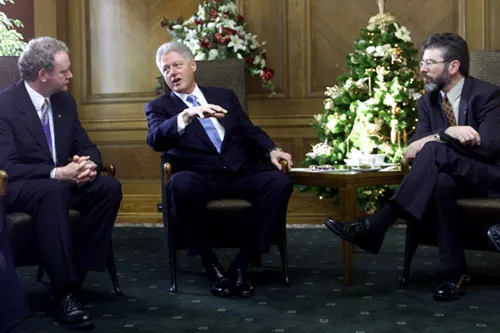
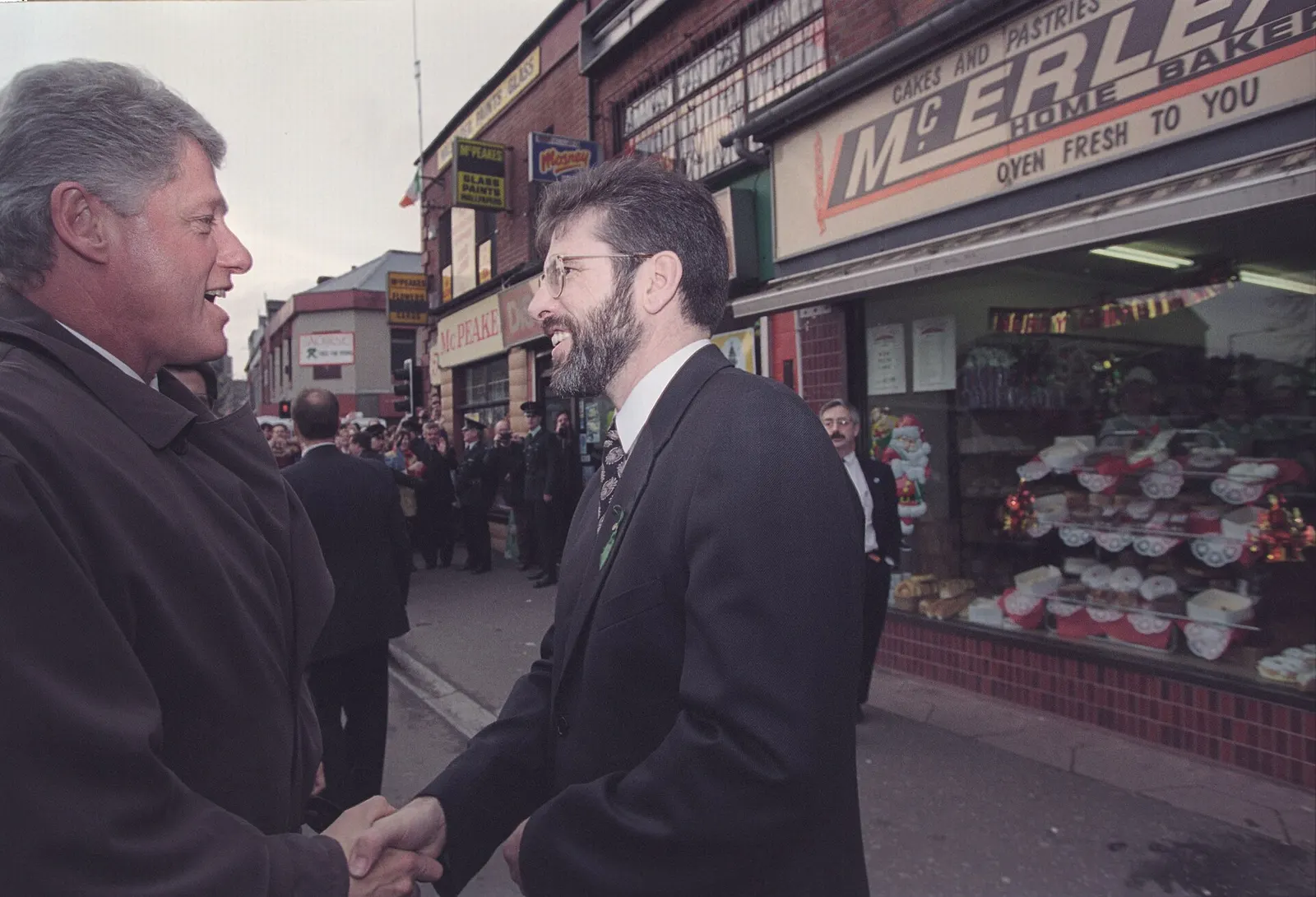
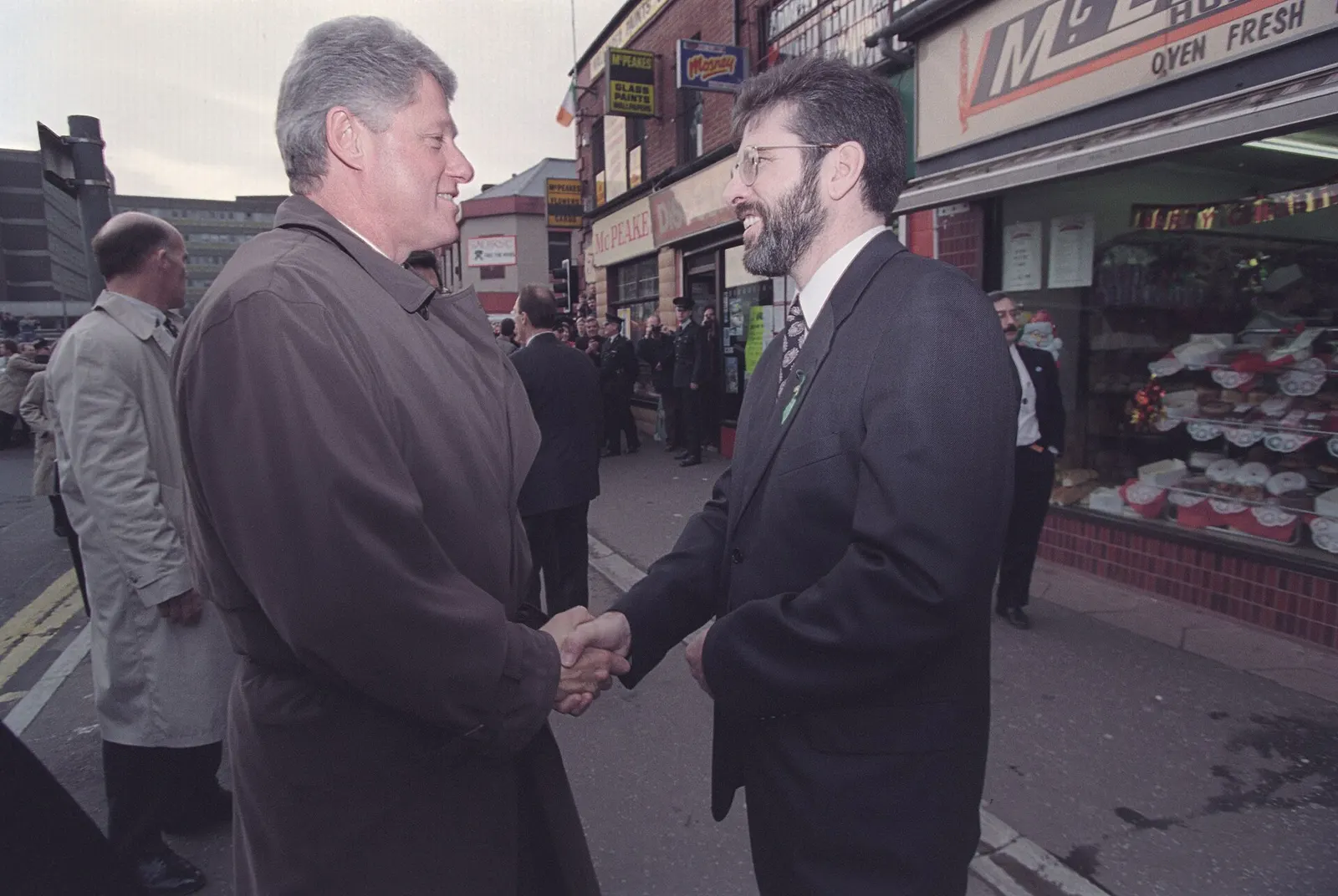
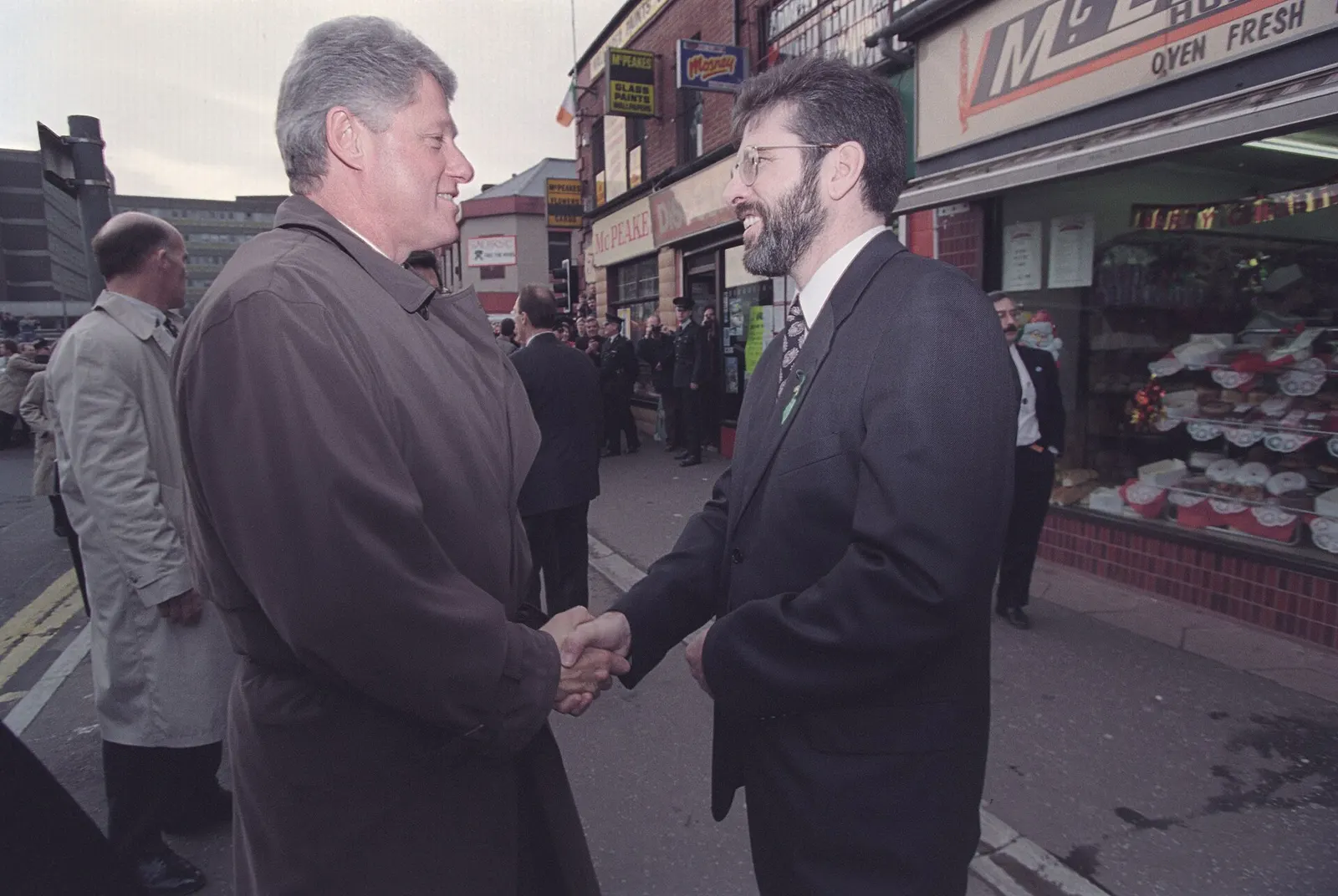
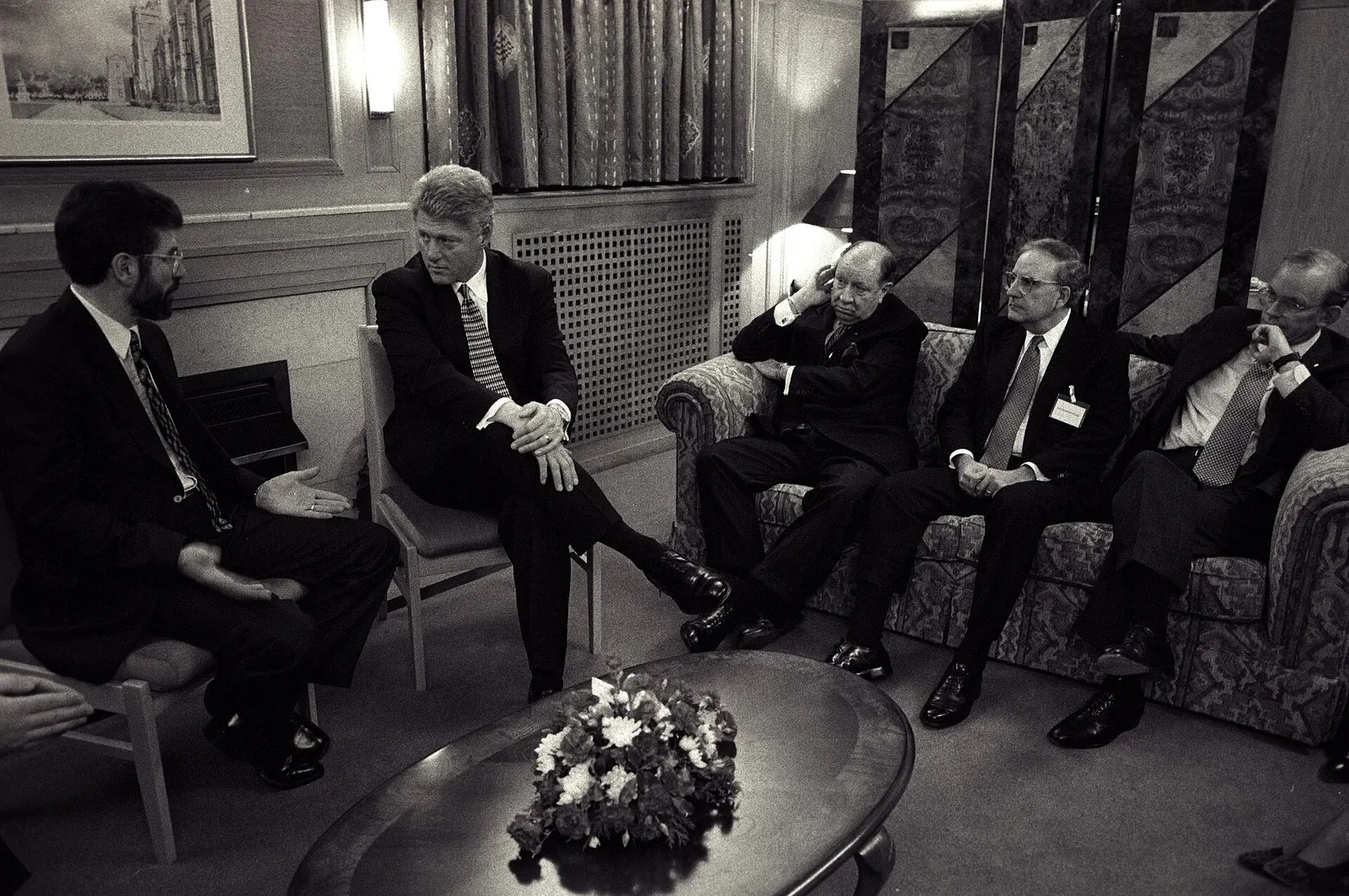
The idea Ancram rejected on November 3 was back on the table within four weeks. On November 28, 1995, London and Dublin issued a joint communiqué setting out a twin-track process, with decommissioning and preparations for all-party negotiations to move forward in parallel. Two days later Bill Clinton was in Belfast. He met Gerry Adams at Queen's University, with George Mitchell in the room, and spoke at City Hall the same day.
Mitchell's international body reported in January 1996. Its central finding was close to the Hume and Adams formula in this story: weapons should be decommissioned during all-party talks, not before or after. The IRA did not wait for the politics to catch up. On February 9, 1996, it ended its ceasefire with the Docklands bomb in London. Sinn Féin won 17 seats in the Forum elections that May, but when all-party talks opened at Stormont on June 10, its delegates were refused entry.
The deadlock broke the following summer. The IRA restored its ceasefire from noon on July 20, 1997. The independent decommissioning commission was formally set up on August 26 under the Canadian general John de Chastelain, and on September 9 Sinn Féin signed up to the Mitchell Principles and took its seats in the talks. The Good Friday Agreement was signed on April 10, 1998. The IRA's arms were finally verified as put beyond use in September 2005.
Michael Ancram, the minister across the table, served at the Northern Ireland Office from January 1994 to May 1997. He later chaired the Conservative Party, was its deputy leader and shadow foreign secretary from 2001 to 2005, succeeded his father as Marquess of Lothian in 2004, and entered the Lords as Baron Kerr of Monteviot in 2010. He died on October 1, 2024, aged 79.
Questions readers ask
What was the Mitchell Report on decommissioning?
The report of the international body chaired by US Senator George Mitchell was published on January 24, 1996. It concluded that paramilitary decommissioning should take place during all-party talks rather than before or after them. It also set out six ground rules, the Mitchell Principles, committing participants to exclusively peaceful means.
When did Sinn Féin join the Northern Ireland peace talks?
Sinn Féin entered the multi-party talks at Stormont on September 9, 1997, when its representatives signed a pledge to abide by the Mitchell Principles. This followed the IRA's renewal of its ceasefire from noon on July 20, 1997. The talks had begun on June 10, 1996, without Sinn Féin, and led to the Good Friday Agreement on April 10, 1998.
Who was Michael Ancram?
Michael Ancram was a Conservative politician who served as Minister of State at the Northern Ireland Office from January 1994 to May 1997, leading talks with Sinn Féin. He later became Conservative Party chairman from 1998 to 2001 and deputy leader from 2001 to 2005. He became the 13th Marquess of Lothian in 2004 and died on October 1, 2024.
Did Bill Clinton meet Gerry Adams in Belfast in 1995?
Clinton met Gerry Adams at Queen's University Belfast on November 30, 1995, four weeks after the Stormont talks in this story broke down. White House photographs show Senator George Mitchell, Ambassador William Crowe and Tony Lake at the meeting. The same day Clinton addressed a crowd at Belfast City Hall and called paramilitaries "yesterday's men."