Bruton criticized for talks refusal
In October 1995 Taoiseach John Bruton refused to meet John Hume and Gerry Adams together, and Bertie Ahern called it an insult to nationalists.
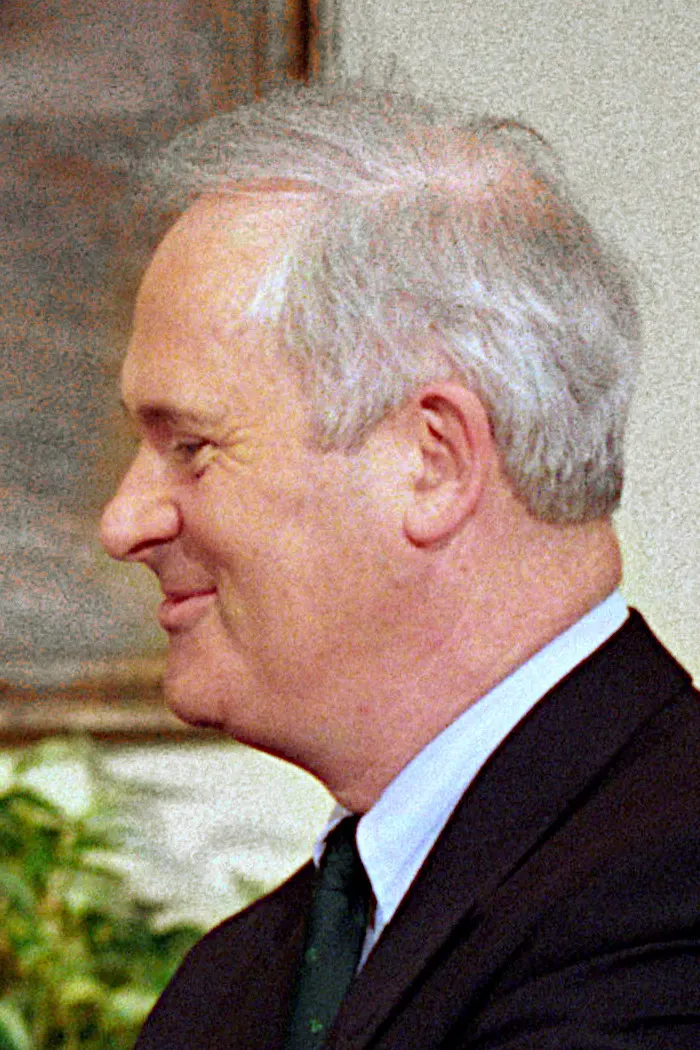
As printed in the Celtic Mirror, November 1995
DUBLIN - Irish Prime Minister John Bruton has rejected criticism over his refusal to meet John Hume and Gerry Adams almost two weeks ago.
Leaders from the Social Democratic Labor Party had requested a joint meeting with Bruton to discuss their proposals to overcome the impasse caused by the British government's demand for the decommissioning of IRA arms in advance of all party talks, which has obstructed the peace process for several months.
Bruton told the Irish Dail (Parliament) on Oct. 25 that he had agreed to meet the party leaders separately, but not together, a view which was condemned by minority party Fianna Fail leader Bertie Ahern.
Ahern asked whether it would be inappropriate for the British Prime Minister to meet a joint delegation of the unionist leaders in Northern Ireland and said that Bruton's action was an insult to Irish nationalists.
Bruton had claimed it was government policy to meet party leaders individually and suggested that joint meetings would be interpreted by Alliance Party and unionist leaders as further evidence of the existence of a pan-nationalist front in Irish politics.
The row follows reports that Hume and Adams were enraged at the rejections and growing fears that little progress is being made on the setting of an agreed date for the commencement of all party talks in Northern Ireland.
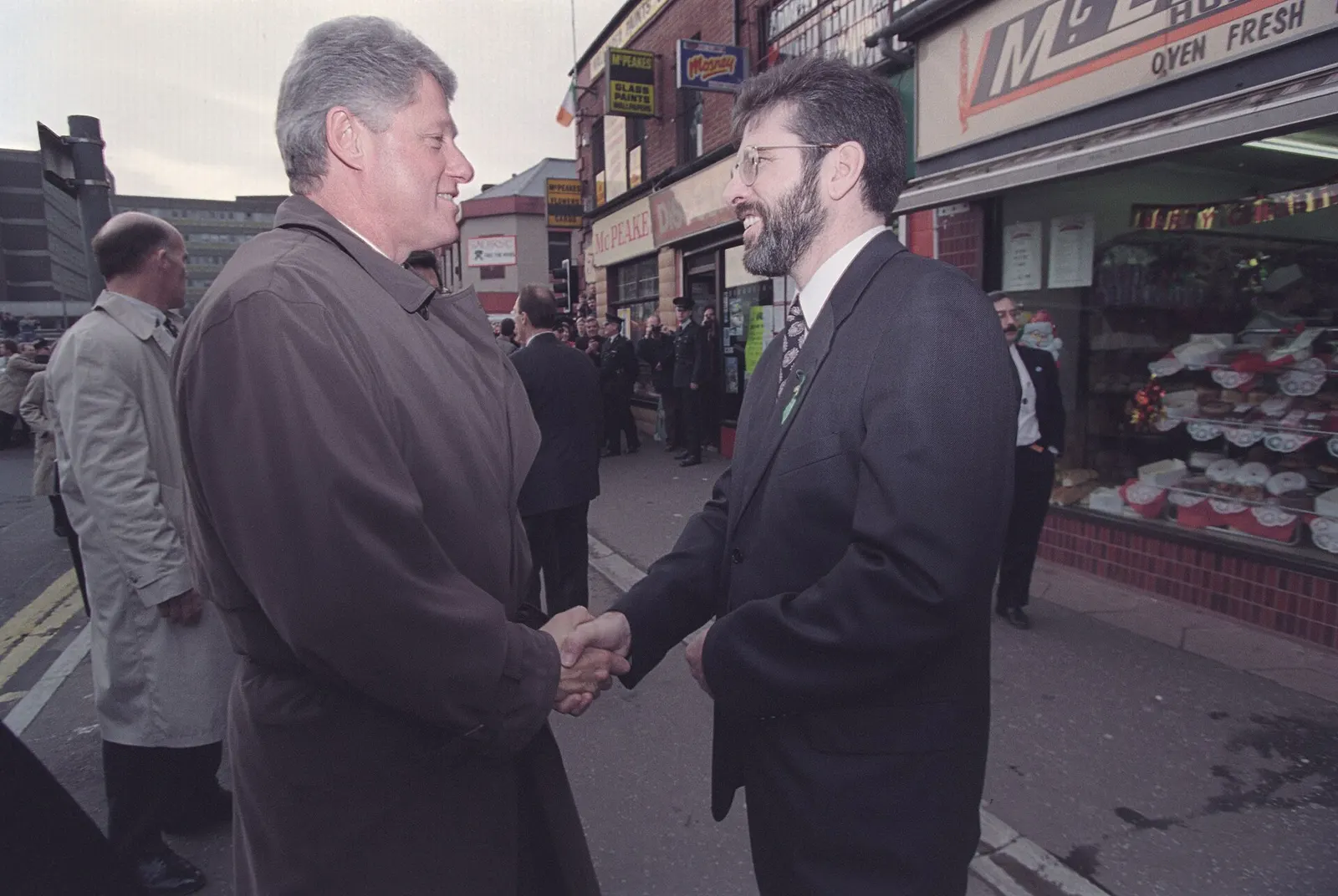
Adams warned that only the forthcoming visit by President Clinton could help save the peace process from collapse, and contemplated return to violence unless there was movement.
Meanwhile, a Fianna Fail member of parliament has criticized the conditions in which republican prisoners are being held in English jails. Eamon O'Cuiv, a grandson of former president Eamon de Valera, said conditions had worsened for Republican prisoners since the cease-fire more than 14 months ago and that prisoners and their families were suffering severe hardship as a result.
What became of the row
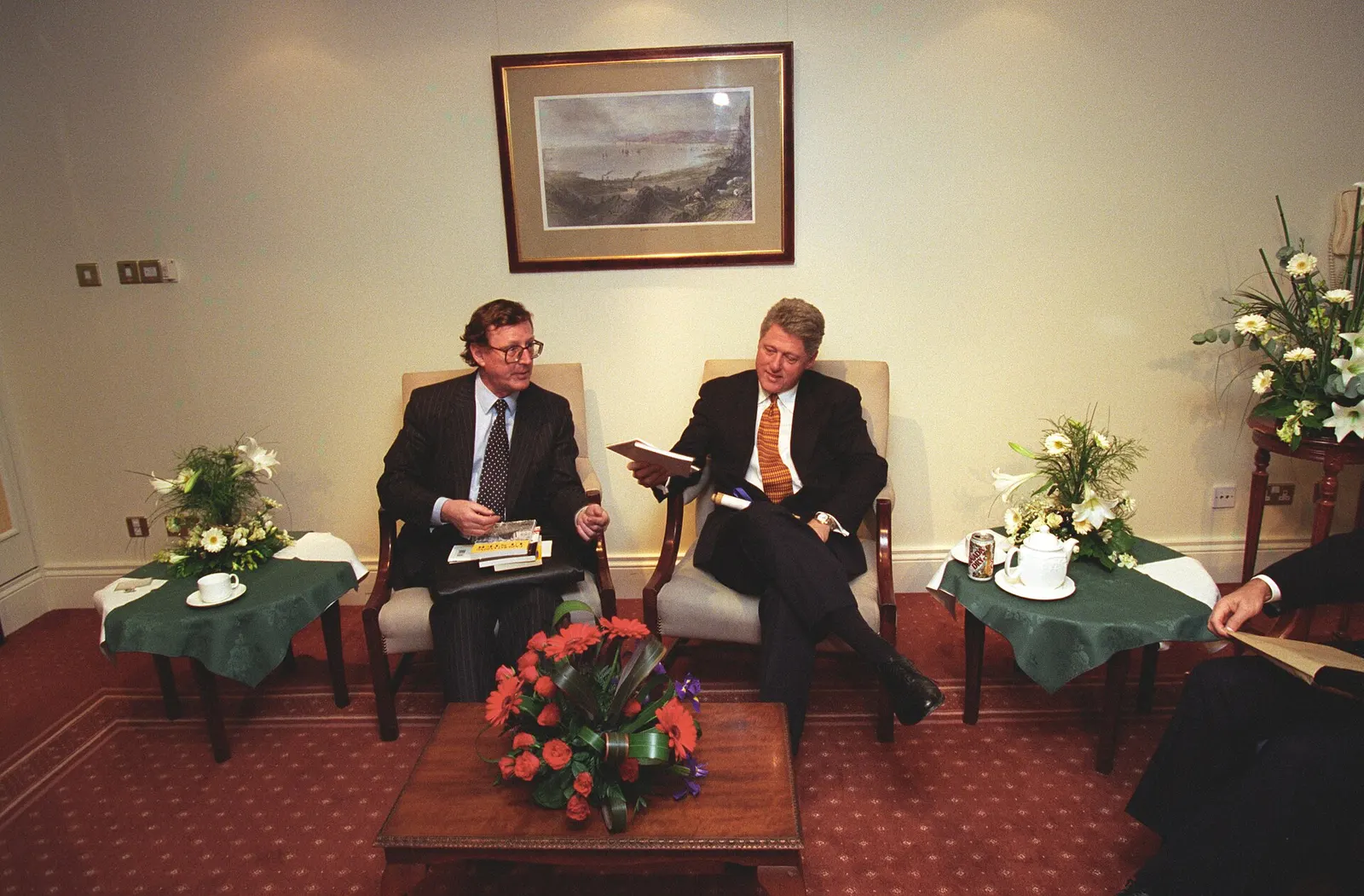
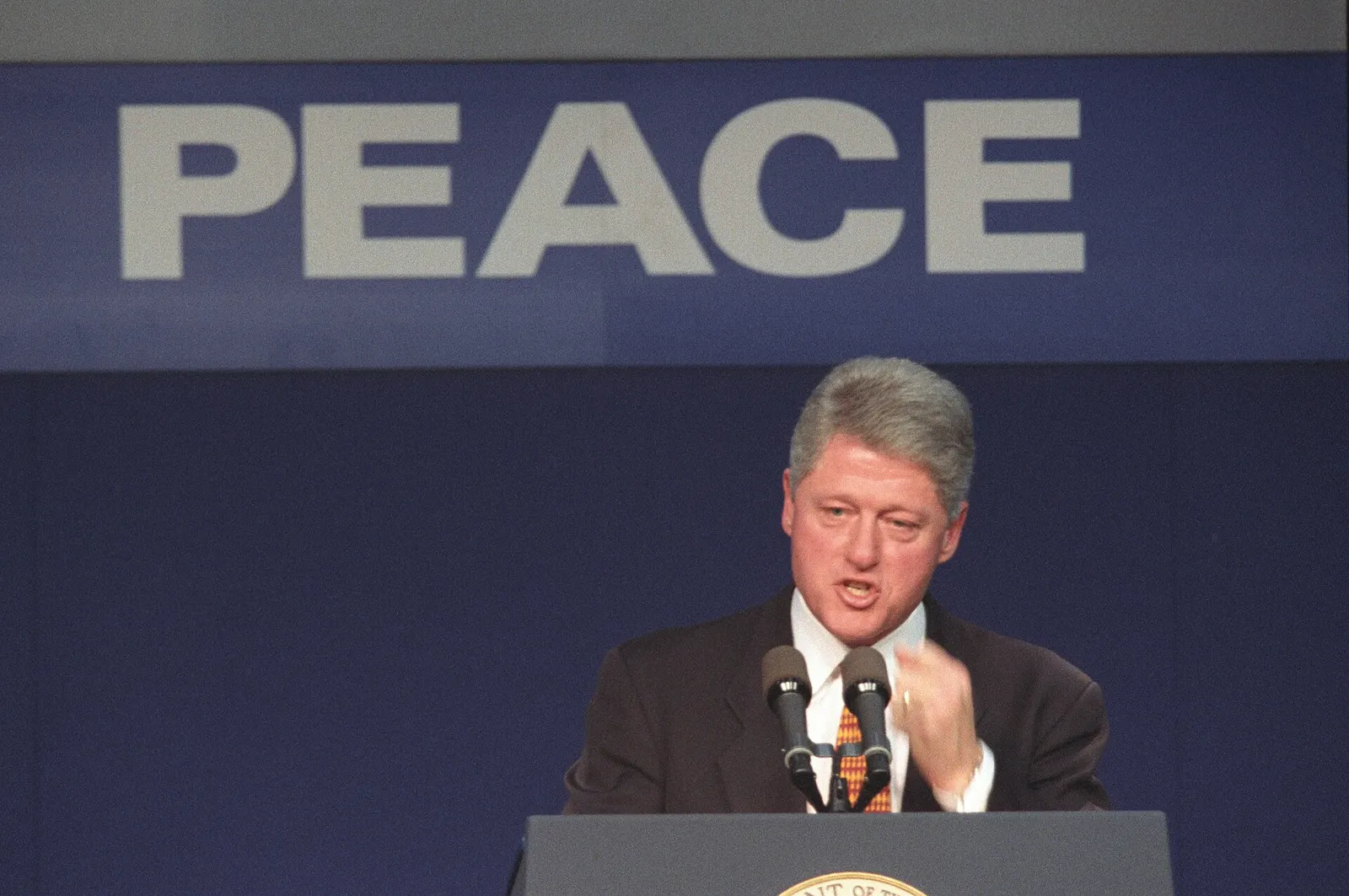
This short staff report caught the Dublin end of the autumn 1995 stalemate. Within weeks the pressure Adams talked about arrived on schedule. On November 28, 1995, two days before the American visit, the British and Irish governments announced a twin-track process meant to move decommissioning and all-party negotiations forward in parallel. Two days later Bill Clinton spoke at Belfast City Hall and called the paramilitaries "yesterday's men."
It bought time, not peace. George Mitchell's international body reported in January 1996 that weapons should be handed over during talks rather than before them, but the IRA ended its ceasefire with the Docklands bomb on February 9, 1996. All-party talks opened at Stormont on June 10, 1996, without Sinn Féin.
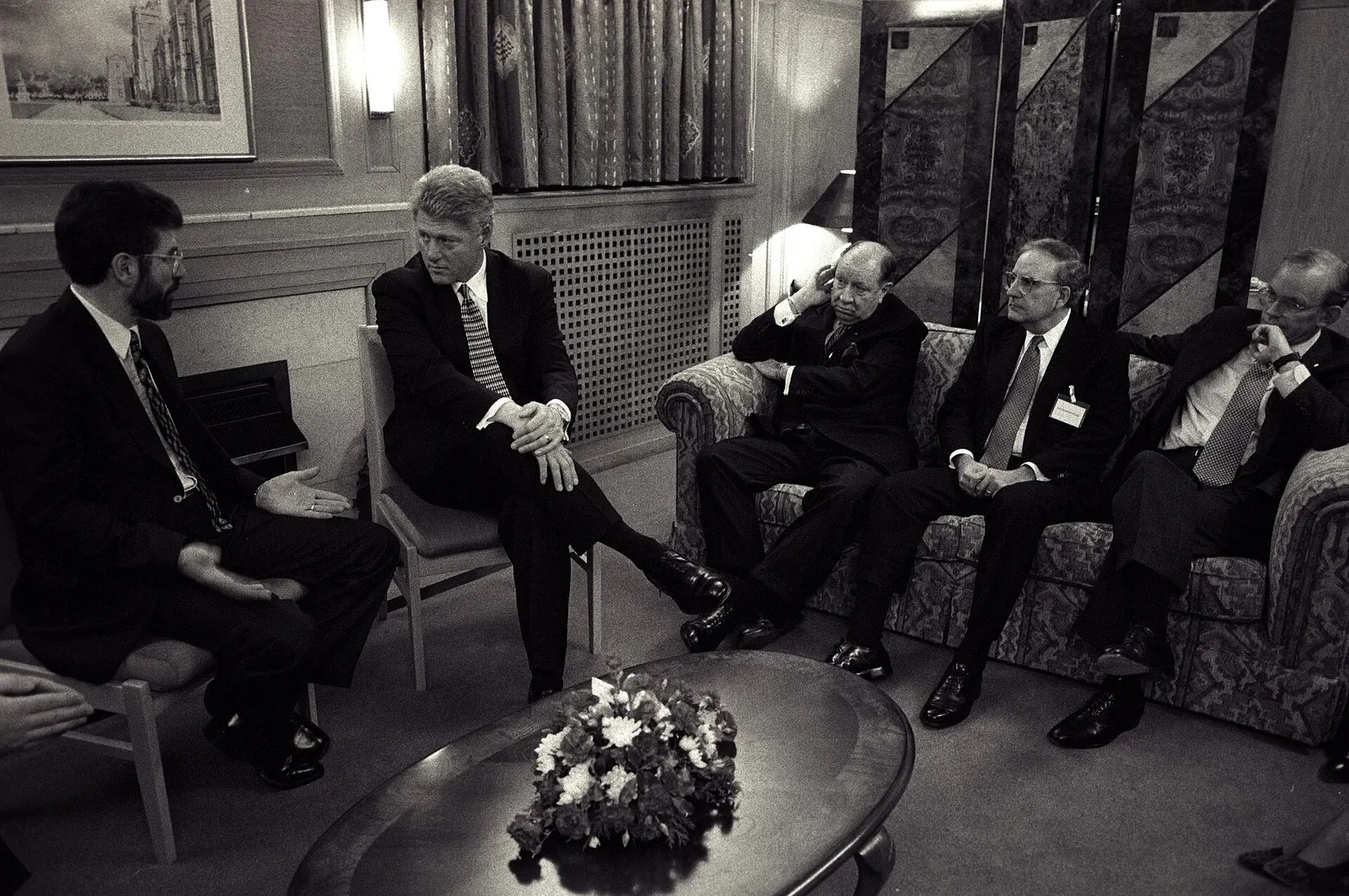
Adams did get his presidential visit. On November 30 Clinton met him at Queen's University Belfast, with George Mitchell and Ambassador William Crowe in the room, a meeting the White House photographers recorded. Bruton's worry about a pan-nationalist front faded as the arithmetic of the North took over. In the Forum elections of May 30, 1996, on a 65 percent turnout, the Ulster Unionists took 30 seats, the DUP 24, the SDLP 21 and Sinn Féin 17. Whoever met whom in Dublin, any settlement would need all four.
The two men in the Dáil exchange swapped places the following year. Bruton served as Taoiseach from December 15, 1994, to June 26, 1997, when Bertie Ahern succeeded him. Ahern was in office when the IRA restored its ceasefire in July 1997 and when the Good Friday Agreement was signed on April 10, 1998, and he stayed Taoiseach until May 2008, resigning in the wake of the Mahon Tribunal's revelations about payments from developers.
When the deal finally came, voters on both sides of the border endorsed it on the same day. On May 22, 1998, 71.11 percent of those voting in Northern Ireland said yes to the Good Friday Agreement on an 81.1 percent turnout, and 94.39 percent in the Republic backed the constitutional amendment that went with it. Ahern was Taoiseach by then. Bruton had carried the same file for the two and a half years before him.
Bruton found a second career on our side of the Atlantic. From November 2004 to October 2009 he was the European Union's ambassador to the United States, based in Washington. He died in Dublin on February 6, 2024, aged 76.
Éamon Ó Cuív, the de Valera grandson quoted at the end, went on to a long ministerial career, including eight years from 2002 as Minister for Community, Rural and Gaeltacht Affairs. In 2008 he set up the committee behind Ireland's National Famine Commemoration. He sat for Galway West from 1992 until he stood down at the November 2024 election.
Questions readers ask
When was John Bruton Taoiseach?
John Bruton of Fine Gael was Taoiseach from December 15, 1994, to June 26, 1997, through the first IRA ceasefire and its collapse in February 1996. He was succeeded by Bertie Ahern of Fianna Fáil. From November 2004 to October 2009 Bruton served as the European Union's ambassador to the United States. He died on February 6, 2024.
What was the twin-track approach in 1995?
The twin-track approach was announced in a joint British-Irish communiqué on November 28, 1995. It set out a process to make progress in parallel on the decommissioning of paramilitary weapons and on preparations for all-party negotiations. An international body chaired by George Mitchell then reported in January 1996 that decommissioning should take place during talks.
How long was Bertie Ahern Taoiseach?
Bertie Ahern was Taoiseach for nearly eleven years, from June 26, 1997, until May 2008. His governments oversaw the restored IRA ceasefire of July 1997 and the Good Friday Agreement of April 10, 1998. He announced his resignation on April 2, 2008, after evidence at the Mahon Tribunal about payments he had received.
Is Éamon Ó Cuív related to de Valera?
Éamon Ó Cuív is a grandson of Éamon de Valera through his mother, Emer de Valera. A Fianna Fáil TD for Galway West from 1992 to November 2024, he held several ministerial posts, including Minister for Community, Rural and Gaeltacht Affairs from 2002 to 2010, and set up the National Famine Commemoration Committee in 2008.