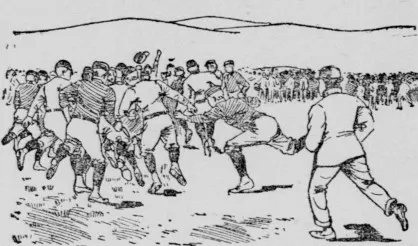
Baseball in critical condition with fans
Five months after the 1994-95 strike ended, a columnist weighed millionaire players against a coal-dirt lot called the Dairy Field and picked the lot.
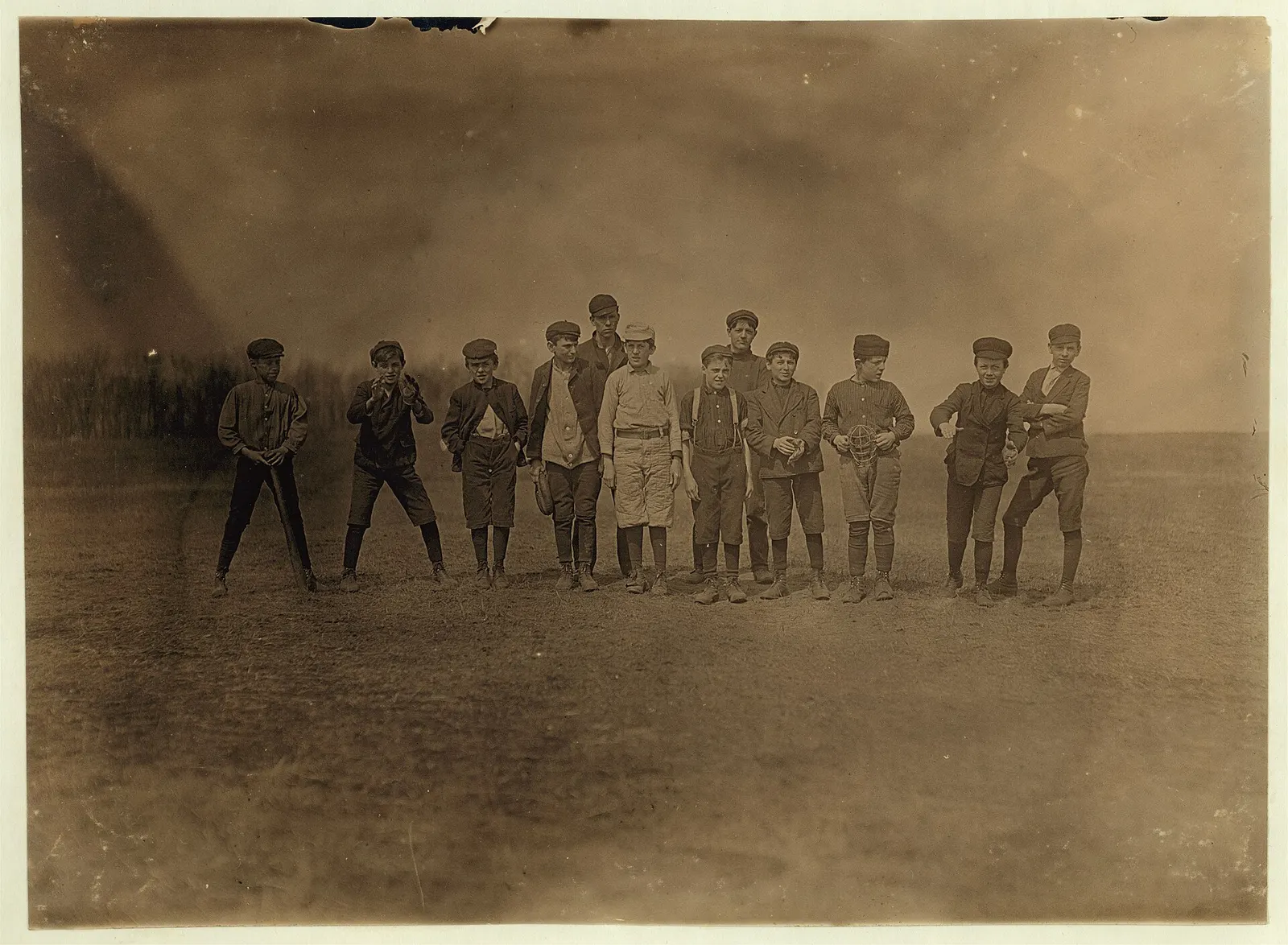
As printed in the Celtic Mirror, September 1995
The game of professional baseball is at the most precarious point in its illustrious history.
In fact, a sense of apathy among fans seems to pervade many a conversation when baseball is mentioned.
Certainly, one does not need to be a nuclear physicist to ascertain why.
Since the labor strike, professional baseball has seen a precipitous drop in game attendance, television ratings, and general interest.
Indeed, a discernible callous indifference now seems to permeate the thoughts of fans nationwide.
When the players decided to walk away, again, from a game founded in so much rich history and prestige, what can we expect?
Professional athletes are paid large sums of money to “play” their sport.
We see contracts which exceed $6 million and $7 million per year.
Utility infielders who appear in 50 games a season and who have a batting average of .165 are often paid well over $500,000 yearly.
The minimum annual salary in pro baseball is $175,000.
Factor in endorsement contracts which often rake in another million or so yearly for some players, and now we are getting the idea that these guys are compensated handsomely for swatting the ball around the yard.
Try to explain to Mr. Middle-class that the wages in pro baseball aren't high enough and the strike was warranted.
Tell it to the parents who are working two jobs to support a family.
Sorry folks, but the next time you take your youngsters to the ball game, that $250 you spent last time will no longer cut it.
You see, Sammy Superstar couldn't squeeze by on $3 million a year and he wants a raise. Therefore, ticket prices are going up.
I was amused at the arrogance of some of the players during the strike.
Mark McGwire of the Oakland A's was being interviewed on ESPN and the issue of replacement players was mentioned.
McGwire scoffed at the notion by stating that replacement players weren't real players. The fans would never accept this hypocrisy, he said.
In other words, McGwire felt that he and his cohorts were indispensable.
Well, that is an absurd notion if there ever was one.
The only indispensable factor in any sport is the fan.
It is the fans' money, support, and interest which allow athletes to be paid outrageous salaries.
The game of baseball will remain whether or not the structure known as major league baseball endures.
Regardless of whether or not there is a game on ESPN, I can still take two gloves out of the closet and take my daughter outside to play baseball.
I wonder how baseball today is viewed through the eyes of a child?
Certainly not in the same light as years past.
Fond recollections from my youth paint a picture in my mind of baseball in its raw purity.
Every morning, my two brothers and I would gather our gloves, balls, and bats and charge out of the house.
Our destination was an open plot of ground called the Dairy Field.
By the standards for most playing fields, I presume the Dairy Field would have been seen as less than ideal.
Not a blade of grass was visible on the coal dirt field, however rocks and shards of glass were plentiful.
But that was irrelevant.
It was our field.
For there would be no strike or walkout today.
There were games to play and dreams to chase, scores to be settled.
Who would be the first player to drill a pitch over the fence and hit the side of the oil truck sitting off in the distance?
Would anyone ever be able to knock a ball over the creek and into the maple trees in left field?
These questions would be answered at the Dairy Field every day.
It was our “field of dreams.”
One time, there was a rumor that the owner of the Dairy Field was contemplating the preposterous act of selling “our field.”
Well, we would have to take matters in our own hands.
Imagine a ragamuffin crew of 10-year-olds, leaning on baseball bats, hatching a plot to save their ball field.
It was decided, in the infinite wisdom of youth, that allowance funds would have to be thrown in a pot and an offer would be made to purchase the field.
After all, between ten or 11 contributors we would have had more than $100.
What an amazing concept! We actually wanted to pay someone so we could continue to play baseball. We didn't want our season cut short.
Fortunately, that crisis was averted and many summers would see many more games played on our field.
And what would be our pay for playing America's pastime?
There would be no multi-year, no-cut contracts or juicy endorsement deals.
Our payment came in the nature of things far less tangible while being perhaps every bit as satisfying.
Memories. Friendship. Camaraderie forged in bruises, bloody noses, and skinned knees.
The Dairy Field is quite different today than it was 20 years ago. The owner did ultimately sell the land and three houses sit on what was once “our field.”
However, like in the movie “Field of Dreams” the memories and ghosts of the past remain.
I walk with my family on a quiet summer night, and I find myself gazing at that field.
In my mind, I can hear the voices, see the faces.....
Not the specters of Mays, Mantle, or Gehrig, but those of young children with hats cocked sideways.....
Standing on third base, I steal a furtive glance at my brother Dan, who is on second base after looping a double down the right field line.
The score is 19-17. There are two outs in what must be the bottom of the 25th inning of the day.
Dusk, with its fading orange skyline, lends an ethereal look to the dusty field. You knew something special would happen here today.
Like Doc Holliday at the OK Corral, the pitcher stands alone on the mound, ready to make a stand. He nervously spins the ball in his right hand like the trigger happy gunslinger, ready to draw and gun down his prey.
Oldest brother John, obviously savoring the moment, strides to the plate with a brazen swagger.
He taps his Louisville Slugger on home plate, which happens to be a crushed soda can. A signal to the figure on the mound that one way or another, this ends now.
Offering up what he feels is his best heat of the day, the pitcher lets it fly.
The pitch comes up wanting as the park won't hold this shot.
A thunderous crack of the bat, and all the little heads snap skyward as the gargantuan blast hurls toward left field.
It's one of those rare moments of youth when time seems frozen for an eternity, but in reality it is only a few seconds.
A wild celebration ensues on the base paths. The ball doesn't only make the once unattainable mark of the maple tree, it clears the top of it.
Spoils for the victors would be 10 ounce bottles of Peppers Ginger Ale, compliments of the vanquished.
All of the day's participants begin to disperse, and three brothers turn to trudge home, already an hour late for dinner.
But one last thing.
The ritual words spoken at the close of every day at the Dairy Field. Someone, faithfully, would call out across the now quiet and already lonely field. Words that for me, have carried their weight through the space of time.
“Hey! Nice game! See you guys tomorrow around 12 o'clock!”
“Yeah! See ya tomorrow!”
Yeah. There was always tomorrow.
Contracts. Commercials. Endorsements.
Nah. But for what it's worth, I'll take my memories anytime.
The strike, and what came after
This column ran in our September 1995 issue, and the anger in it was well earned. The players had walked out on 12 August 1994. On 14 September the rest of the season was called off, World Series included, the first time in ninety years there had been none. Owners announced in January 1995 that they would open the new season with replacement players, the plan McGwire scoffed at on ESPN. The strike ended on 2 April 1995 after a federal judge, Sonia Sotomayor, issued an injunction against the owners. In all, 948 games were lost, and 1995 was cut to 144 games a team.
Our columnist's sense that fans were staying home was right. Average attendance fell about 20 percent, from 31,256 a game in 1994 to roughly 25,000 in 1995.
The cure, when it came, was not the one he would have chosen. On 6 September 1995, the very month this issue went out, Cal Ripken Jr. of Baltimore played his 2,131st straight game and passed Lou Gehrig's record, which had stood for 56 years. Three seasons later, McGwire himself, by then with St. Louis, hit 70 home runs in 1998 and broke Roger Maris's single-season record in a summer-long chase with Sammy Sosa. Crowds came back. In 2010 McGwire admitted he had used performance-enhancing drugs for much of his career. Hall of Fame voters never gave him more than 23.7 percent, and he dropped off the ballot in 2016.
Labor peace held longer than anyone in 1995 expected. The next stoppage was a lockout by the owners, from 2 December 2021 to 10 March 2022, settled with a five-year agreement before any full season was lost.
The Dairy Field itself we cannot trace. The column never names the town, and we are content to leave three houses sitting on it.
Questions readers ask
How long did the 1994 baseball strike last?
The 1994-95 Major League Baseball strike began on 12 August 1994 and ended on 2 April 1995, a stoppage of about 232 days. It was the longest work stoppage in MLB history, cancelled 948 games including the 1994 World Series, and forced a shortened 144-game schedule in 1995.
Why was the 1994 World Series cancelled?
Players struck on 12 August 1994 after the collective bargaining agreement expired on 31 December 1993 and owners pushed for a salary cap. With no deal in sight, acting commissioner Bud Selig called off the rest of the season, including the World Series, on 14 September 1994, the first year without one in ninety years.
How did the baseball strike end in 1995?
The strike ended on 2 April 1995 after federal district judge Sonia Sotomayor issued an injunction against the owners, who had planned to open the season with replacement players. Play resumed without a salary cap, and each team played 144 games that year instead of the usual 162.
Did attendance drop after the 1994 strike?
Average attendance fell about 20 percent between 1994 and 1995, from 31,256 fans per game to roughly 25,000, and television ratings dropped as well. Cal Ripken Jr.'s record 2,131st consecutive game on 6 September 1995 and the 1998 home run chase are often credited with bringing fans back.