Notes on Irish history: Interesting discoveries make for a 'potpourri'
Two trips to Ireland yield a column of finds: the Slattery name, a royal visit that sank Muckross, a gentlemanly siege at Enniscorthy, and Aughrim.
As printed in the Celtic Mirror, August 1995
This month’s column will indeed be a potpourri of “Irish History Notes.”
In the past three months, I have made two trips to Ireland, during which I have come across some interesting as well as trivial facts.
Some of these will probably make a complete column in the future.
What’s in a name?
At the end of last month’s column, we talked about the introduction of surnames by the Normans. It is quite easy to see that some families acquired a surname based on their occupation - Baker, Butler, etc.
However, some others require a little bit of digging, such as, Slattery.
Well, on arriving at Shannon in April, I looked up a friend of mine, Paddy Dunne, an air traffic officer, only to find he wouldn’t be in until the evening shift.
When the officer on duty offered to give him a message, I gave him my card and immediately was shaking hands with Pat Slattery.
Not any Pat Slattery, but an avid genealogist who had traced the “Slattery” name back to its origin in the 13th century.
It seems this small Celtic sept lived in what is now County Clare, in an area ruled by the MacNamaras.
A strong invading force attacked the MacNamaras, who were able to repulse the attack primarily because the small Celtic sept fought by their side. When the enemy had been driven out and their lands made secure, the King of the MacNamaras in gratitude for their help dubbed this small sept, O’Slaidiri (pretty close), or “the strong arm of the king.”
Pat Slattery and his family still live in Ballyslattery in County Clare.
Now I guess it is up to me to find what great adventure, or misadventure, took my branch of the family to County Waterford. And maybe to wonder why “Slattery” wasn’t one of the members of MacNamara’s Band?
Guess who’s coming to dinner?
One of the finest estates in Ireland is Muckross House in Killarney. The estate is now owned by the Irish government, but a key reason for this, is that one of the previous owners spent the family fortune in redecorating and refurnishing the entire estate for a single day visit by Queen Elizabeth.
The two years of preparations for this 24-hour visit included building a first floor bedroom for the good queen who had a paranoia about fires (a fire escape was also built and a fire engine was placed outside her first floor window!).
These expenditures left the family finances in such a poor state that Muckross was sold to an American family, who eventually donated the house and its 4,000 acres to the Irish government, who turned it into Ireland’s first National Park.
For those interested, it doesn’t seem to be recorded whether or not Elizabeth enjoyed her stay.
Let’s drink to that
Over in Enniscorthy, County Wexford, the town castle has been turned into a very interesting museum, which includes much memorabilia from the 1798 and 1916 Uprisings. That is only appropriate, because key battles in both wars were fought nearby.
In fact, you can look out the windows at Vinegar Hill.
One of the more interesting stories told of the area concerned the tragic Civil War of 1922-23.
It seems that the IRA forces arrived in town first and determined that the castle, then in use as a residence, was the best defensible position. So they invited the resident family to move out for the foreseeable future.
Shortly thereafter, the pro-treaty forces arrived.
The next best place to the castle was St. Mary’s Roman Catholic Church a few blocks away. Not wanting to get on the bad side of the priest or the parishioners, but needing the church, they offered to move out during any planned event such as a wedding or a funeral.
For several days, there was some fierce fighting between the two camps, with only a few pauses for scheduled church ceremonies.
Finally, the group in the castle realized that its fight was lost and a surrender was negotiated. The IRA forces came out of the castle and handed over their arms. At which point, both sides shook hands and retreated up to the main street where they took advantage of several pubs to celebrate the end of their hostilities. I am sure the celebration included several sad songs.
Right war, wrong battle?
We have all had it drummed into our heads that the Battle of the Boyne fought in 1690 just north of Drogheda was the decisive battle between the forces of William of Orange and King James.
Is it possible that this battle was only the prelude to the real clincher which took place at Aughrim, a tiny village about 30 miles east of Galway.
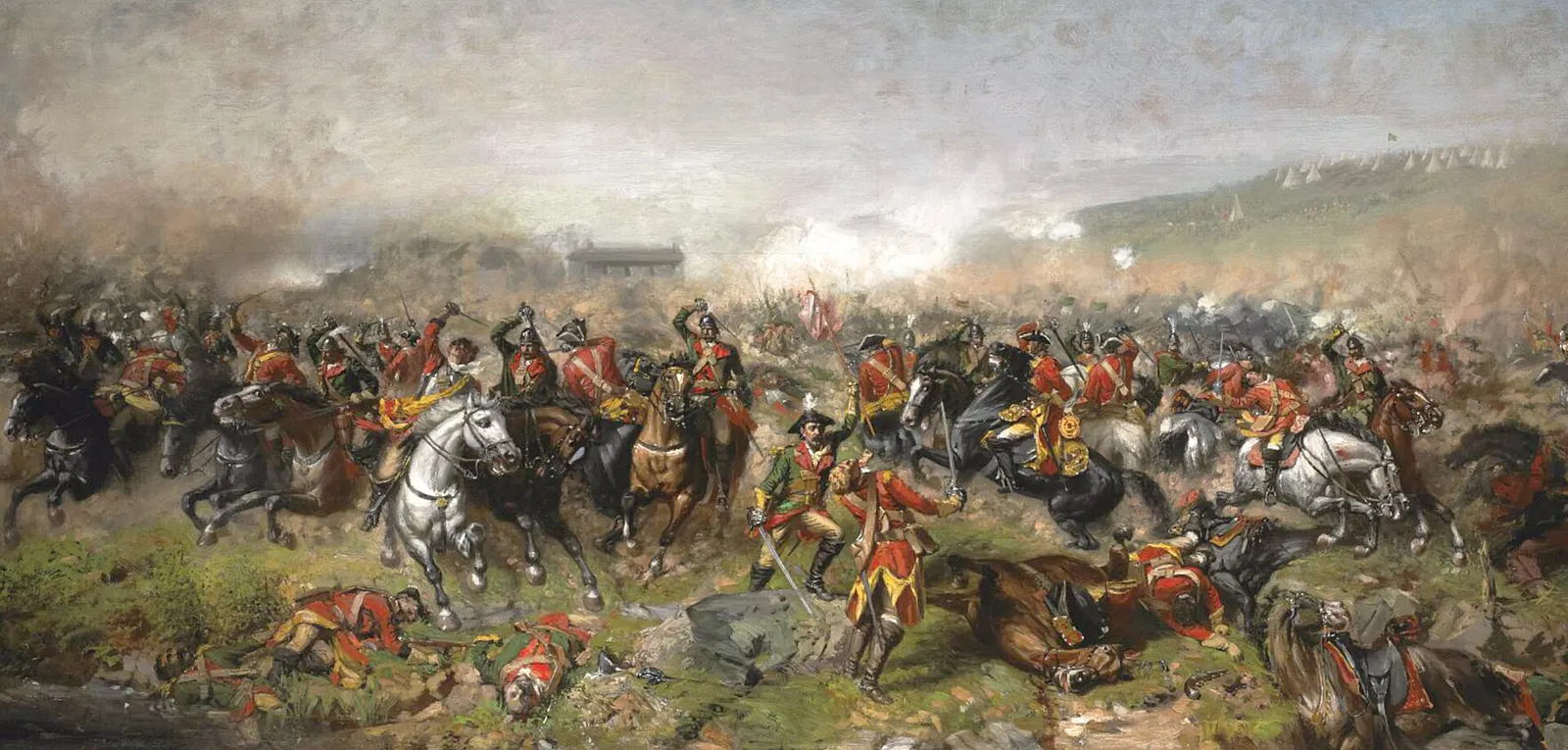
Here the bloodiest battle of the war (actually, the bloodiest battle ever fought on Irish soil) took place the following year - and this is the battle from which the Jacobite forces never recovered, leading directly to the Treaty of Limerick in 1691.
Now that Aughrim has opened a Heritage Center that depicts this key battle, maybe some of the recent revisionist historians will revisit its significance. I wonder what this would do to today’s groups of infantile drummers.
By the way, those history buffs who enjoy traipsing over the battlefields of yore, a la Gettysburg, will find the encampments, moves and counter-moves of this battle clearly marked along the surrounding countryside.
The changing times
Recent developments in archaeology, along with the necessary grants to carry out these studies, have led to a surge in these activities throughout Ireland over the past five or six years.
The results of these “digs” are changing the dates and peoples we have associated with certain places.
It had long been assumed that Dun Aengus, a circular fort in Inish Mor the largest of the Aran Islands off Galway, dated from about the 1st Century AD.
Recent excavations, especially of dwelling places, have not only pushed the date back 1,000 to 1,500 years, but have also led to the belief that the significance of the site was more ceremonial than defensive.
The same is true of Croagh Patrick, the holy mountain located just south of Westport in County Mayo. This has always been St. Patrick’s mountain, the mountain that Christians climb on a summer (some in their bare feet) Sunday to obtain a plenary indulgence.
Thus its significance was assumed to date from the 5th Century.
Archeologists, now uncovering ceremonial sites on the top that date back into the pagan cultures that inhabited the area long before Christianity, realize that Croagh Patrick was considered a “sacred” mountain centuries before the time of Christ.
Conclusion
The history of Ireland is alive and changing. We are beginning to learn more about the distant past from the archaeologists; more about the recent past from the research of towns and individuals into their historical significance; and more about Irish history because it is respectable to be Irish, even American-Irish today.
Granted that some of this work is spurred on by the potential benefits of tourism, but it must all sooner or later pass a litmus test.
Until next month, Slán.
Notes on the notes
Mr. Slattery’s potpourri holds up well, with one royal slip we owe readers a fix for. The queen who cost the Herberts of Muckross their fortune was Victoria, not Elizabeth. The house was extensively improved in the 1850s for her visit in 1861, and those improvements are said to have helped push the family into the money troubles that ended in the sale of the estate.
The rest of the Muckross chain is just as he says, with more links. Arthur Guinness, Lord Ardilaun, bought the place in 1899. In 1911 it passed to William Bowers Bourn, a California mining magnate, who gave it to his daughter Maud and her husband Arthur Vincent as a wedding present. Maud died of pneumonia in 1929, and in 1932 her parents and Vincent presented the house and an estate of about 11,000 acres to the nation in her memory. As the Bourn Vincent Memorial Park it became the first national park in the state and the core of today’s Killarney National Park.
On Aughrim, the column has company. The battle was fought on July 12, 1691 (old style), and is generally agreed to have killed about 7,000 men, a contender for the bloodiest battle ever fought in Britain and Ireland. For a century and more the Orange Order marched to remember Aughrim on the Twelfth. Only in the early nineteenth century did the Boyne take over the date.
Enniscorthy Castle’s “resident family” were the Roches, who rented it from 1903 until 1951. The Wexford County Museum later moved in. The castle closed for refurbishment in 2006 and reopened in 2011, now telling the story of the building and the town.
The archaeology has only firmed up. Most of the walls at Dún Aonghasa are now thought to date from the Bronze and Iron Ages. Croagh Patrick is now seen as the focus of prehistoric ritual long before Patrick, and on the last Sunday in July thousands still climb it, some barefoot. A seam of gold was found in the mountain in the 1980s, and Mayo County Council refused to let anyone mine it.
Questions readers ask
Which queen visited Muckross House?
Queen Victoria visited Muckross House near Killarney in 1861. The Herbert family carried out extensive improvements in the 1850s to prepare for the royal visit, and these costs are said to have contributed to the financial difficulties that led to the estate’s sale. Arthur Guinness, Lord Ardilaun, bought it in 1899, and in 1911 it passed to the Californian William Bowers Bourn.
How did Killarney become Ireland's first national park?
In 1932 William Bowers Bourn, his wife and their son-in-law Arthur Vincent presented Muckross House and its estate of about 11,000 acres to the Irish Free State in memory of Maud Vincent, who had died in 1929. Named the Bourn Vincent Memorial Park, it became Ireland’s first national park and the basis of today’s Killarney National Park in County Kerry.
Was Aughrim more decisive than the Battle of the Boyne?
Many historians describe the Battle of Aughrim, fought in County Galway on July 12, 1691 (old style), as the decisive battle of the Williamite War in Ireland. About 7,000 men were killed and the Jacobite cause in Ireland effectively ended, though Limerick held out until autumn. Loyalists marked Aughrim on the Twelfth until the early nineteenth century, when the Boyne replaced it.
When is Reek Sunday on Croagh Patrick?
Reek Sunday, the main pilgrimage on Croagh Patrick in County Mayo, falls on the last Sunday in July, when thousands of pilgrims climb the 764-metre mountain and Mass is said at the summit chapel. Some still climb barefoot as penance. Archaeologists have found that the mountain was a focus of prehistoric ritual long before Saint Patrick’s time.