Producers pull plug on Irish film: Bond between brothers subject of new release
Brando, Depp and Winger leave Ballycotton when Divine Rapture collapses; Edward Burns brings The Brothers McMullen to cinemas; two new books on Irish islands and archaeology.
As printed in the Celtic Mirror, August 1995
The name of this column has been changed to better reflect its purpose - to feature arts and entertainment personalities, projects and places that are not necessarily new but nonetheless worthy of attention. Reader recommendations are always welcome.
The film “Divine Rapture” was canceled only two weeks into production on location in Ballycotton.
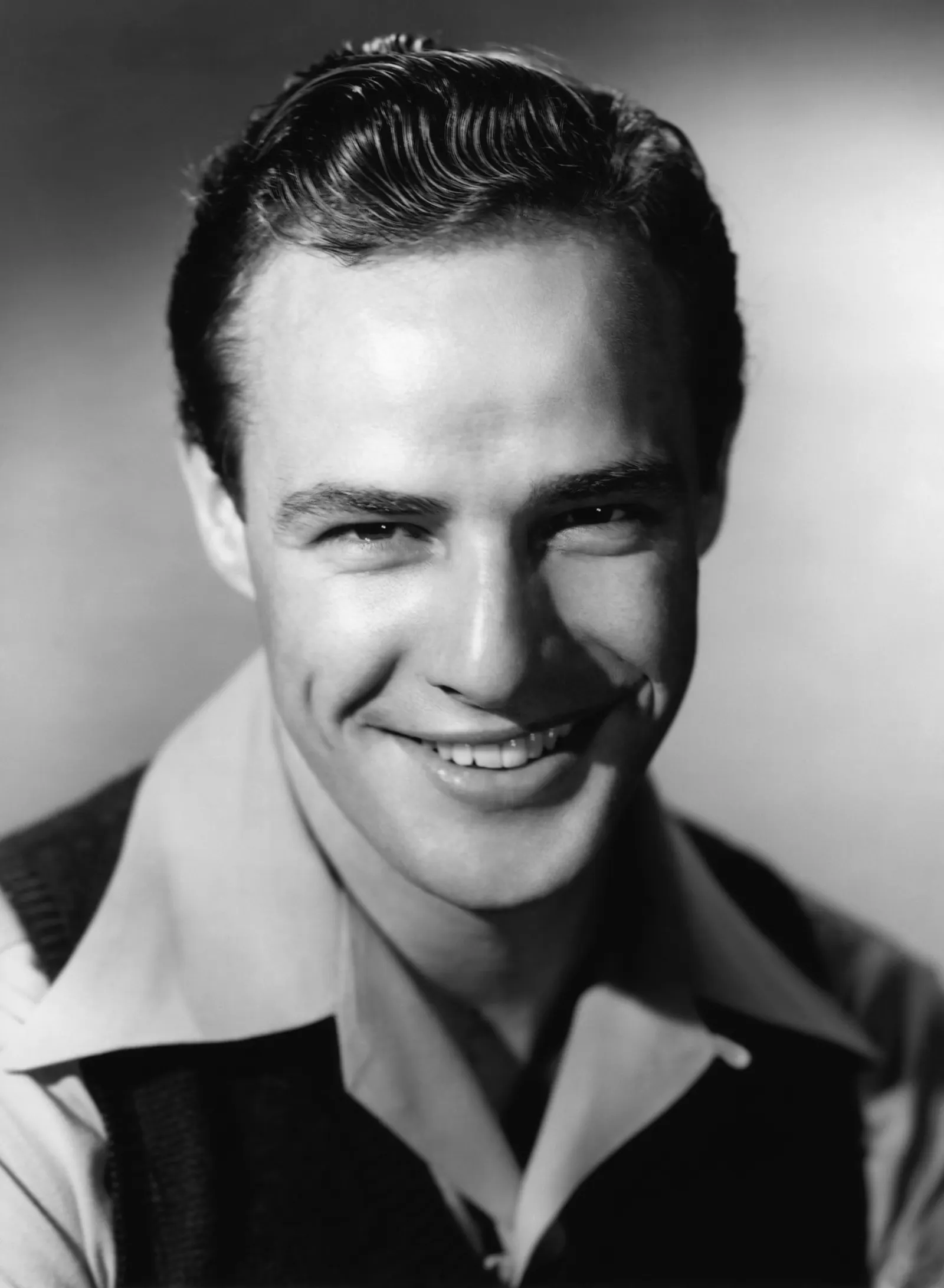
The village, home to fishermen and retirees, had become a hub for the stars of the film, Marlon Brando, Johnny Depp and Debra Winger, as well as tourists and entertainment media in recent weeks.
About 300 Ballycotton citizens, meanwhile, had been paid cash to pose as extras in the film.
According to published reports, financial problems forced producers to back out of Ballycotton.
There has been no word on what the stars will be paid, or if they will be paid for the work they had done. As of late July, actor John Hurt, who played a village doctor, had not received pay. This was told to villagers for whom he signed autographs in the Schooner’s pub.
The film was described as a quirky comedy. Co-Producer Barry Navidi invested seven years in acquiring talent and funding for the $16 million independent film.
“The Brothers McMullen,” a film written, directed and produced by Edward Burns, is a comical look at the romantic life of three brothers struggling with tradition. The film was released to theaters this month.
Burns began to write the screenplay in 1993, while he was working as a production assistant for “Entertainment Tonight.”
“I wanted to make a film that showed the small conversations that brothers have and I was also interested in how people make commitments,” Burns said. “I was raised in an Irish Catholic household and attended Catholic grammar and high schools. I knew it affected the way I look at the world and wanted to show the way your background has a hold on you for the rest of your life ... sometimes to disastrous consequences.”
“The Brothers McMullen” premiered in competition at the 1995 Sundance Film Festival.
Among the cast are Mike McGlone who plays Patrick McMullen and Jack Mulcahy as Jack McMullen.
McGlone has appeared in Andrew Rona’s film “Box Alley” and Woody Allen’s “Bullets Over Broadway.” He has also appeared on CBS soap opera “As the World Turns.”
Mulcahy played Frank Bell in the box office hits “Porky’s” and “Porky’s II.” He has also had roles in “Turk 182,” “Cadillac Man,” and “Honeymoon in Vegas.” Additionally, he has appeared in the television series “Law and Order” and “NYPD Blue.”
Muiris Mac Conghail’s book “The Blaskets: People and Literature,” was published in June by Roberts Rinehart Publishers, which has U.S. headquarters in Boulder, Colo.
The remote and beautiful Blaskets, a group of seven islands located off the southwest coast of Ireland in the Atlantic Ocean, were home to fishermen, their families and a few writers whose books were written in their native Irish. The Great Blasket was occupied up until 1953.
The 176-page paperback contains interesting color and black and white photos as well as maps and charts. In the first part of the book, the author, a journalist and film-maker, presents the islands, the environment and the people who lived there. Part II is about the island-dwelling writers. Their books and their lives are studied by scholars seeking to know how the authors, living so far from refined education systems, produced such quality literature.
Mac Conghail is director of a documentary film company in Dublin. His film on the Blasket Islands has won several awards.
Remember learning ancient Greek and Roman archaeology and how fascinating it was to read about people who lived hundreds of years ago?
Imagine, then, reading about the first inhabitants of Ireland.
“Irish Archaeology Illustrated” documents the history of the Emerald Isle.
Roberts Rinehart Publishers, with U.S. headquarters in Boulder, Colo., in June published this 240-page paperback book.
It is a compilation of the studies and findings of 37 scientists and authors who explain how archaeological information is obtained and interpreted by exploring the underwater environs, bogs, and urban and rural settings of Ireland.
Readers will learn about Ireland in the Stone Age, in medieval times and in the early modern period. Wonderful illustrations accompany the writing. There are depictions of treasures excavated from tombs and photographs of sacred sites and the ruins of castles.
Michael Ryan, director of the Chester Beatty Library in Dublin, edited the book. He studied archaeology and early Irish history at University College Dublin and received his doctorate at Trinity College.
Where it stands now
“Divine Rapture” never came back. The story, about a run of miracles in a small Irish community in the 1950s, had been shooting in Ballycotton, County Cork, through the summer of 1995 when the finances of the production company, CineFin, collapsed. Most of the cast and crew went unpaid, and so did the local suppliers who had been housing and feeding them. Some accounts say only 29 minutes of footage were ever shot.
The village kept the joke. The potter Stephen Pearce put up a headstone on Ballycotton’s Main Street reading “Divine Rapture, born 10th July 1995, died 23rd July 1995, RIP.” In 2009 Hot Shot Films made a documentary about the whole affair, “Ballybrando,” with interviews from cast, crew and producer Barry Navidi, and it ends with Navidi reworking the script under a new title, “Holy Mackerel.” We have found no sign that it was made. Marlon Brando died on July 1, 2004.
The other film in this column did a little better. “The Brothers McMullen” was shot on 16mm for about $25,000, won the Grand Jury Prize at Sundance in 1995, and went on to gross $10.4 million in the United States and Canada and $19.3 million worldwide. It was the first film released by Fox Searchlight. Edward Burns kept working on both sides of the camera, including a role in “Saving Private Ryan” in 1998, and thirty years on he returned to the family: a sequel, “The Family McMullen,” was released on October 15, 2025.
The Blaskets are in public hands now. In 2009 the Office of Public Works bought most of the property on the Great Blasket, including the deserted village, and guided tours began in 2010. A ferry runs to the island from Dún Chaoin, where the Blasket Centre tells the islanders’ story.
The Chester Beatty Library, whose director edited the archaeology book reviewed above, moved from its original home on Shrewsbury Road to the grounds of Dublin Castle. The new museum opened on February 7, 2000, and was named European Museum of the Year in 2002.
Questions readers ask
Why was Divine Rapture with Marlon Brando never finished?
Divine Rapture, starring Marlon Brando, Johnny Depp, Debra Winger and John Hurt, stopped filming in Ballycotton, County Cork, in July 1995 after two weeks when the production company CineFin ran out of money. Most cast, crew and local suppliers were not paid. A headstone on Ballycotton’s Main Street marks the film’s life as 10 to 23 July 1995.
How much did The Brothers McMullen cost to make?
Edward Burns made The Brothers McMullen on 16mm film for about $25,000, mostly the cost of film stock and processing, using Irish-American actors who agreed to work for free. After it won the Grand Jury Prize at the 1995 Sundance Film Festival, it grossed $10.4 million in the US and Canada and $19.3 million worldwide.
When was the Great Blasket Island abandoned?
The Great Blasket, off the Dingle Peninsula in County Kerry, was evacuated in 1953 when the Irish government decided it could no longer guarantee the safety of the dwindling population. The island had produced classic Irish-language memoirs, including Peig Sayers’ work and Muiris Ó Súilleabháin’s Twenty Years A-Growing. In 2009 the state bought most of the island’s property.
Is there a documentary about Divine Rapture in Ballycotton?
Hot Shot Films released Ballybrando in 2009, a documentary about the collapse of Divine Rapture in Ballycotton, County Cork, in 1995. It includes interviews with cast, crew and producer Barry Navidi, who had spent years assembling the project, along with scenes from the unfinished film. It closes with Navidi reworking the script under a new title, Holy Mackerel.