Symons Says: What say we let the Irish go on holiday?
Tommy Symons makes the case for a national St. Patrick's Day holiday, then reports from the parades, pubs and step-dance stages of the Pennsylvania coal region.
As printed in the Celtic Mirror, April 1998
Being as it is April, and I'm no fool (at least in my opinion), a few t'oughts on the recent March madness. I t'ink that St. Patrick's Day should be a national holiday in America. This is based on a few facts, a few principles and a wee bit of selfishness. I better clarify that last statement. I'm involved with me Irish heritage every day of the year, and look forward to the festivities each March 17 much as a young child thinks of Christmas. My coworkers (in the real world) always say "This is your day!" or "This is the one you've been waiting for!" and I haven't worked on the 17th for the last five or six years.
This year was different due to a busy and hectic work schedule with a deadline, and I missed out on many of the daytime events I usually partake of: a trip to the radio station, stopping off at City Hall and then up to the courthouse to say hello, and usually dinner at the Pottsville (Pa.) Club with the Friendly Sons of St. Patrick as guests of John and Agnes Reiley. I look forward to this each year; it has become a ritual, and I'm not one for changing t'ings. If St. Patrick's Day was a national holiday, then I wouldn't have this problem.
Next on the list is the facts. Approximately 15 percent of the United States (40 million people) can trace their ancestry to Ireland. Imagine the clout they would have if Congress received even half of that number in the mail requesting a bill making March 17 a holiday. Sure, the question might arise, "Why should we single out the Irish?" Look at history: We settled the country, fought the wars, built the railroads, mined the coal, settled the west. Ain't that enough? This is where principle figures into the equation: forty million + hard work + Irish heritage = national holiday ... March 17. Do youse t'ink we could get it passed before next year?
I missed 'em, but reports are they were great
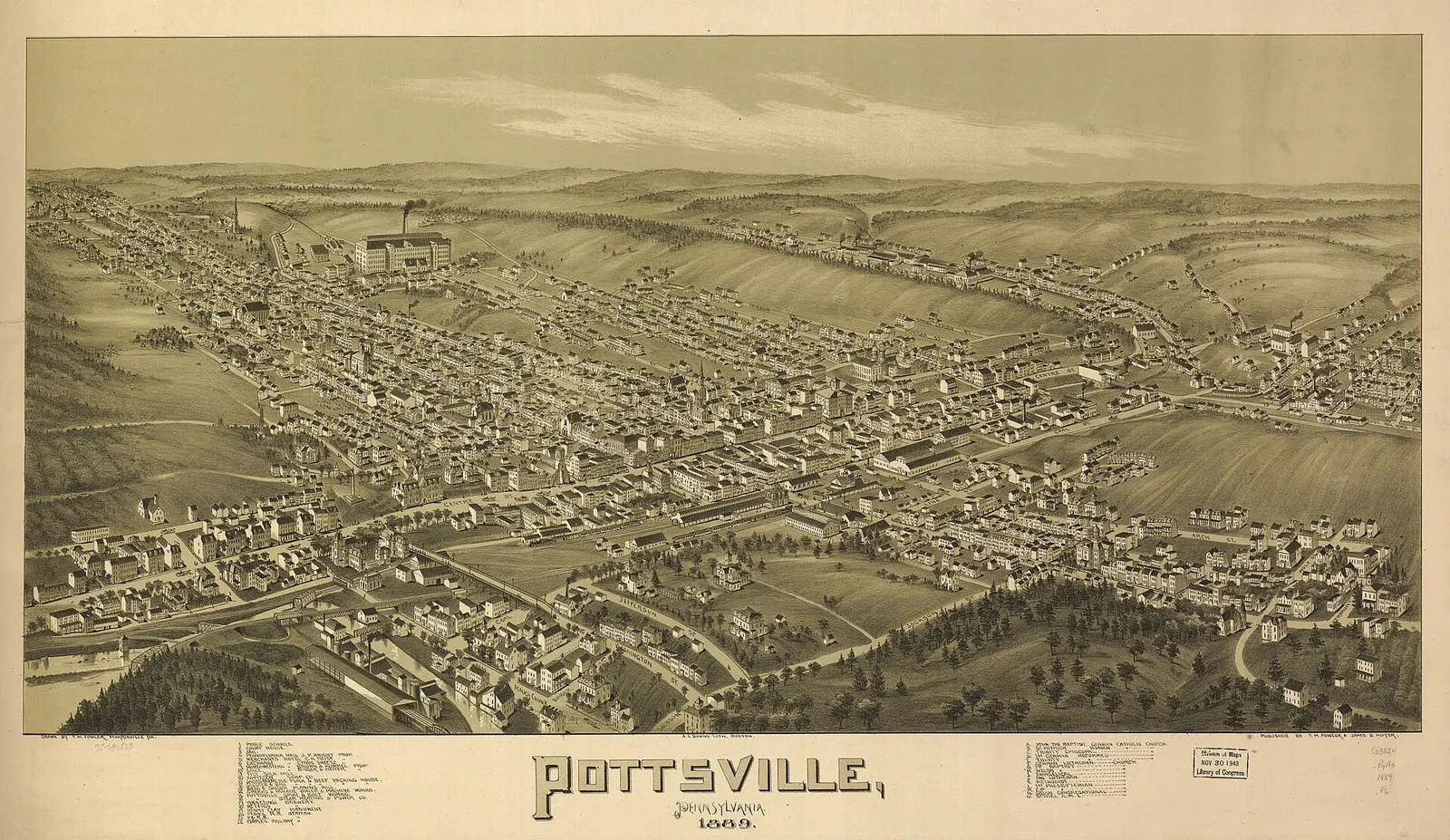
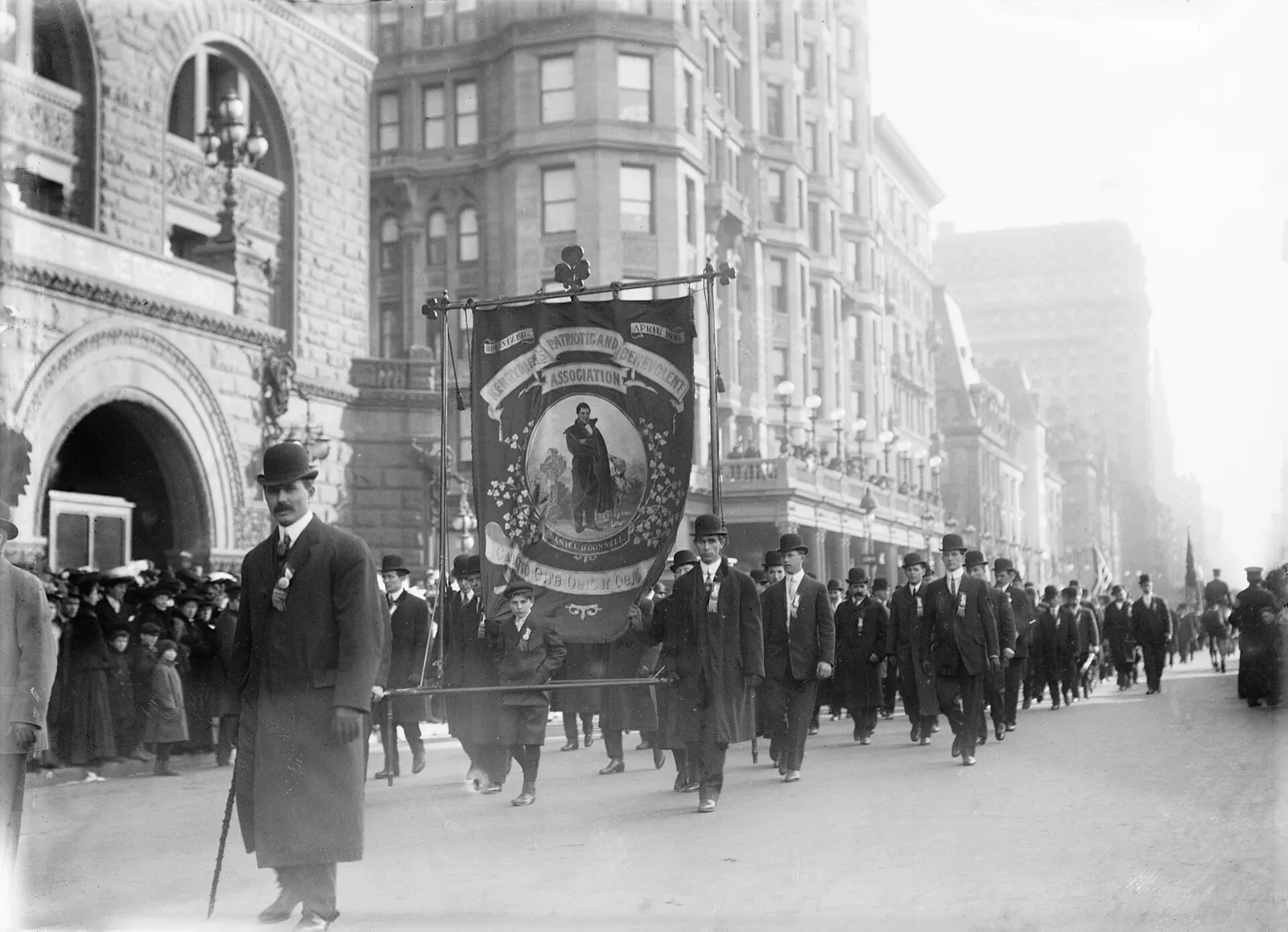
Although I missed many events last month, I did get good reports on many activities. The Pottsville, Pa., parade, sponsored by the JFK Division, AOH, of that city went off without a hitch, even with blustery weather and biting wind. The postparade party is getting bigger, and estimates were that close to 700 people were in attendance. I did manage to make it to the War Vets for their party that night, and the sold-out crowd enjoyed the evening immensely.
Some 380 people, with another 100 turned away at the door, attended the Friendly Sons dinner at the Pottsville Club, where the keynote speaker was Robert P. Casey, Jr., Pennsylvania's Auditor General and son of former Governor Robert Casey. The master of ceremonies was newly elected Pottsville Mayor Terry Reiley, who took over for his father, John D. W., who handled the job admirably for the last 22 years. John D. W. was presented a plaque in recognition of his efforts over the last two decades in promoting and making this the place to be on St. Patrick's Day in the lower anthracite region. A belated tip of me shillelagh to the Reiley family of Pottsville.
The Mauch Chunk Alec Campbell Division, AOH, held its first parade in Jim Thorpe, Pa., and it was a huge success. With a weekend of events and festivities, it was a fitting tribute to the Irish in a locale where a hundred years ago it was a different story.
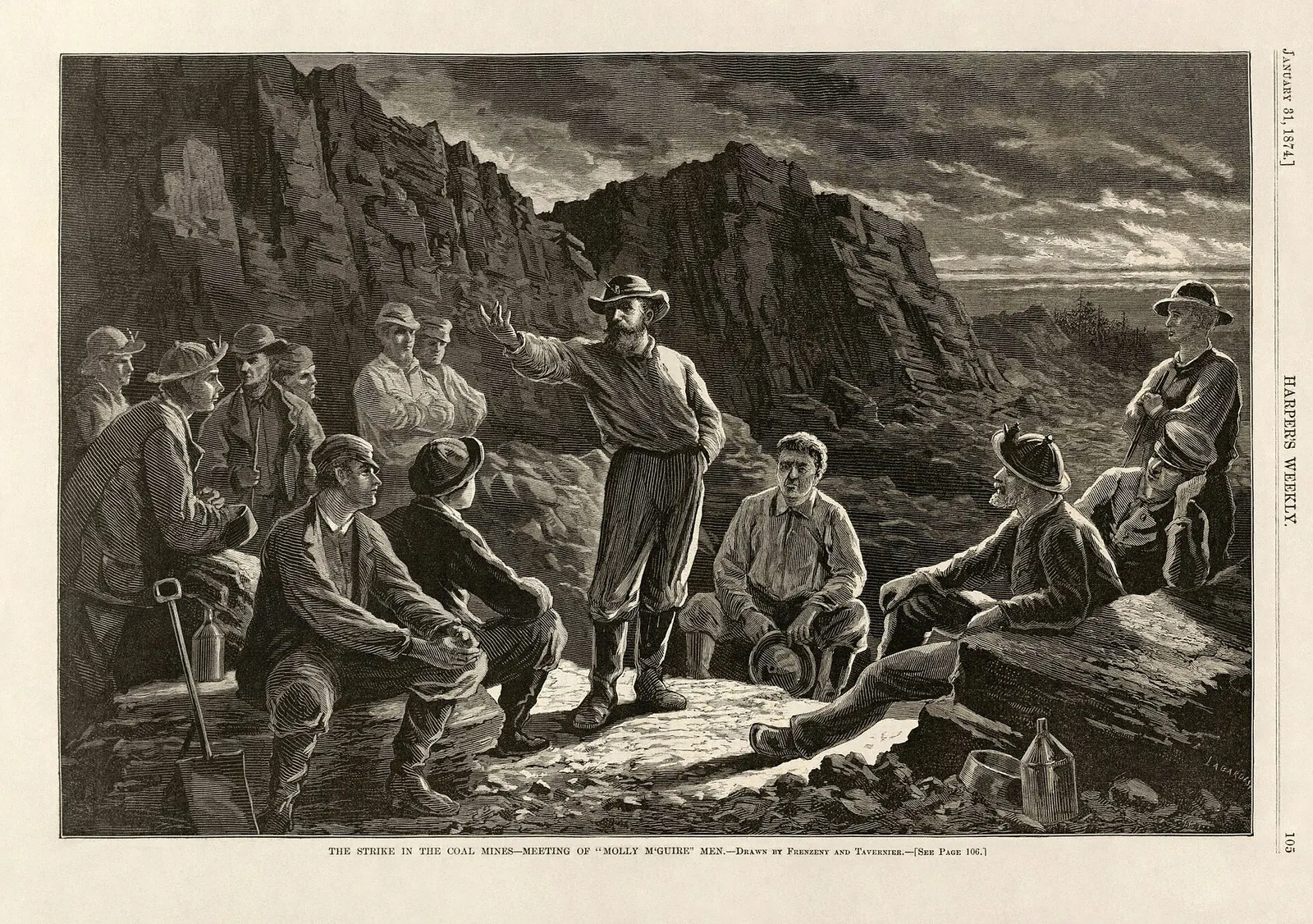
Another coal region tradition is a visit to the Hibernian House in Girardville, Pa., owned by Joe Wayne, great-grandson of Jack Kehoe, the alleged "King of the Mollies" and local hero to many. It was standing room only, elbow to elbow for the entire day, and all in attendance told of the hospitality of both Joe and his mother Alice.
An event I did make it to and was proud to be part of was the first St. Patrick's Celebration at Molly's Pub in Locust Gap, Pa. According to locals, there haven't been that many people in the Gap since the railroad accident at the turn of the century. The event featured an evening of entertainment that was hard to match for miles around. Music was provided by the "Orange and Green Road Show" and also featured dancing by the McCune School of Traditional Irish Step Dancing and the County Schuylkill Ceili Dancers, bagpiper Joan MacLunny of Wilkes-Barre, authors Eric McKeever and Jim "Seamus" Halderman and cartoonist Chris Ring.
A star is born
Another entertainer at the Molly's event, and one making her first public appearance, was Bridgett Joyce, Mahanoy Plane, Pa. Bridgett is a 13-year-old student at Immaculate Heart School in Girardville, and is the coal region version of LeAnn Rimes. She told me she's been "singing since I was a baby," and learned the Irish tunes because "I'm 100 percent Irish and that is all my family listens to." Among the songs she sang that night were "Galway Bay," "Danny Boy," "A Little Bit Of Heaven" and an old country standard, "Crazy." I asked her who influenced her musically, and it came as no surprise to hear "Trisha Yearwood and Patsy Cline." She aspires to become a professional singer, and I think this is a real potential more than a dream. We wish her well, and I'm sure you are going to be hearing from her. By the way, on March 29 she turns 14. Happy Birthday, Bridgett!
Carbon Knight, coal region superhero
As promised last month, here's a review of the new comic book "Carbon Knight" by Chris Ring of Elysburg, Pa. It is based on the infamous mine fire in Centralia, Pa., and its main character is Kyle McKnight, the town fire chief 30 years ago. Without giving away any of the details, I'll reveal that the chief becomes trapped underground and is in a "suspended animation" mode for 30 years. He emerges as a "superhero" with amazing powers and meets with the same problems he encountered 30 years earlier. It has a great story line from superhero to government plots to human interest and is an enjoyable read for all.
Although the cover is in full color, "CK" (as Chris refers to Carbon Knight) is printed in black and white at the present time due to the high cost of full-color printing. If you ask me, the black and white kind of lends something to the coal region theme. The book also features a letters to the editor section and a gallery to which readers can send their own renditions of comic illustrations. I highly recommend it; me young lad also recommends it. If you should read it, I would welcome your comments.
Speedy recovery and so long
I heard through the grapevine that Shamokin, Pa. AOH President Jim Kelley be a bit under the weather. Hang in there, Jim, get well soon, and we'll give it heck next year. Don't forget, September is coming!
Well, 'nuff of me ramblins for this month. Until next, God bless and safe home.
Did the Irish get their holiday?
They did not, and they still have not. Saint Patrick's Day remains a legal holiday in only a handful of places: the Republic of Ireland, Northern Ireland, the British Overseas Territory of Montserrat, and Newfoundland and Labrador, where it is a day off for provincial government employees. In the United States it is observed everywhere and recognized in law nowhere, at least at the federal level. The nearest Congress came to Tommy Symons's petition was symbolic: Public Law 101-418 designated March 1991 as Irish-American Heritage Month, and Congress proclaimed March again for 1995 and 1996. The month has stuck. The day off has not.
Some names in this column went further than the Pottsville Club. Robert P. Casey Jr., the keynote speaker at the Friendly Sons dinner, served two terms as Pennsylvania's auditor general (1997 to 2005), became state treasurer, and then represented Pennsylvania in the United States Senate from 2007 to 2025. He lost his bid for a fourth term in 2024, narrowly, to the Republican David McCormick.
There is an odd thread connecting him to the comic book Symons reviews. Carbon Knight was built around the Centralia mine fire, which has burned under that borough since 1962. In 1992 it was Casey's father, Governor Bob Casey, who invoked eminent domain over every property in Centralia. The Postal Service retired its ZIP code, 17927, in 2002, and the 2020 census counted five residents.
The Molly Maguire landmarks Symons mentions are still visited. Jim Thorpe, where the AOH division held its first parade, was called Mauch Chunk until 1954, and four Mollies were hanged in its jail on 21 June 1877. Jack Kehoe, whose great-grandson kept the Hibernian House in Girardville, received a posthumous pardon from Governor Milton Shapp in 1979. We could not trace what became of Bridgett Joyce's singing career, so we wish her well, as he did, a little late.
Questions readers ask
Is St. Patrick's Day a federal holiday in the United States?
St. Patrick's Day is not a federal or legal holiday in the United States, although it is widely celebrated with parades, church services and parties. It is a public holiday in the Republic of Ireland, Northern Ireland, the British Overseas Territory of Montserrat and, for provincial government employees, in Newfoundland and Labrador. Ireland made it an official public holiday under the Bank Holiday (Ireland) Act 1903.
When is Irish-American Heritage Month?
Irish-American Heritage Month is observed in March in the United States. Congress first designated March 1991 as Irish-American Heritage Month through Public Law 101-418, and it proclaimed the month again for 1995 and 1996. The observance, timed around St. Patrick's Day on March 17, has also been recognized by governments in Canada, where it is often called Irish Heritage Month.
Is the Centralia mine fire still burning?
The coal mine fire under Centralia, Pennsylvania, has been burning since 1962, most likely after a landfill fire in an abandoned strip-mine pit spread into old mine workings. In 1992 Governor Bob Casey invoked eminent domain over the whole borough, and the Postal Service withdrew its ZIP code in 2002. The population fell from about 1,000 in 1980 to five residents in 2020.
Why did Pennsylvania pardon Black Jack Kehoe?
John "Black Jack" Kehoe, portrayed as the leader of the Molly Maguires, was one of ten men hanged in the two years after the first mass executions of 21 June 1877, and he insisted on his innocence to the end. In 1979 a descendant asked for a review, the Pennsylvania Board of Pardons examined his trial, and Governor Milton Shapp granted a posthumous pardon, calling the Mollies martyrs to labour.