A new chapter in Irish history unfolds
Weeks after the Good Friday Agreement, our history columnist asked both sides to speak softly, warned of the hate-mongers, and braced for the Twelfth of July.
As printed in the Celtic Mirror, May 1998
For the past year, Ireland has definitely held center stage on the world scene; more important, the events that have placed her in this prominent position have instilled a new confidence in the people. The republic's booming "Celtic Tiger" economy has shown that Ireland's young workforce can compete favorably in the new technological environment.
Now, as well, a peace agreement has been signed in Northern Ireland. It just might be that this newfound confidence will help the agreement survive. Teddy Roosevelt's most famous line was "Speak softly and carry a big stick" - and now is the time for the participants to speak softly. Those who care to make this agreement work know that they must tone down their harsh rhetoric. This is definitely not the time for either side to openly gloat over advantages they believe they have won against the other. This is a time for self-restraint, and it seems that the major party leaders have taken this cue. Their often stentorian remarks about the other side have dropped a decibel or two, which is so important, because it is from them that the people take their cue. That is not to say that the sides will stop pursuing their different goals. It is to say that they will go about this pursuit in a nonviolent manner, and this is what this peace agreement is all about.
As a person who hopes for a united Ireland, I will myself practice self-restraint in my choice of words and say that I do not like the Apprentice Boys or the Orange Order, but I do recognize the Apprentice Boys for their nonviolent parade diversion a few weeks ago. Instead of trying to force their way through a Catholic area, or even staging a mass protest, they sent a representative out of their bus to the Royal Ulster Constabulary commander with a protest note, and then continued on to their own neighborhood for their festivities. It is this type of rethinking that is necessary to the success of peaceful coexistence. Yes, I know that July 12 will bring a bigger test.
Anyone who thinks the peace agreement is a solution does not understand the problem, nor does anyone who fails to recognize that the agreement is a breakthrough. What the agreement does is give parties, some of whom have been (and still are) mortal enemies, a chance to work together in molding a future that all can accept. One can only hope the process will be a long, agonizing one, because there is no short-term solution to bigotry and hatreds passed down through generations. It is going to take a generation or two to slowly break down age-old discriminations. Only those who truly care for a brighter future, who realize that there must be a better way, will be fit to be the leaders of the next few decades.
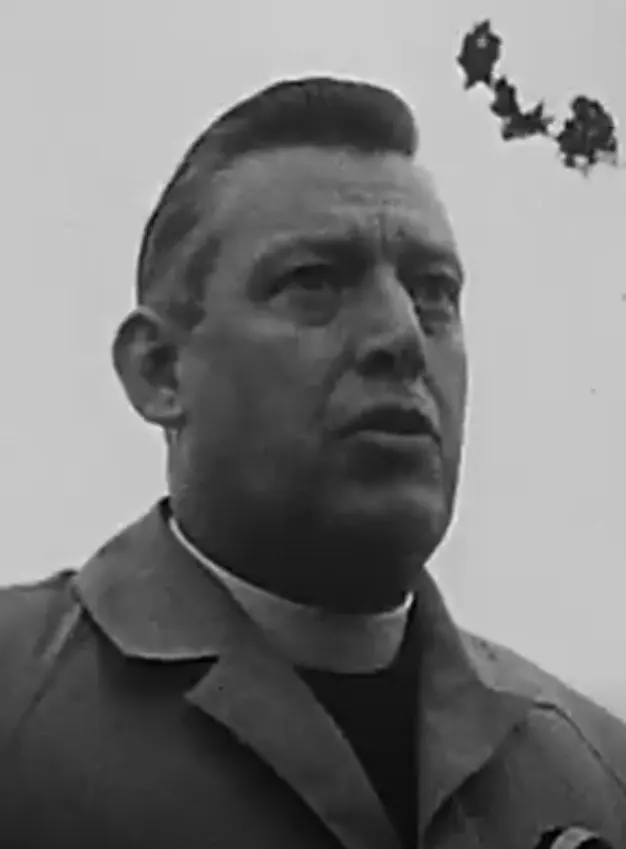
The hate-mongers, on both sides, will make themselves known over the coming months, and actually it will be good for the world, and for the people of Northern Ireland, to see them for what they are. It will be a kind of "decommissioning of the bigots"; they will be on open display as the purveyors of disruption. For this agreement to succeed, these individuals and groups, who did not even enter the "search for peace" process, must be made to realize that their message is obsolete in today's Northern Ireland. Such people include Ian Paisley, a minister, a preacher, a self-proclaimed man of God, who spews forth publicly nothing but hatred for people who don't believe as he does. A man of God - what manner of man can claim to be such and hold such hatred in his heart? A quick study of the past 40 years reads like a grand jury indictment of this man for his role in starting the bloodshed and in keeping it going whenever it seemed to slacken off a bit (see the peace marches, Sunningdale, etc.). There would be no better comeuppance for him than for his few remaining followers to join the others who are willing to give peace a chance. This same indictment holds for the fringe paramilitary groups of both persuasions, whose one-track minds are about to be overrun by those truly concerned about the future.
Do not think that I am blind to the potential pitfalls, to the attempts to return to the old system, to the hard infighting that will be necessary to gain "equal rights," to the cries of "They are taking everything away from us" and "They are not giving us everything we are asking for as fast as we ask for it," and to the terrorism that the fringe groups will engage in (and this time it will be properly labeled terrorism). Compromise has always been difficult for the Irish (and for many others as well). It will be very difficult for those who have everything not to object as some of their "personal" goodies (e.g., jobs, better housing) are distributed among others, just as it will be difficult for those who have been oppressed so long to realize that their every demand will not be met immediately or even within their lifetime.
It will take outstanding leaders to work through these problems. What is important is that those leaders be in place. John Hume has been a long-suffering champion of causes, but a person who understands both sides of the Northern Ireland problem. Gerry Adams has emerged as a skillful leader, who understands both the world of the gunman and the arena of the political leader, and who has dared to walk among both at great personal risk. There is David Trimble, a person for whom I myself do not care at all, but a person who did sign the agreement and push successfully for its passage among his party - and, like Adams, at great personal risk.
Does Trimble have his own agenda? Of course, but so does Adams. That is what this peace agreement is all about - leaders who are willing to work for their goals in a peaceful scenario. We know that the fringe groups, who offer the people nothing but hatred and genocide (otherwise they would have joined the talks, or at least made application to do so), will make their presence known. Their random acts of violence, shootings and bombings, may disrupt the process, but they will not destroy it if the major leaders are working together.
The most important ingredient in this process is time - time to work together, time to live together. Time is the great healer. If a few years can pass in a cooperative environment, then anything is possible. If people can live together without hatred, then there is no big deal if they celebrate different heritages or go to different churches or, more important, share in their heritages. There are many young people in Ulster today, primarily Protestants, who feel robbed because they learn only a single heritage. They would like to learn about the other side, but "peer" pressure makes this an impossibility.
One of my daughters taught with a Fulbright scholar from Northern Ireland, a young Protestant who had four young children, two sons and two daughters. The parents wanted the girls to learn Irish dancing but could not do it at home because the classes were taught in a Catholic hall and their neighbors would have made life miserable for them if they had entered such a hall. Time, knowledge and hard work are necessary to overcome such bigotry. I need only point to America and the past 50 years to show that it can work among the overwhelming majority (hey, every society has its ignorant few), but that it does take an all-out effort. Two other important elements in the success of this peace venture are parents and institutions. We will look at their changing roles next month.
Please say a prayer in the church of your choice for the leaders of Northern Ireland and for the success of the peace agreement. Slan!
The bigger test, and after
Thomas Slattery's "Notes on Irish History" was a partisan column, and he said so in the third paragraph. Read now, it is most interesting for the things he expected and the things he could not have.
He was right that July 12 would bring a bigger test. On 29 June 1998 the new Parades Commission barred the Portadown Orange march from the Garvaghy Road, and Orangemen and loyalists dug in at Drumcree church from 5 July, with thousands gathering over the following days. On Sunday 12 July, loyalists petrol-bombed a house in Ballymoney, County Antrim, and three young brothers, Jason, Mark and Richard Quinn, aged 8, 9 and 10, died in the fire. Their mother was Catholic. Five weeks later, on 15 August, the Real IRA bomb in Omagh killed 29 people, the deadliest single incident of the Troubles in Northern Ireland. Those were the fringe groups he had warned about, and they did not stop the process.
The leaders he named stayed in place for a while. John Hume and David Trimble shared the 1998 Nobel Peace Prize, and Trimble had already been elected First Minister on 1 July.
The strangest turn concerns the man he wrote off. Ian Paisley's Democratic Unionist Party had opposed the Agreement in the 1998 referendum. Nine years later, on 8 May 2007, Paisley became First Minister of Northern Ireland, with Sinn Féin's Martin McGuinness as his deputy. He announced in March 2008 that he would step down and was succeeded by Peter Robinson that June. He died in Belfast on 12 September 2014, aged 88. Slattery hoped for a long process measured in generations. On that, at least, he was a good forecaster.
Questions readers ask
What happened at Drumcree in July 1998?
On 29 June 1998 the Parades Commission banned the Portadown Orange Order march from the Garvaghy Road. From 5 July Orangemen and supporters massed at Drumcree church, and about 1,000 soldiers and 1,000 police were deployed. On 12 July three young Quinn brothers died when loyalists firebombed their home in Ballymoney.
Did Ian Paisley support the Good Friday Agreement?
Ian Paisley and his Democratic Unionist Party opposed the Good Friday Agreement in the referendum of 22 May 1998 and had walked out of the talks when Sinn Féin joined them. Nine years later Paisley became First Minister on 8 May 2007, sharing power with Martin McGuinness of Sinn Féin.
Who won the Nobel Peace Prize for the Good Friday Agreement?
John Hume, leader of the SDLP, and David Trimble, leader of the Ulster Unionist Party, shared the 1998 Nobel Peace Prize for their efforts to find a peaceful solution in Northern Ireland. Trimble had been elected First Minister on 1 July 1998. Hume died in Derry on 3 August 2020 and Trimble on 25 July 2022.
What was the Celtic Tiger?
The Celtic Tiger was the nickname for the Republic of Ireland's period of rapid economic growth from the mid-1990s to 2008. Growth averaged 9.4 percent a year from 1995 to 2000, and the name first appeared in a 1994 Morgan Stanley report by Kevin Gardiner. By May 1998 this magazine was already describing Ireland's booming economy as a source of new national confidence. Ireland entered recession in September 2008.