Dick Gaughan: Celtic bard and hero
On tour in New Mexico in 1998, the Leith singer talked about Braveheart, Bonnie Prince Charlie, atheism and why he never plays from a set list.
As printed in the Celtic Mirror, May 1998
Dick Gaughan has little time for kilts, crowns, bankers, Tories, haggis or Mel Gibson. And he has no time at all for fascists, except, perhaps, as the targets of rowdy jokes - or heartfelt curses. But he'll gladly make you smile - and cry - with skillful songs about "the bloody lot of them."
Celts have always had brave singers who stand up in public to rally. We call them na filí, our bards and bold poets, soothing our pain, mocking the Mighty, and shouting "F yez all!" at tyrants, traitors and fools alike.
When Christy Moore retired last month, the time-honored public role of Celtic musical conscience shifted squarely onto Gaughan's shoulders. And certainly Gaughan, the sturdy Bard of Leith, well deserves that high office.
Gaughan is Scotland's finest songwriter, an unequaled interpreter of songs, a master guitarist - and an unreconstructed republican rebel into the bargain. Indeed, Gaughan may justly be compared in importance to singers of other than Celtic lands. He is a worthy peer of Pete Seeger, Woody Guthrie, Paul Robeson, Victor Jara - even Rab Burns. They are all heroes to Gaughan, though he characteristically shrinks from such comparisons and from any attempt to canonize him. "I'm just one picker from Edinburgh, a journeyman at most," he says with a laugh. "There's no need for ranking; we all do our bit as best we can." He shakes his head, switching his ponytail side to side, and drags deep on a cigarette.
There are damn few "gods" in Gaughan's view of the world, musical or otherwise, but he's always proud to be recognized as a worker. Gaughan is driven by the beauty and value of toil - and of the world's toilers, the salt of the earth. He celebrates the centuries of hard work done by the so-called "common folk" - history's long-embattled workers, farmers, soldiers - "union men," "street kids" and "welfare mothers" alike. Gaughan has a clear eye for how poorly this labor has been rewarded, and for how much work still needs to be done to seize the fruits of that labor ("Worker's Song").
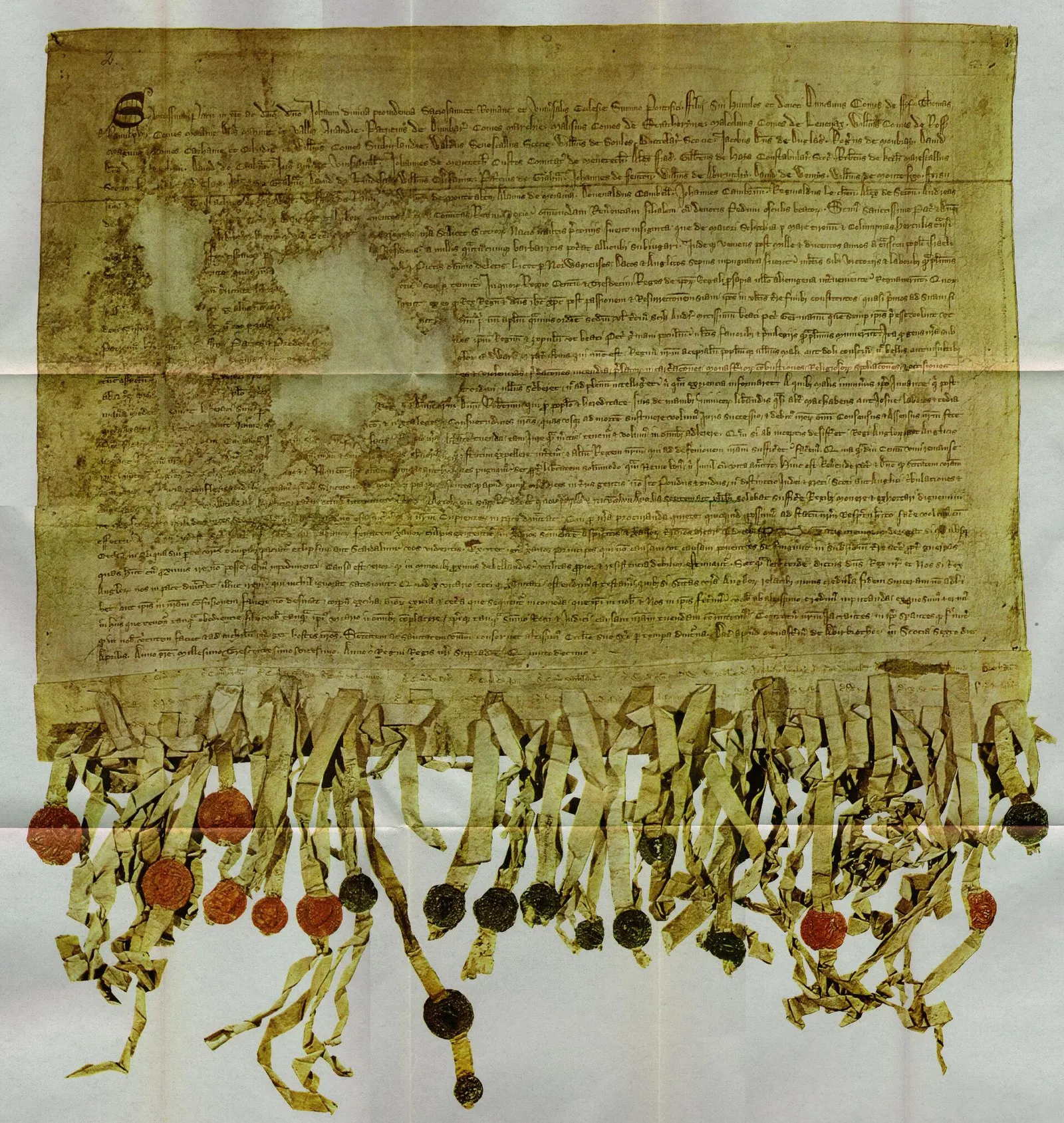
Gaughan himself has worked very hard down all the years. He was a founding member of The Boys of the Lough, at the very core of the Scottish folk revival. An Internet free-speech advocate, he has his own extraordinary website featuring the text of a 12th-century Scottish declaration of liberty, The Treaty of Arbroath. A tireless defender of British miners, Irish prisoners, women and other victims of assault by the rich and arrogant, Gaughan champions the cause of all.
A few years back, Gaughan was in a car accident and suffered severe injuries that many feared might end his career. Instead, he fought his way back to health. He is an exemplary and cheerful survivor. Despite his rich Scots burr, Gaughan is by no means the gruff character this reporter had anticipated. In fact, he is downright friendly, signing autographs and joshing about his "weakness" for American country music: "I can't get enough of the stuff, God help me! And your radio here is full of it!"
A forthright socialist, Gaughan refuses to lower his standard. He survived the fall of the Soviet Union with grace and grit, too.
He clearly sees human caring as inseparable from the harsh reality of human conflict. Sometimes he is the gentlest of acoustic guitarists, conjuring tears with eerie melodies. In the next set, though, Gaughan can transform himself into a joyous rocker, soaring with a Stratocaster and laughing out loud. A very young 50, Gaughan is beloved by folk traditionalists, yet confessed to this reporter that he holds deep admiration for Shane MacGowan's irreverent iconoclasm.
Though he is a revered songwriter, Gaughan has been little recorded. There should be far more than the "precious few" half-dozen or so records he has made. "Handful of Earth" and "Coppers and Brass" are two of those rare albums you never tire of. His shared recordings with Andy Irvine and others are legendary.
Still, Gaughan is making up for lost time. He has reached a new height of excellence with "Sail On," his flawless new CD on Appleseed Recordings, joining his sharp wit and musical virtuosity with a growing serenity and an undiminished rage at injustice. His performance of Hamish Henderson's "The Banks of Sicily" on this CD is truly one of the wonders of modern music. This strange song, ostensibly about the longings of Scottish troops on a far-distant shore during World War II, combines Highland grandeur with the dark death-life dualism of Robert Johnson (or of Yeats). To hear Gaughan perform this song live, as he did recently in a stunning Albuquerque (N.M.) FolkMads concert, is to go beyond mere mind to a place of soul - fear, joy, bewilderment and awe.
Not bad for a self-declared atheist.
But that is not to say that Dick Gaughan is a dull materialist. Asked about his beliefs by this reporter, Gaughan said, "I usually call myself an atheist because that tends to end the discussion. Belief is a very personal thing, and I don't see it is anyone else's business to pry into someone's beliefs. It surely is not right to tell someone what to believe in. So I might believe any number of odd things - the way the fine people of the land here, the Pueblo Indians and other Native Americans, believe in many wonderful things that are very real to them and very strange to outsiders. You know, when the American Natives first met Scots, they called us 'white Indians.' But why the hell is that any concern to you, or to anyone else? It's my business! So I call myself an atheist and move on to talk about things we can share a worthwhile conversation about."
On "Sail On," and in concert, Gaughan performs a thoughtful new song he wrote about "those who bear the symbol of the Cross," which reveals a deep respect for sincere people of faith who live out their ideals. Yet, in the same song, Gaughan reserves the right to oppose those who disgrace that Christian heritage by bigotry, exploitation and slaughter. He is a man of musical and philosophical complexity, yet always a man of humor and never, ever dogmatic or dull.
Asked whether he considers Bob Dylan's recent recording, "My Heart's in the Highlands" (on Dylan's "Time Out of Mind" CD), to be an oblique homage to all things Scottish, Gaughan chuckled and quipped, "You'd have to ask him which 'highlands' he's in."
Gaughan has little patience with misty-eyed sentimentality, particularly as regards his homeland or the Celtic lands generally. He sets an audience roaring in laughter with wry cracks about "Braveheart" being "at least 5 percent accurate - that's pretty good for Hollywood!" He shakes his head and chuckles at mention of "tartans and all that other nonsense" that Americans associate with Scotland. Instead, he sings of a Scotland fraught with unemployment, industrial pollution and a vicious drug-fueled class war inflicted on Scottish "have-nots" by English and multinational corporate "haves." Then he tunes up and delivers his version of a slyly hilarious Richard Thompson song, "Vincent Black Lightning," about a supposed "desperado" tooling around in "English stockbroker land," frightening the yuppies with his old motorcycle.
Gaughan's recorded repertoire includes covers of Phil Colclough's "Song for Ireland" and Tom Makem's "Four Green Fields," as well as Seeger's antiwar classic, "Waist Deep in the Big Muddy."
Questioned about the North of Ireland, Gaughan states that he often plays Belfast gigs to welcoming audiences. And he declares that he has always considered himself "a Scottish republican - it's the only way we will be free!" He reminded this reporter that James Connolly led workers' struggles in Scotland and America as well as in Ireland.
Gaughan notes that his family background is Irish and Highland Scot, and that he has spoken Gaelic since childhood. But he comments sadly that many reactionary loyalists in the Six Counties identify strongly with their Scottish heritage, "even if they've never been to Scotland." Muses Gaughan, "This complicates further a very complicated political and economic situation in Ireland. I don't live there, so I don't feel I have the right to tell them how to sort it out, but I do know that the Irish and the Scots are the same people, and none of us are really 'British' - whatever that may mean.
"When you look at it, you realize that England itself was the first colony of the British Empire. They had a revolution there in the 1600s, executed the king, and proclaimed a peoples republic. But it was crushed - an event that historians now call a 'civil war' - and the monarchy was brought back. Freedom will come with the true workers' republic and never from the English monarchy, nor from the international bosses, or any bunch of bureaucrats, nor from any imaginary Scottish king, for that matter. Bonnie Charlie was a coward who never lived more than two months in Scotland anyway."
Gaughan scoffs at broad "pan-Celtic" notions: "We are far too different from the Bretons and the Welsh, but the Scots and Irish can get together." Yet he espouses a far more inclusive international bond of humanity, of working people united in decency and caring, if divided by nations, armies and economic exploitation.
Gaughan has sung very harshly of American power misused in Vietnam, in Chile, and right here in America's ghettoes. But when asked how he feels visiting here in the heartland of the country accountable for so much evil, Gaughan responds without hesitation: "Wonderful! It's the people that I love to meet. It is so grand to go about this land and meet so many wonderful people. And have so many grand conversations. That's what it is all about, you see. We are all people. Governments have nothing to do with that, and the worst government can't do a damned thing to stop that. We will find ways to get together, despite whatever walls they try to put up."
By his own description, a Gaughan concert is truly a grand "conversation" among people who may not have known one another coming into it, but who get to know each other well in the course of the evening. "I never have a set list," he says. "I just know the first song; then after that, the show goes according to how the people in the audience steer me. I get lots of requests, of course, but it has more to do with that sort of chatting back and forth that goes on between me and the crowd. One song gets a certain response and that leads to the choice of the next song and so on. I love it! We can go to some pretty interesting places together, me and these audiences."
There are truly no strangers at a Gaughan concert. You have the feeling that Gaughan is always somehow at home, never a stranger, and never discouraged, wherever he may roam.
The bard, a generation on
Bill Nevins caught Gaughan at 49, on the road in New Mexico, and wrote him up as a man with a long career still ahead. That turned out to be true for almost twenty more years.
A few details in the 1998 profile need tidying. Richard Peter Gaughan was born in Glasgow on 17 May 1948 and moved to Leith as a baby, so the Bard of Leith title is fair. He was not a founder of the Boys of the Lough: he joined in 1972, alongside Aly Bain, Cathal McConnell and Robin Morton, and stayed about a year before moving on to the Celtic rock band Five Hand Reel in 1975. The album the magazine printed as "Handful of Dust" is Handful of Earth, released in 1981. Melody Maker named it folk album of the year, and in 1989 Folk Roots readers and critics both voted it album of the decade. Sail On came out in 1996 on the Scottish label Greentrax. The document on his website was the Declaration of Arbroath, a letter to the Pope written in 1320, so 14th century rather than 12th.
Christy Moore did not stay retired either. He cut back his work at the end of the 1990s for health reasons and went on to release Traveller in 1999 and This Is the Day in 2001.
Honours followed for Gaughan. He was inducted into the Scottish Traditional Music Hall of Fame in December 2009 and received a Lifetime Achievement Award at the BBC Radio 2 Folk Awards in February 2010.
Then, in September 2016, he cancelled all his public performances, believing an earlier stroke was affecting his playing. An MRI scan in October confirmed it. By February 2017 he had begun physiotherapy and was not expected back on stage for the foreseeable future. The man who never used a set list had, in effect, been handed one he did not choose. The records remain, and so do the arguments he liked to start.
Questions readers ask
Is Dick Gaughan still performing?
Dick Gaughan cancelled all public performances in September 2016, believing an earlier stroke was affecting his ability to perform, and an MRI in October 2016 confirmed the stroke. He began physiotherapy in February 2017 and was not expected to return to the stage for the foreseeable future. He was born in Glasgow on 17 May 1948.
What is Dick Gaughan's best album?
Handful of Earth, released in 1981, is usually named his finest record. Melody Maker made it folk album of the year in 1981, and in 1989 readers and critics of Folk Roots magazine both voted it album of the decade. Other key releases include Coppers and Brass on Topic and Sail On, issued by Greentrax in 1996.
Was Dick Gaughan in the Boys of the Lough?
Gaughan joined the Boys of the Lough in 1972, playing alongside Aly Bain, Cathal McConnell and Robin Morton, and left after about a year. He later joined the Scottish Celtic rock band Five Hand Reel in 1975 and recorded four albums with them between 1976 and 1978 before concentrating on his solo career.
What awards has Dick Gaughan won?
Gaughan was inducted into the Scottish Traditional Music Hall of Fame in December 2009. In February 2010 he received a Lifetime Achievement Award at the BBC Radio 2 Folk Awards. His 1981 album Handful of Earth was Melody Maker's folk album of the year and was later voted album of the decade by Folk Roots.