Scotland's blackest days: The Clearances
From Culloden to the Year of the Burning: a 1998 account of how the Highland chiefs traded their people for sheep, and where the emptied glens sent them.
As printed in the Celtic Mirror, April 1998
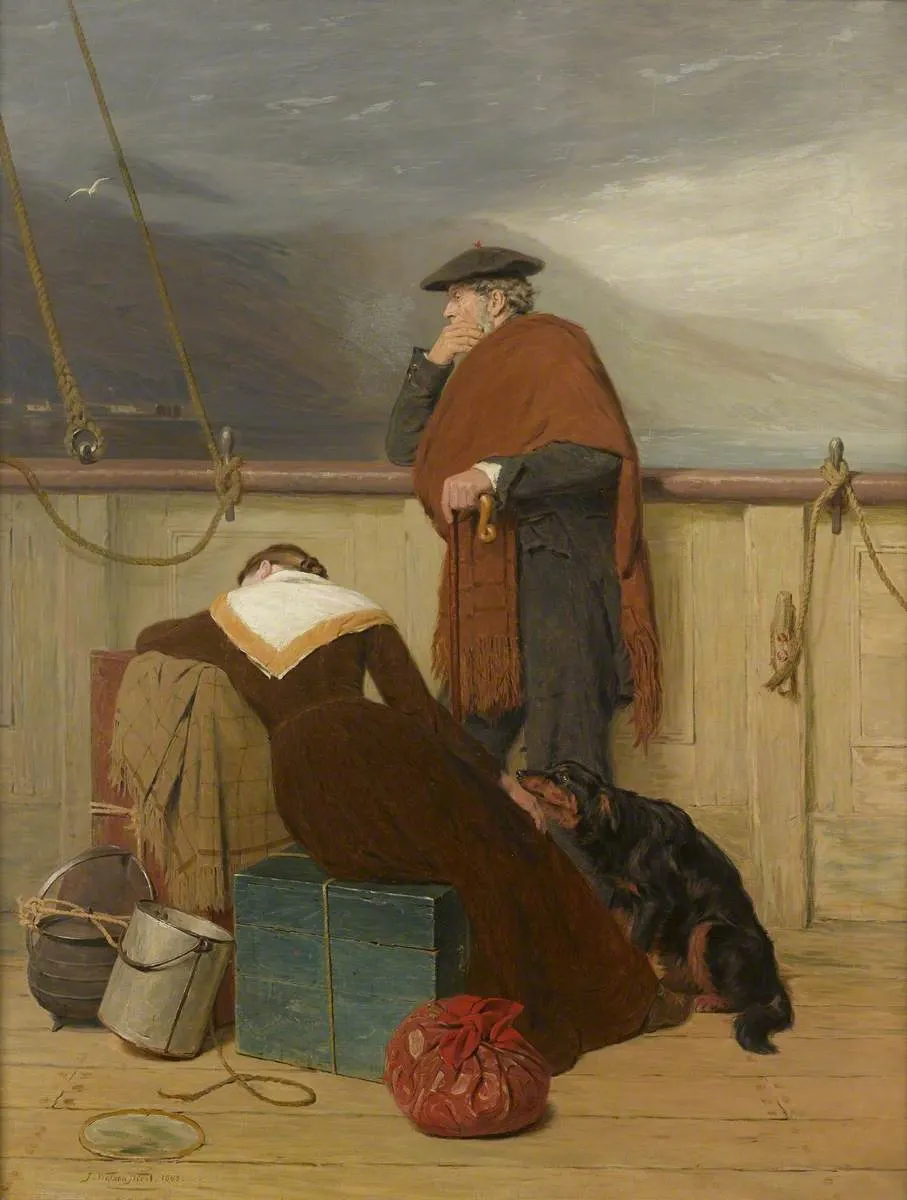
I see the hills, the valleys and the slopes, But they do not lighten my sorrow. I see the bands departing On the white-sailed ships. I see the Gael rising from his door. I see the people going, And there is no love for them in the north. (Unknown Mackenzie bard)
In the history of every nation are many pages blackened by sordid and shameful deeds and events. That of Scotland is certainly no exception. There is no darker page in her 1,500-year history than the one that tells the despicable tale of the series of infamous events referred to collectively as the Clearances.
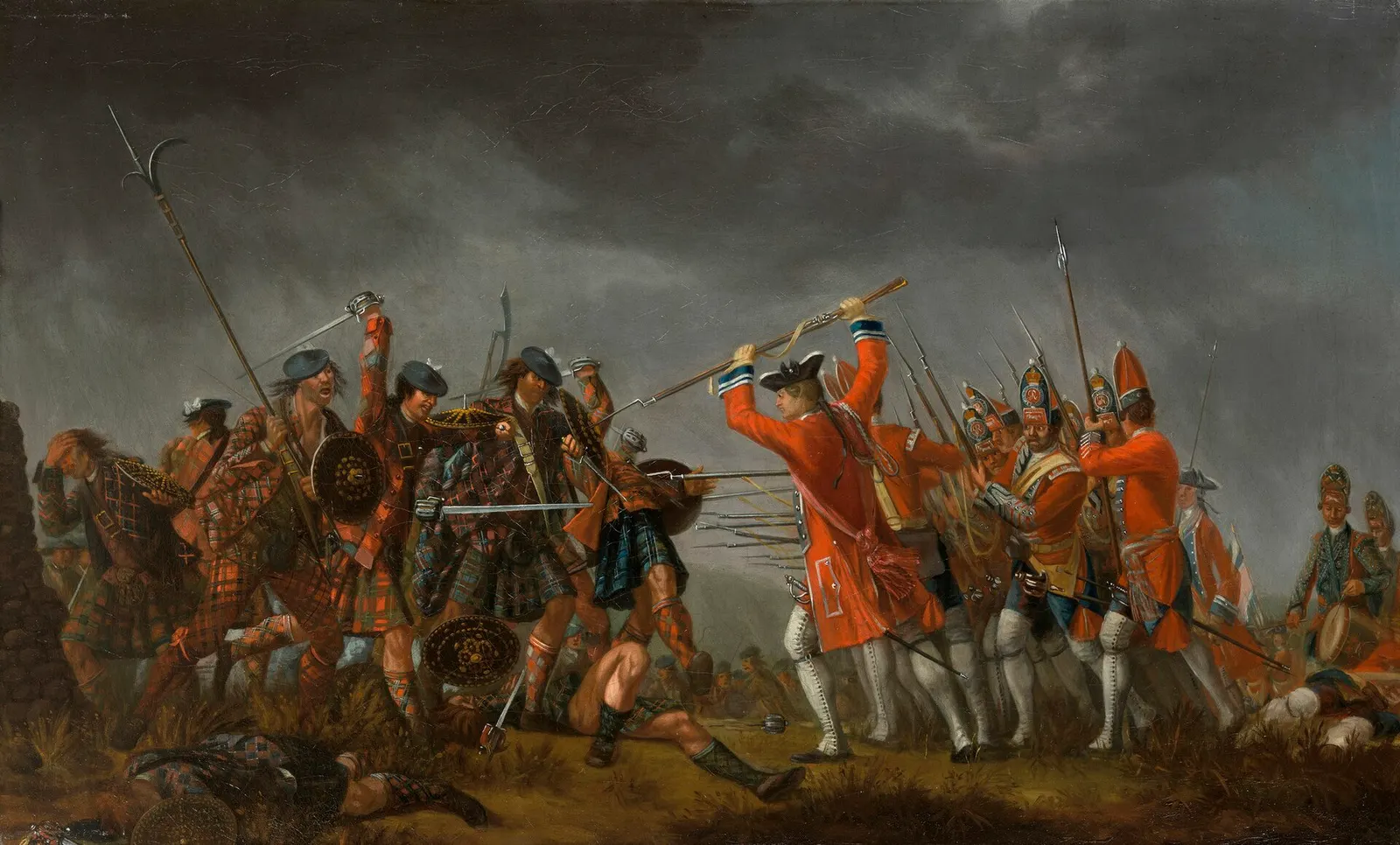
In 1745, Bonnie Prince Charlie, officially Charles Edward Stuart, grandson of exiled King James II of Britain, raised an army in the Scottish Highlands and attempted to regain the throne for his father, James III. After some initial success, his campaign came to a bloody end in 1746 with the Battle of Culloden on desolate Drummossie Moor.
Following the defeat of the clans that had supported Prince Charles, the British government instituted a program of incredibly harsh and vicious reprisals against the Highlanders, beginning at the bloody battleground itself. By order of the Duke of Cumberland, younger son of King George II, wounded Scots were slain where they lay, and all prisoners were slaughtered. These actions earned Cumberland the sobriquet known to and remembered by generations of Scots: "The Butcher."
Martial law was immediately imposed on the land. Fugitives were hunted down and hanged like common criminals, along with anyone who helped or sheltered the Highlanders who survived the battle. Livestock was confiscated, crops were destroyed, and homes and cottages were burned to the ground, sometimes with the hapless occupants still asleep inside. Thus began another sickening chapter in the lengthy annals of man's inhumanity to man.
The British troops were ruthless and relentless in their efforts to smash the power of the clans and, once and for all, extract the troublesome Northern Thistle that had caused them so much aggravation. The ancient authority of the clan chiefs was torn from them, and with it their lands. Forfeited estates of dead or exiled Scots were turned over to approved factors, many of them English or Scots Lowlanders - among the latter some who hated the Highlanders more than did the English.
The men of the clans were stripped of their weapons and all tangible manifestations of their Highland characteristics. It was forbidden to wear tartan, plaid or kilt, and transportation to a penal colony was the punishment for the slightest infraction. Death was the penalty for possessing or carrying weapons. Even the bagpipe, considered by the English to be an instrument of war - probably with good reason - was outlawed.
The year 1792 is bitterly remembered in the Highlands as Bliadhna nan Caorach ("Year of the Sheep"), when sheep began to replace the cattle that the clansmen had traditionally pastured on their lands. The years between the Battle of Culloden and the Year of the Sheep were a turbulent and violent time, characterized by strikes, uprisings and continual unrest. Many of the remaining Highland chiefs, poverty-stricken and debt-ridden as a result of the loss of their centuries-old hereditary powers, turned in utter desperation to new ways of resolving their staggering financial difficulties.
The desperate measures they employed widened the chasm that was opening between the chiefs and their clansmen. Widespread emigrations began as the people found themselves unable to meet the growing demands of the lairds. Those who remained in the Highlands grew even poorer than they had been, and many were forced into vagrancy. Some Scots found their way south to English mines and factories, where they toiled in misery and degradation beyond belief.
The Great Cheviot sheep, richer in mutton and fleece than any other breed, first came to the Highlands late in the 18th century and was quickly seized on by the destitute chiefs as the solution to all their problems. The landowners did not even have to be concerned about the details of herding and shearing, for the sheep-raisers were only too anxious to lease their lands.
There was, however, a major obstacle: Before the sheep could graze upon the land, it had to be cleared of the people, along with their villages, possessions and cattle. The ancient paternalism of the chiefs toward their clansmen, the glue that had held the clans together for 600 years, began to dissolve as harsh realism and desire for profit took its place.
Evictions of Highlanders from the holdings of the chiefs and lairds had been carried on in a small way as the 18th century came to a close and the 19th began. The mass evictions of the Great Clearances, referred to in Orwellian terms as "The Policy of Improvement in the Highlands," did not begin, however, until the appointment of one James Loch as commissioner of the vast Scottish estates of the English Marquess of Stafford. The marquess had acquired these lands the old-fashioned way - by marrying the widow of Lord Gordon. Stafford was a man of incredible excesses and extravagances, and consequently required enormous revenues from his lands. It was Loch's stated ambition to supply these revenues by making the marquess' mountainous districts productive and profitable - and that meant raising sheep in a big way.
The first mass clearance began in 1814, another year that is seared into the memory of the Highlanders, this one as Bliadhna an Losgaidh ("Year of the Burning"). The people of Strathnaver were brutally expelled from their homes, which were burned before their eyes. They were then driven, like the sheep that would replace them but with far less concern for their welfare, to the northern coast, where they were to be employed in recently opened fisheries. The poorly planned scheme failed, and the fisheries proved unable to support the displaced Highlanders. Their standard of living, never very high, sank to an all-time low. Driven by the spurs of hunger and privation, many of them emigrated to Canada in a desperate search for a life with some meaning and hope.
The Clearances spread across the Highlands and the Hebrides islands like a loathsome malignancy. The smoke of burning villages fouled the pristine air of the Highlands. People were routed from their homes, force-marched to seaports and forcibly boarded on ships for transport to America, Canada and Australia. The slightest resistance was quelled with armed brutality. In some areas, only the women resisted. The courageous women of Strath Carron and Glencalvie organized to fight their eviction and for their pains were beaten to the ground by the clubs and muskets of the sheriff's officers and soldiers.
Many people were killed. Even more, the very old, the very young and the infirm perished during the forced marches or died miserably in the stinking, pestilential holds into which they were thrown. Famine ravaged the unhappy land, and epidemics of cholera struck down thousands. At the center of this maelstrom of violent change, the bewildered and buffeted Gaels stood confused and helpless, their whole world swept away like leaves in a great storm. Even God seemed to have abandoned them.
Some of the Highland chiefs, to their eternal credit, for they were hard-pressed, attempted to stem the relentless tide of evictions, but found themselves standing alone and powerless. Clan Chisholm's 23rd chief, Alexander, refused to implement the Policy of Improvement, but after his death, his successors immediately cleared the glens and braes of Strathglass. Godfrey MacDonald of Sleat, fourth Baron of the Isles, attempted to help his starving people even as he evicted them, but to little avail. It is bitterly ironic that, well-intentioned and compassionate as he seemed to be, the clearances and evictions carried out on his lands are remembered as among the most brutal.
It was argued by those conducting the Clearances, with considerable and obvious sincerity in many cases, that the ultimate intent of their actions was to help the Highlanders break their cycle of pastoral poverty. Clearly, some of the people implementing the Policy of Improvement were well-intentioned. Yet some of their actions, well-meant though they may have been, were carried out with ruthless cruelty that amounted to little less than open warfare.
The initial horror of the Clearances was compounded by shame upon shame, as Highland regiments found themselves forced, against every instinct, to put down the riots that followed hard on the heels of the crop failures and epidemics. Highland ministers, with a few honorable exceptions, traduced their calling and misused their pulpits for the benefit of the landowners who had appointed them, damning and condemning any who resisted eviction. The total abdication of their spiritual and moral responsibilities by so many ministers led to serious schisms in the ranks of religion, and the Church of Scotland Free was born of the pain and turmoil, perhaps the last action of independent Scotland - save one.
In 1851, the British government, ironically headed by Scotsman George Hamilton-Gordon, fourth Earl of Aberdeen, was at war with Russia in the Crimea, scene of the historic World War II Yalta Conference, over control of the dying Ottoman (Turkish) Empire. Seeking recruits to replenish the battalions decimated by the bloody victories at the Alma River, Balaklava and Inkerman, thanks to the incredibly inept commanders on both sides, the British appealed to the remaining Highland chiefs and the English lairds for fresh troops. The recruiting effort, carried out in a land where the glens stood empty and silent save for the mournful wind and the bleating of sheep, enlisted hardly enough men to form a platoon. The Highlanders sarcastically advised the British, "Since you have preferred sheep to men, let the sheep defend you!"
The nightmarish Clearances finally came to an end, leaving the Highlands and islands nearly empty of the brave and venturesome people of the clans who made the very name Scot synonymous with freedom and independence. But virtually every Scot who made a new life in a new land carried the spirit of freedom in his breast, and so Scotland's calamitous loss became the free world's gain.
How the Clearances are remembered
Alex Campbell wrote this with the anger of a descendant, and the anger is earned. The scholarship has moved on in places, so a few notes for the reader of 2026.
The Strathnaver evictions of 1814 now have a fixed face. On 13 June that year the house of William Chisholm at Badinloskin was burned, and accounts disagree on whether his elderly, bedridden mother-in-law was still inside. Patrick Sellar, the Sutherland estate's factor, was charged with culpable homicide and acquitted at his trial in April 1816. He was soon eased out of the job and became the scapegoat, which spared the estate's wider policy, run by James Loch, from scrutiny. The estate itself had come to George Leveson-Gower, Marquess of Stafford, through his marriage in 1785 to Elizabeth, Countess of Sutherland, rather than by marrying a widow of the Gordons, as our text says.
Two dates in the article also slipped. The Free Church of Scotland was born in the Disruption of 1843, when a large part of the established Church walked out. And the Crimean War began in October 1853, not 1851; Lord Aberdeen was prime minister from 1852 to 1855.
Historians have also argued about the violence. Eric Richards found that troops intervened on at least ten occasions, but that not one death could be attributed directly to the physical act of eviction. The killing came afterwards, through hunger, disease and the voyages. The Highland potato famine, from 1846 to about 1856, ended in assisted emigration to Canada and Australia on a large scale.
The Clearances ended in law with the Crofters' Holdings (Scotland) Act 1886, which gave crofters security of tenure after years of agitation on Skye and elsewhere, too late for the glens already empty. The Scottish Parliament went further with the Land Reform (Scotland) Act 2003, which gave rural and crofting communities a right to buy the land they live on. Above Golspie, the 1837 statue of the first Duke of Sutherland, known as the Mannie, still stands on Ben Bhraggie. A former councillor proposed demolishing it in 1994, and it has been vandalised repeatedly since.
Questions readers ask
What were the Highland Clearances?
The Highland Clearances were the eviction of large numbers of tenants from the Scottish Highlands and islands, mostly between the late eighteenth and mid-nineteenth centuries, so that landowners could let the land for large sheep farms. Many families were moved to the coast or emigrated to Canada, the United States and Australia. The Crofters' Holdings (Scotland) Act 1886 effectively ended the Clearances by giving crofters security of tenure.
Who was Patrick Sellar and what happened at Strathnaver?
Patrick Sellar (1780 to 1851) was a lawyer and factor on the Sutherland estate who carried out clearances in Strathnaver in 1814. Houses were burned, including William Chisholm's at Badinloskin on 13 June 1814. Sellar was charged with culpable homicide and other offences, was acquitted at his trial in April 1816, and was replaced as factor soon after. He remains the most hated name of the Clearances.
When did the Highland Clearances end?
The Highland Clearances are generally said to have ended with the Crofters' Holdings (Scotland) Act 1886, passed after the Crofters' War and agitation by the Highland Land League. Modelled partly on the Irish Land Acts, it defined crofting parishes, gave crofters secure tenure and created the first Crofters Commission to settle disputes. By then much of the Highlands was already heavily depopulated.
Why was tartan banned in Scotland after Culloden?
After the Jacobite defeat at Culloden in 1746, Parliament passed the Dress Act as part of the Act of Proscription, in force from 1 August 1746. It made it illegal for men and boys north of the Highland line to wear Highland dress, including the kilt and tartan, as part of a campaign to break the clans. The ban was repealed in 1782, by which time tartan had faded from everyday wear.