Peace brings dividend; NI receives EU funds
A year into the IRA ceasefire, Brussels approved $350 million for Northern Ireland and the border counties: the first of the EU’s PEACE programmes.
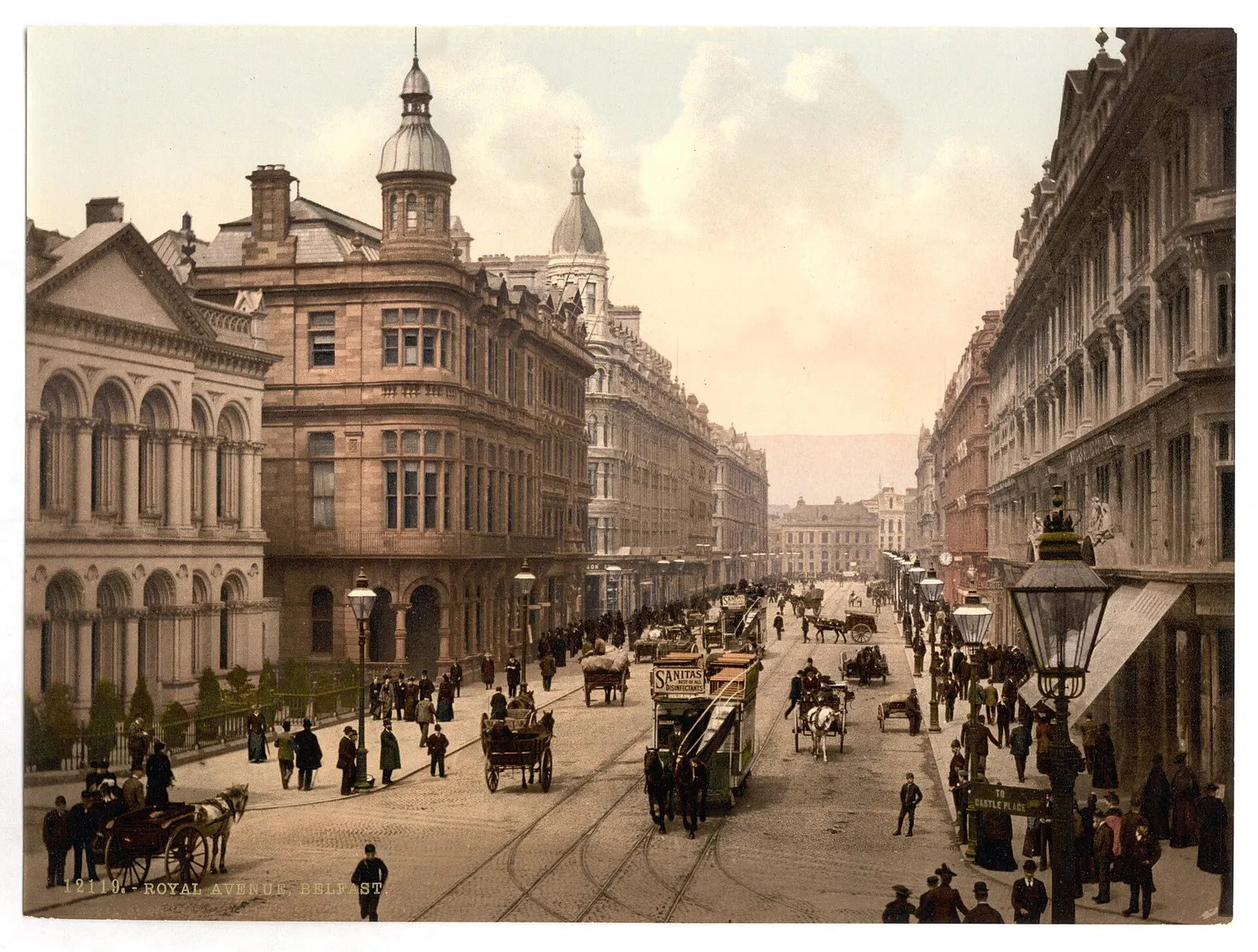
As printed in the Celtic Mirror, August 1995
BELFAST - Northern Ireland and six border counties will receive $350 million through the Special Support Program for Peace and Reconciliation sponsored by the European Union.
The program, which was submitted jointly by the British and Irish governments, aims to reinforce progress towards a peaceful and stable society and to promote reconciliation by increasing economic development and employment, promoting urban and rural regeneration, developing cross-border cooperation and extending social inclusion.
Through the program, $350 million has been allocated in initial funding for 1995-97 and additional funding may be available for a further two years, depending on the outcome of a review of the program.
Of the total allocated, 80 percent has been allocated to Northern Ireland. Twenty percent will go to Ireland’s six border counties. At least 15 percent of the total allocation will be used in a cross-border context.
“The speed with which this program has been prepared and negotiated is to be commended and demonstrates the commitment of those concerned to the peace process. It is now important that all interested parties work together to deliver a program which makes a real and lasting difference to the communities in Northern Ireland,” said Sir Patrick Mayhew, Secretary of State for Northern Ireland.
There are eight main allocation areas applicable to Northern Ireland: employment, $42.9 million; urban regeneration, $21.7 million; rural regeneration, $21.7 million; cross border development, $25.4 million; social inclusion, $66.4 million; productive investment, $42.2 million; technical assistance, $3.9 million; partnerships $51.2 million.
The funding also makes special provision for local area partnerships from each district council area to put forward proposals for action or projects which are considered to advance the aims and objectives of the program in that area.
“The introduction of the partnerships is a new and particularly exciting aspect of a program which contains a number of innovative ideas and actions. I hope that the program will encourage local groups and bodies to bring forward imaginative and original proposals for funding which both fulfill the aims and objectives of the programs and also provide good value for money,” Mayhew said.
The implementation of the programs will be overseen by a monitoring committee. There will also be a consultative forum which will consist of representatives drawn from a wide range of local bodies and organizations.
The forum will serve as a mechanism for continuing consultation with local interests.
The funding is additional to Northern Ireland’s total initial structural funds allocation of $1.4 billion and its community initiative funding of $150 million for the years 1994-99.
The draft guidelines for the funding were formally adopted on May 16. European Union members may only submit a funding request once guidelines are agreed and they would normally be allowed six months to do this following adoption of the guidelines.
However, because of a need to speed the process, the European Commission overseeing the funding allowed the member states concerned just two months to submit a program of action.
The program was submitted by the British and Irish governments to the commission on June 9. Negotiation of the program was extensive in an effort to reach agreement by the end of July.
Thirty-one years of PEACE
This was the first of what became a long line. The programme described here is now remembered as PEACE I, and it ran from 1995 to 1999, a little longer than the three years first promised. PEACE II followed for 2000 to 2004, then PEACE III. The aim written into that third round was almost word for word the one in this 1995 report: to “reinforce progress towards a peaceful and stable society and promote reconciliation.”
The politics around the money were rougher than the press release suggested. The IRA ceasefire that made the programme possible had begun in August 1994. It ended on February 9, 1996, with the truck bomb at South Quay in London’s Docklands, which killed two people. The talks recovered, and the Good Friday Agreement was signed on April 10, 1998.
That agreement changed who handles the cheques. The Special EU Programmes Body, one of six cross-border bodies created after 1998, now coordinates EU-funded projects in Northern Ireland, the border region of the Republic and, in some programmes, western Scotland. It reports to the European Commission, the Northern Ireland Executive and the Irish government.
Brexit might have ended the arrangement. It did not. Under the withdrawal deal the EU, the UK and Ireland committed to keep funding the body, and in July 2022 they announced PEACE PLUS, worth €1.1 billion or about £1 billion, jointly funded by the UK and the EU with matching money from Belfast and Dublin. It runs to 2027.
Sir Patrick Mayhew, quoted above, stood down from Parliament at the 1997 election and died on June 25, 2016, aged 86. The local partnerships he called new and exciting have an echo in PEACE PLUS, which set aside €110 million for community peace plans drawn up in the 17 eligible local authority areas on both sides of the border.
Questions readers ask
What is the EU PEACE programme in Northern Ireland?
The PEACE programmes are European Union funding schemes for Northern Ireland and the border region of Ireland, aimed at reinforcing progress towards a peaceful and stable society and promoting reconciliation. PEACE I ran from 1995 to 1999 and began with $350 million, 80 percent for Northern Ireland and 20 percent for six border counties. PEACE II, PEACE III and later rounds followed.
What is PEACE PLUS?
PEACE PLUS is the newest cross-border funding programme for Northern Ireland and the border counties of Ireland, announced in July 2022. Worth about €1.1 billion, or £1 billion, it is jointly funded by the United Kingdom and the European Union, with matching funds from the Northern Ireland Executive and the Irish government. It is run by the Special EU Programmes Body and expires in 2027.
Did Brexit end EU funding for Northern Ireland peace projects?
Brexit did not end it. As part of the withdrawal agreement, the European Union, Ireland and the United Kingdom committed to continue funding the Special EU Programmes Body until at least 2023. In 2022 they agreed joint EU and UK funding until at least 2027 through the €1.1 billion PEACE PLUS programme for Northern Ireland and the border region.
Which counties are in the Irish border region for EU funding?
The 1995 programme covered Northern Ireland plus six border counties in the Republic of Ireland, which received 20 percent of the money. Under PEACE PLUS the eligible area is Northern Ireland and Counties Cavan, Donegal, Leitrim, Louth, Monaghan and Sligo. At least 15 percent of the 1995 money was reserved for cross-border projects, and some later programmes also took in western Scotland.