Perspective: Hand over your weapons
Patrick S. McCormick argued in June 1998 that IRA disarmament could only come as part of a mutual stand-down, and tipped his hat to Clinton and Mitchell.
As printed in the Celtic Mirror, June 1998
The tortured voices of the past have given way to a fresh resonance in Northern Ireland, one that whispers hope and not despair. Gone may be the stale yet all too ripe fear of existing in a society where the specter of the next tragedy always looms. By a crushing consensus, the people have quite clearly opted for a new dawn.
Yet there are many thorny tasks to be accomplished, and almost before the ink on the ballots was dry, the term "decommissioning" began to rear its head. Seems that unionist heavyweights David Trimble and Jeffrey Donaldson reverted to form, asserting that they had unequivocal assurances from Tony Blair that some form of Irish Republican Army disarming would be a prerequisite for any Sinn Fein members to sit on the future Northern Assembly.
Response from Sinn Fein was expectedly cool, yet there can be no denial that any such utterances from the British Prime Minister at this stage of the game would be quite disturbing, to say the very least.
The fact of the matter is, besides the IRA, there are at least ten armed militias in Northern Ireland with weapons stockpiles of widely varying sizes. And the only rational, workable way to broach the arms issue is by mutual surrender of those stockpiles.
One can safely assume that there were no like declarations given to Sinn Fein: no promises that if the Loyalist Volunteer Force did not turn in some token arms, then Trimble would be left with his mug pressed against the frosty windowpane.
For that matter, certainly the same demand should be made of the Royal Ulster Constabulary. "What's that?" you say. Is not the RUC the police force in Ulster? Are those police not the guardians of civil order?
Yeah, right. In Northern Ireland, the inmates have long been running the asylum, except in this case they've donned black police uniforms. If one harbors any doubt as to the authenticity of the long-heard cries of collaboration between loyalist paramilitaries and the security forces, and how they conspired against republicans and Catholics, then I suggest he read Sean McPhilemy's "The Committee."
The book is as shocking as it is repulsive, as it unmasks the corruption of a police force that festers with unfettered bigotry, and they're supposed to be the good guys. In fact, I believe McPhilemy's investigative work ought to be required reading in World History 101, catalogued with the rest of the failed British policies around the globe.
Exactly what the book illuminates is how a core group of wealthy Ulster businessmen conspired with many of the RUC upper echelon and rank and file officers, and with notorious loyalist assassins Billy "King Rat" Wright and Robin "The Jackal" Jackson. And yes, at times, the British intelligence services.
Why, then, should the IRA not assert that decommissioning is a matter for them to decide for themselves alone? The hard-line element of the movement would perceive such an act as surrender.
In a land where connection to history is palpable, the lessons of the late '60s pogroms, when the "peacekeeping" British troops stood idly by as Catholics were thrashed about, will dictate that the Provisionals will surrender arms only when it is done across the board and coordinated with British troop disengagement and the restructuring of the RUC.
Given the duplicitous history of successive past British administrations when dealing with the Irish question, any demand for unilateral decommissioning by the Provisional IRA is a pipe dream.
On a different note, does anyone remember the 1992 election campaign here in the United States, when George Bush and company were shrieking that Bill Clinton handling foreign policy would be akin to Clark Kent munching on a kryptonite Milky Way?
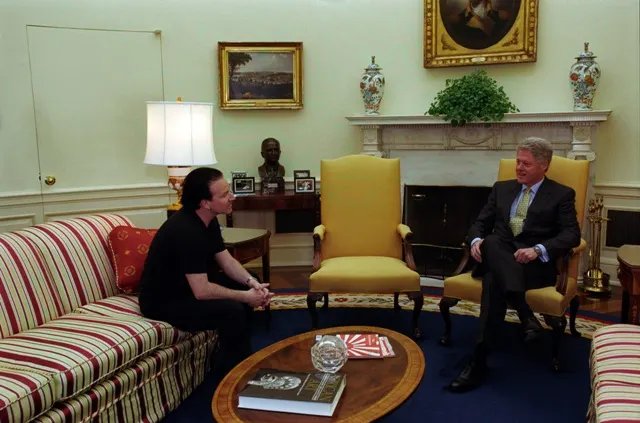
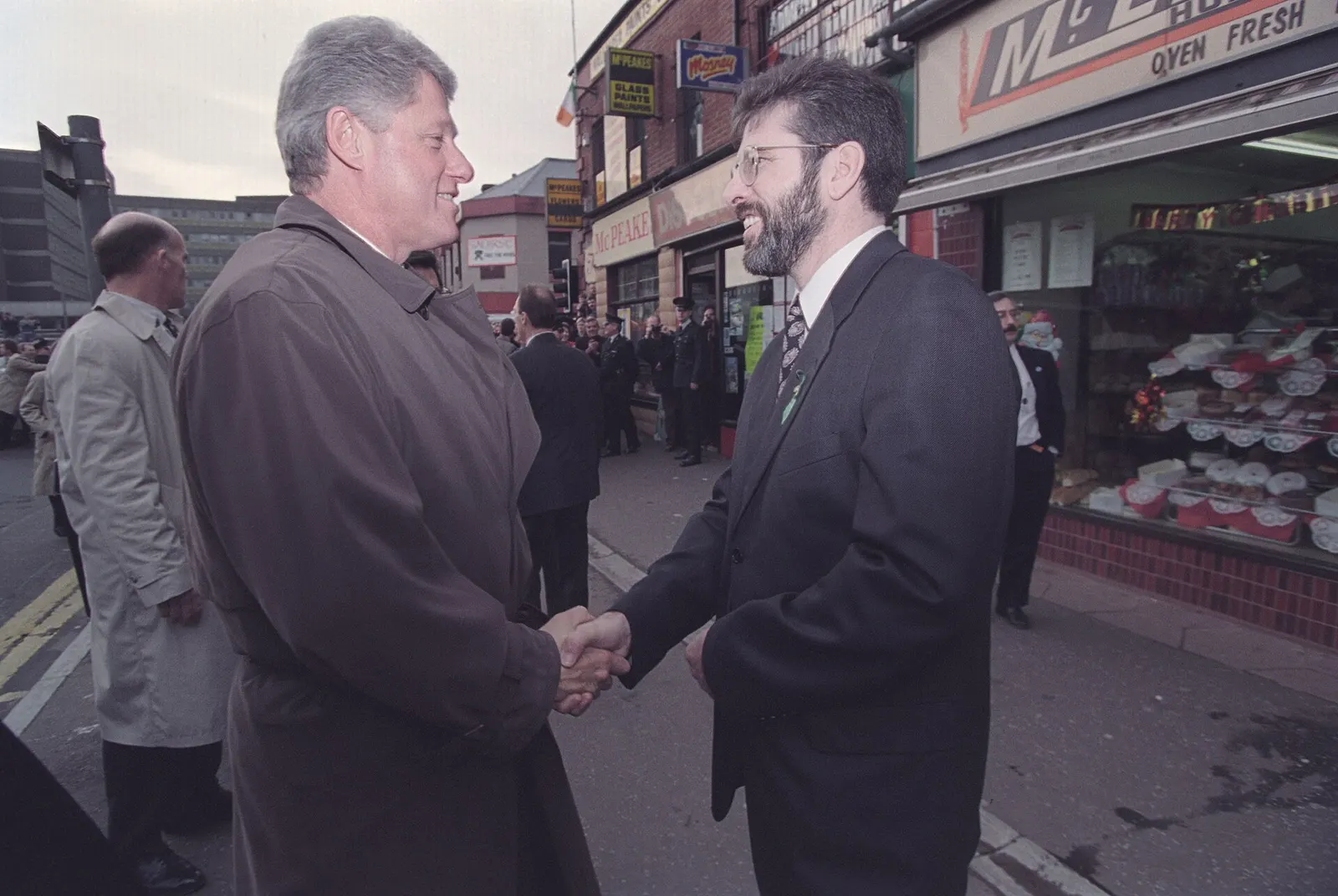
Well, President Clinton much deserves kudos for his instrumental role in the Irish peace process. History may well reflect that a pivotal point for a resolution was when Clinton granted Gerry Adams a visa to visit the United States in 1994. He did so against the bitter opposition of the British government, and against some considerable opposition in his own cabinet. Yet he seemed to sense that in order to bring the IRA in from the political Antarctic, a gesture of American resolve was necessary. In effect, the President looked then British Prime Minister John Major in the eye and told him to stow it. No more would the United States dance to the tune of "the special relationship" with Britain, which for years had bound American policy on Northern Ireland in chains.
When the IRA cease-fire broke down after a 17-month ride on Major's precondition merry-go-round, Clinton resisted the urge to bail out of the peace process. He took his licks, weathering the cries of "We told you so," and exhibited the patience of a true leader, providing assurances and stern warning alike when needed.
And let us not forget his appointment of George Mitchell as chairman of the talks, he of the Job-like patience. The former Senate majority leader's equanimity and stamina reached near-mythical status during his 22-month stay in Belfast. He once listened to a politician from one of the parties speak for eight hours without pause. When the nominations for Nobel Peace Prize were announced, I was saddened to learn of his omission. I do believe he is a special man, and that one of lesser character would have closed the lemonade stand and taken the first cab out of Stormont long ago. Well done, Senator.
How the guns went quiet
McCormick wanted the guns to go all at once, from every side. That is not quite how it happened. The Independent International Commission on Decommissioning, set up by the two governments on 26 August 1997 and chaired by the Canadian general John de Chastelain, worked for eight years before the IRA's last weapons were accounted for. The final IRA act of decommissioning came in September 2005, and the commission reported on 26 September 2005 that the arsenal was gone. The loyalists came later: the UVF in June 2009, the UDA in January 2010, the INLA in February 2010.
His other demand, a remade police force, was met more fully than he might have expected. The Patten report on policing appeared in September 1999, and on 4 November 2001 the Royal Ulster Constabulary gave way to the Police Service of Northern Ireland. For almost ten years the new service recruited Catholics and Protestants on a 50:50 basis, a rule dropped in April 2011.
Two of the men he named were already gone or going. Billy Wright had been shot dead inside the Maze prison by INLA prisoners on 27 December 1997. A public inquiry under Lord MacLean reported on 14 September 2010 that it found no collusion between the authorities and the killers, though it did identify a number of security failings at the prison. Robin Jackson died of lung cancer at his home in County Down on 30 May 1998, at 49, a few days before this June issue was dated.
On Mitchell, the Nobel committee did not change its mind. The 1998 Peace Prize went to John Hume and David Trimble. Mitchell had to make do with the Liberty Medal that July and the Presidential Medal of Freedom in March 1999.
Questions readers ask
When did the IRA decommission its weapons?
The IRA announced the end of its armed campaign in July 2005. Its final act of decommissioning took place in September 2005, and on 26 September 2005 the Independent International Commission on Decommissioning, chaired by General John de Chastelain, reported that the IRA's arsenal had been put beyond use. That was more than seven years after the Good Friday Agreement.
When was the RUC replaced by the PSNI?
The Royal Ulster Constabulary was replaced by the Police Service of Northern Ireland on 4 November 2001. The change followed the Patten report on policing, published in September 1999 under the Good Friday Agreement. The new service recruited Catholics and Protestants in equal numbers under a 50:50 rule until April 2011.
Did loyalist paramilitaries decommission?
Loyalist groups disarmed well after the IRA. The Ulster Volunteer Force was formally decommissioned in June 2009, and the Ulster Defence Association confirmed on 6 January 2010 that its weapons were beyond use. The republican INLA followed in February 2010, shortly before the international commission was due to wind up.
Who killed Billy Wright?
The loyalist Billy Wright was shot dead on 27 December 1997 inside the Maze prison near Lisburn by three INLA prisoners, with Christopher McWilliams firing the fatal shots. The Billy Wright Inquiry, chaired by Lord MacLean, reported on 14 September 2010 and found no evidence of state collusion but several security failings.
Did George Mitchell win the Nobel Peace Prize?
George Mitchell was not among the winners. The 1998 Nobel Peace Prize went jointly to John Hume of the SDLP and David Trimble of the Ulster Unionist Party. Mitchell was honoured instead with Philadelphia's Liberty Medal on 4 July 1998 and the US Presidential Medal of Freedom on 17 March 1999.